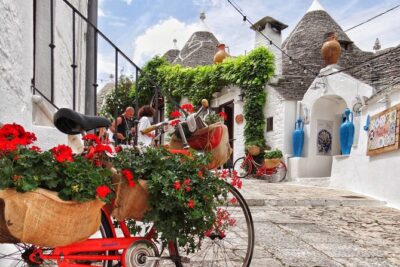
Those white conical roofs guide your feet. This Alberobello history walking tour moves through the UNESCO-listed world of trulli, starting with a viewpoint before you meet the village up close.
I especially like two things: you get to step inside a traditional trullo, and the walk through Rione Monti and Aia Piccola is guided in a way that makes the architecture click fast. Guides such as Francesco and Dominicio are singled out for clear explanations and storytelling that keeps the whole walk moving.
One consideration: the tour is short—about 1.5–2 hours—and transfers aren’t included, so you’ll want to factor in how you’ll reach the meeting point (which can vary by option).
In This Review
- Key highlights at a glance
- From Belvedere Views to Trulli in Walking Distance
- Rione Monti and Aia Piccola: Two Neighborhoods, One Trulli Language
- Stepping Inside a Trullo: Where the Real Education Happens
- The Walk to San Antonio: A Trullo-Shaped Church on Foot
- A Local Home Visit: Understanding How a Trullo Is Composed
- Price and Timing: Is $40 Worth 1.5–2 Hours?
- Language, Group Style, and What Guides Can Change
- Who This Alberobello Tour Fits Best (and Who Might Skip)
- Should You Book This Alberobello Trulli Walk?
- FAQ
- How long is the Alberobello history walking tour?
- What does the tour include?
- Does the tour include transfers?
- Where does the tour start and end?
- Is this tour available in languages other than English?
- Are there options for private groups?
- Is the tour free for children?
- How many people are required for the tour to run?
- What is the cancellation policy?
Key highlights at a glance
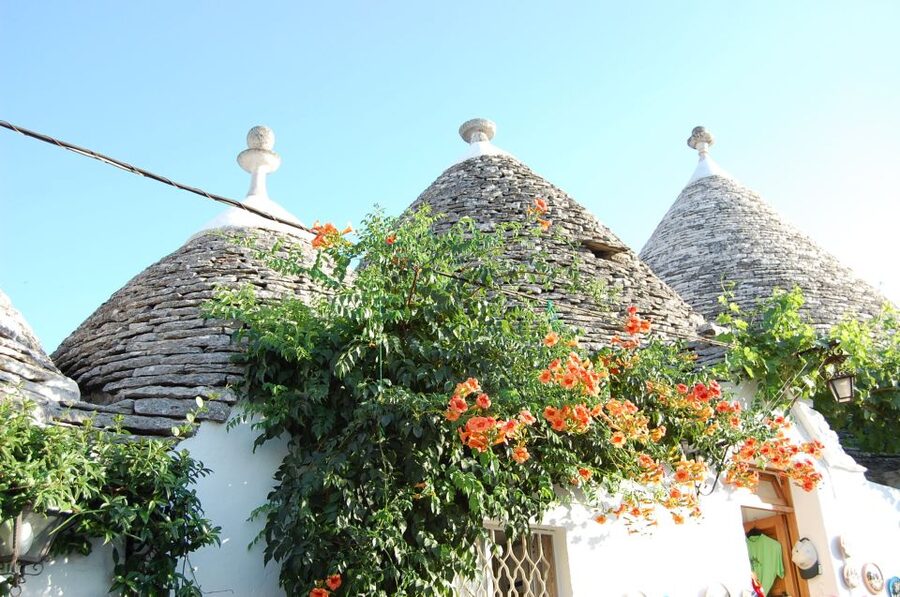
- Belvedere terrace start to get your bearings and context fast
- Rione Monti + Aia Piccola for the classic trulli neighborhoods
- Inside a trullo so you see more than facades
- Church of San Antonio shaped like a trullo, reached on foot
- Visit a local’s home to understand how a trullo is put together
- Licensed guide in multiple languages (English, French, Spanish, Italian)
From Belvedere Views to Trulli in Walking Distance
Most Alberobello tours start with photos. This one starts with a view—at the Belvedere terrace—so you can understand what you’re looking at before you start walking. That matters, because trulli aren’t just cute cones; they’re a whole building system that responds to materials, weather, and local life in Apulia.
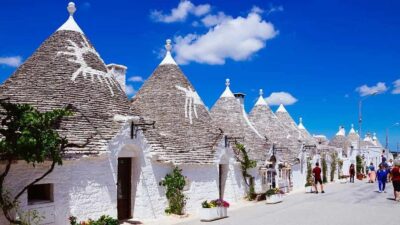
As you descend from the viewpoint into the village lanes, the conical roofs start making practical sense. You’ll be able to spot the shapes, learn what makes them distinctive, and connect the details you see later (doors, stonework, and layout) to the explanation your licensed guide shares along the way. If you like walking tours that help you orient first, this is a solid setup.
The experience is also tightly timed. Plan on about 1.5 to 2 hours total, and know that it’s a walking tour with stops rather than a long sit-down history lesson.
More Alberobello trulli tours from Bari


Rione Monti and Aia Piccola: Two Neighborhoods, One Trulli Language
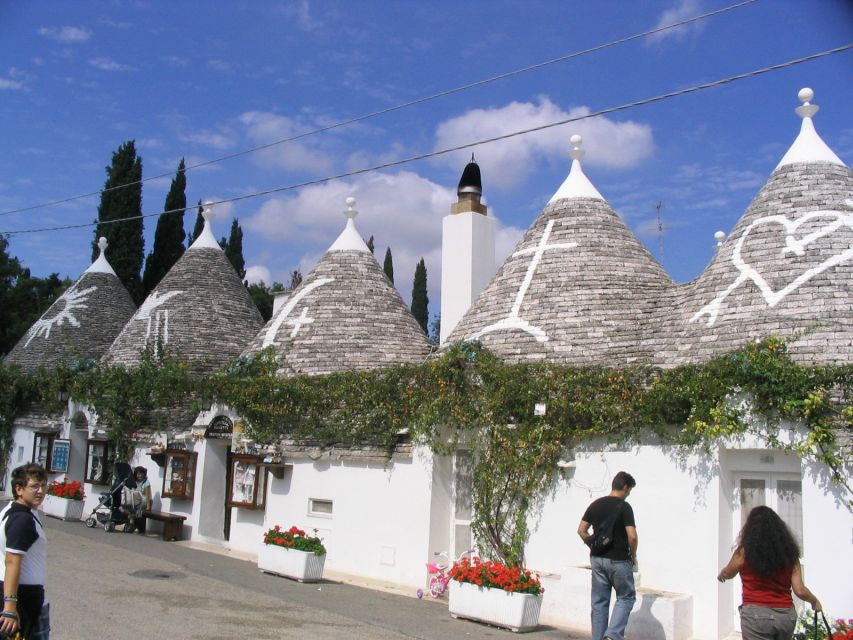
The heart of the tour is the guided walk through Rione Monti and Aia Piccola. These areas give you a feel for how trulli are clustered and how the village’s narrow streets shape movement on foot. You’re not only seeing “more trulli”—you’re watching the architecture and the neighborhood pattern work together.
Rione Monti tends to feel like the classic postcard version of Alberobello, with lots of cones visible and a sense of the village’s older core. Aia Piccola shifts the vibe and helps you compare how the trulli landscape shows up across different parts of town. Walking between both areas is one of the best ways to avoid a “single-street” experience.
What makes this part of the walk valuable is how your guide frames the details. In the stories shared by guides like Floriana and Roberta, you pick up why people built with local stone and how the architecture relates to the way the trulli were made and used over time.
Stepping Inside a Trullo: Where the Real Education Happens
The tour isn’t limited to looking. You’ll step inside a traditional trullo, which is a big difference between a sightseeing walk and a real understanding of how these structures work. From the outside, the shapes look simple. Inside, you can start connecting design choices to space, structure, and the building logic behind the conical roof.
This is where guides tend to shine. Francesco is highlighted for taking visitors into historical houses and explaining details in a way that feels personal, not rushed. Mario is mentioned for making the architecture easy to follow, with explanations that help you see what to look for when you’re back outside.
If you’re trying to decide whether a trulli tour is worth it, the interior stop is your deciding factor. Without it, you’re mostly collecting images. With it, you’re collecting understanding.
The Walk to San Antonio: A Trullo-Shaped Church on Foot
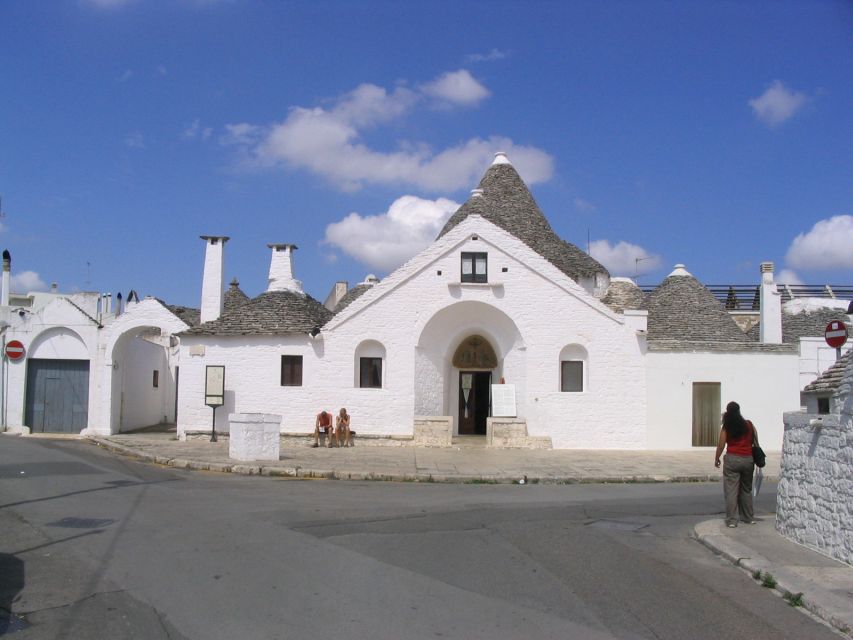
Next comes a scenic walking stretch through the village’s little alleys and trulli clusters until you reach the trullo-shaped Church of San Antonio. This is a great stop because it turns the trullo from a “house type” into something that can apply to community spaces too.
You’ll get the chance to see how the style translates to religious architecture. Even if you don’t care about church interiors, the building form is the point: it’s another way to understand that trulli aren’t only decorative roofs—they’re a recognizable local way of building.
Because the church is part of the walking route, it also keeps your momentum. Instead of hopping by car between points, you keep learning while you move through the village, picking up small details along the way.
More Bari walking tours through the old town lanes
- Bari: Guided Walking Tour★ 4.7 · 744 reviews
- Bari: Pasta Experience Walking Tour★ 4.7 · 660 reviews
- Bari Walking City Tour★ 4.5 · 511 reviews
- Matera’s Sassi Walking Tour – History & Culture★ 5.0 · 476 reviews
- Bari: Walking Street Food Tour★ 4.7 · 458 reviews
A Local Home Visit: Understanding How a Trullo Is Composed
The tour ends with a visit to a local’s home, where you can see how a trullo is composed. This is the most “real life” part of the experience, since it focuses on the building itself as an object people live with and maintain. You’re not just learning a museum fact—you’re seeing how the structure is put together in context.
Guides like Alessandro and Sylvia are noted for making these moments feel warm and human, including engaging explanations that expand what you saw earlier. And in some cases, you may also get a chance to taste local products at the end, which can add a nice Apulia flavor to the close of the tour. It’s not something you should count on as guaranteed, but it’s been part of the experience under some guides.
This home visit is also a good reality check. Trulli are fragile in the “old materials” sense, so the idea of composition and upkeep matters. If you pay attention during this stop, you’ll leave with a stronger sense of why preservation efforts are taken seriously.
Price and Timing: Is $40 Worth 1.5–2 Hours?
At $40 per person for a 1.5–2 hour guided walk, the value depends on what you want most from the trip. If you want a simple photo loop, you could do Alberobello on your own. But if you want context plus access, this price starts to make sense fast.
You’re paying for:
- A licensed guide who explains the “why,” not just the “what”
- Multiple districts (Rione Monti and Aia Piccola), not one zone
- Interior access to a traditional trullo
- A trullo-shaped church stop (San Antonio)
- A local home visit that explains construction and composition
Transfers aren’t included, so you’ll likely pay extra if you need transport to and from the meeting point. The meeting point can vary based on the option booked, but the tour always ends back at the starting point—handy if you’re planning your next meal or stop.
From a budgeting perspective, this works especially well as a first structured activity in Alberobello. You’ll learn what to look for on your own afterward, which can save time and help you enjoy the rest of the day more.
Language, Group Style, and What Guides Can Change
The tour runs with a live guide and offers languages including English, French, Spanish, and Italian, plus private group options. That matters more than it sounds. When a guide speaks clearly and keeps explanations flowing, you don’t spend the walk mentally translating—you just follow along.
The names mentioned in guide highlights give you a clue about the tone. Dominicio is described as a storyteller who makes history engaging, while Floriana is noted for an informative, pleasant style. Guides like Mario and Francesco get praised for accommodating questions and handling the group rhythm well, even when timing gets a little messy.
If you’re the type who likes interaction—asking why something was built a certain way, or what the building technique actually means—this kind of guided flow can be a real upgrade. If you prefer silent walking and your own pacing, you may find the guided stops a bit structured. Still, you’ll likely appreciate the interior moments.
Who This Alberobello Tour Fits Best (and Who Might Skip)
This Alberobello history walking tour is a great match if you:
- Want a short, focused way to understand trulli beyond photos
- Like walking tours that mix viewpoints, architecture, and a real local connection
- Care about interior access and learning how a trullo is composed
- Are visiting for a limited time and want the “high points” packed into 1.5–2 hours
It might be less ideal if you:
- Prefer long, unstructured wandering without any scheduled guide stops
- Have transport needs you’d rather not manage, since transfers aren’t included
- Are looking for a very deep, long-form museum-style experience (this is a walking tour with multiple short stops)
It’s also worth noting that it’s free for children under 18, which can make it a good family option if your kids enjoy short walks and curiosity-based explanations.
Should You Book This Alberobello Trulli Walk?
If you’re spending time in Apulia and want to understand Alberobello quickly—while still feeling like you got access and context—this is a strong pick. The best reasons to book are the combination of interior trullo access, the guided walk through Rione Monti and Aia Piccola, the trullo-shaped Church of San Antonio, and the final home visit where you see construction explained.
I’d book it if you want value in “learned moments,” not just sights. Skip it only if you’re mainly chasing time for self-guided wandering or you already know a lot about trulli building details and just want extra photos.
FAQ
How long is the Alberobello history walking tour?
The tour lasts about 1.5 to 2 hours. Starting times vary by availability, so check dates before you plan the rest of your day.
What does the tour include?
It includes a walking tour and a licensed guide. You’ll also have guided visits to the main trulli districts, an inside trullo experience, the Church of San Antonio, and a final visit to a local’s home.
Does the tour include transfers?
No. Transfers are not included, so you’ll need to handle getting to the meeting point.
Where does the tour start and end?
The meeting point can vary depending on the option you book. The activity ends back at the meeting point.
Is this tour available in languages other than English?
Yes. The live guide is available in English, French, Spanish, and Italian.
Are there options for private groups?
Yes, private group availability is offered.
Is the tour free for children?
Yes. It’s free for children under 18.
How many people are required for the tour to run?
A minimum of 2 participants is required for the tour to run.
What is the cancellation policy?
You can cancel up to 24 hours in advance for a full refund.
More Tours in Bari
- Matera: Sassi Tour with Cave House and Rupestrian Church
★ 4.7 · 6,618 reviews - Polignano a Mare: Cave Boat Tour with Aperitif
★ 4.7 · 1,891 reviews - Discover Matera, the ancient city – English tour
★ 5.0 · 1,771 reviews - Guided Tour of Matera Sassi
★ 4.5 · 1,312 reviews - Bari’s Ultimate Street Food Tour – Small Group by Do Eat Better
★ 5.0 · 1,187 reviews - Polignano a Mare boat tour emotions, caves, diving and appetizers
★ 5.0 · 1,022 reviews
More Tour Reviews in Bari
- Matera: Sassi Tour with Cave House and Rupestrian Church
★ 4.7 · 6,618 reviews - Polignano a Mare: Speedboat Cruise to Caves with Aperitif
★ 4.8 · 3,382 reviews - Polignano a Mare: Cave Boat Tour with Aperitif
★ 4.7 · 1,891 reviews - Discover Matera, the ancient city – English tour
★ 5.0 · 1,771 reviews - Guided Tour of Matera Sassi
★ 4.5 · 1,312 reviews - Polignano a Mare: Boat Trip, Swim & Cave with Aperitif
★ 4.8 · 1,300 reviews
More Alberobello Trulli Tours
- Alberobello: 2-Hour Guided Trulli Tour
★ 4.6 · 727 reviews - Tour di Alberobello e Matera in bus privato da Bari
★ 4.8 · 701 reviews - Tour of Alberobello and Guide to Matera, from Bari
★ 4.7 · 478 reviews - UNESCO’s Alberobello and Matera from Bari
★ 4.5 · 271 reviews - Alberobello and Matera Bus Tour, from Bari
★ 4.5 · 250 reviews - Alberobello Guided Segway and Mini Golf Cart Tour
★ 5.0 · 221 reviews