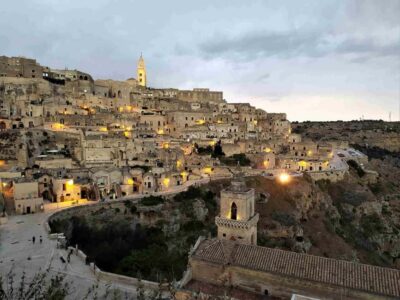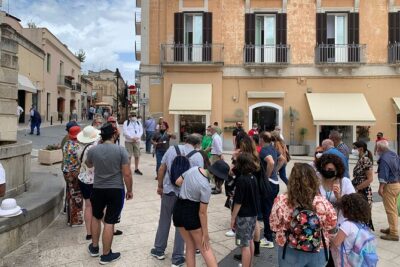
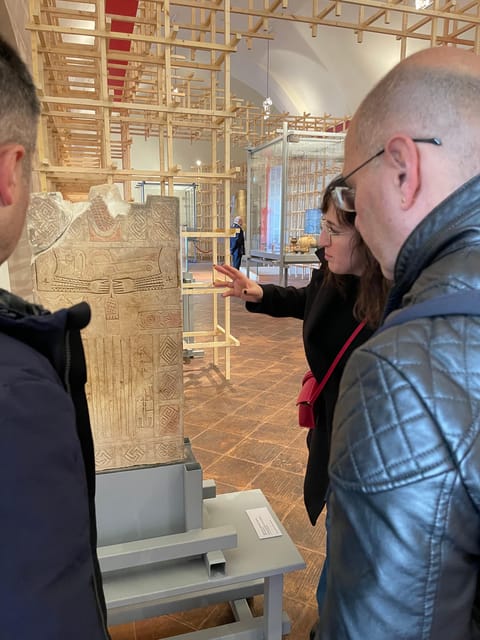
Bari’s underfoot story is the main event. This guided walk takes you from the ancient Via Traiana to layered church interiors like the Succorpo, with an archaeologist explaining how Roman, early Christian, and Byzantine Bari fit together. I especially like the fact that you’ll be talking to someone who can answer real questions as you go—guides such as Chiara and Anna have been praised for clear English and genuine enthusiasm.
One possible drawback: if you end up with less history framing in your language, you might feel like the tour stays at the sightseeing level rather than building a fuller story. That’s more likely to matter if you were expecting deep archaeological context.
In This Review
- Key things to know before you go
- Bari’s Layers: what this 2-hour archaeologist walk really gives you
- Meeting at VELO SERVICE Store and walking into Via Traiana
- Santa Scolastica Archaeological Museum: your entry ticket moment
- Cathedral of Saint Sabinus and the Succorpo underground route
- Basilica of Saint Nicholas: ending at the relics and the East-West link
- Which archaeological sites you might visit (and why hours matter)
- Price and value: is $58 for a Bari archaeology guide worth it?
- How to get the most out of your tour (language, questions, and overlap)
- Who this Bari archaeologist tour suits (and who might want to skip)
- Should you book this Bari archaeology tour with VELO SERVICE?
- FAQ
- Where does the tour start?
- How long is the guided tour?
- What languages are available?
- What’s included in the price?
- Which archaeological sites will we visit?
- Is it refundable if plans change?
Key things to know before you go
- Start on Via Traiana: you’ll begin near an ancient Roman road section built in the early II century A.D.
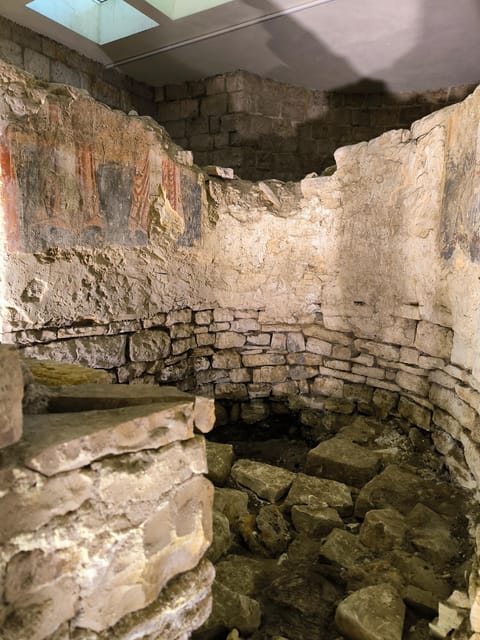
- Underground Succorpo access: the Cathedral of Saint Sabinus route includes the underground itinerary.
- Saint Nicholas relics and East-West meaning: your ending stop ties Bari’s spiritual role to the broader meeting of cultures.
- Two ticketed museum areas included: you’ll pay less out of pocket because entry is already built in.
- Your exact museum sites depend on hours: which two “archaeological sites” you visit can shift.
Bari’s Layers: what this 2-hour archaeologist walk really gives you
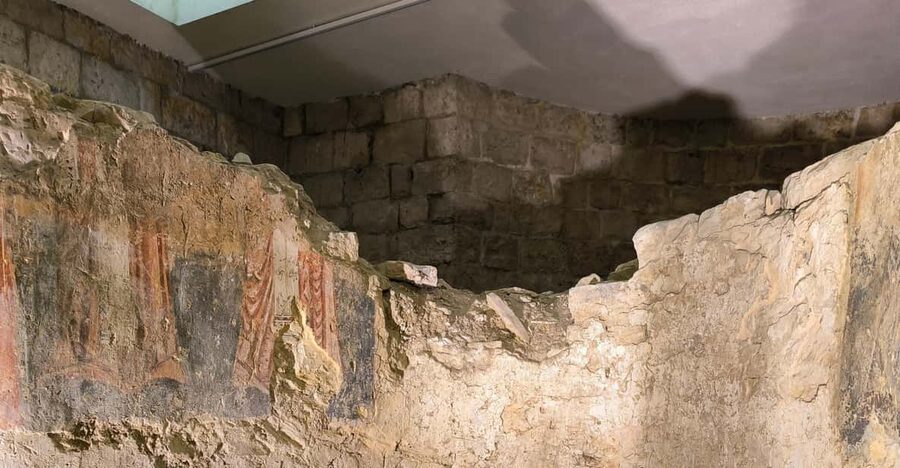
This is the kind of tour that changes how you look at Bari. From the start, you’re not just watching churches and monuments—you’re seeing how different eras reused the same city space. Roman engineering shows up in the street-level setting, then you move into church architecture and underground passages, where early Christian and later periods leave their mark.
The time window is also realistic. Two hours sounds short, but it’s designed for focused walking plus short, high-impact stops. If you’re doing a short city stay, this works well because it gives you context without turning your afternoon into a homework assignment.
If your goal is to understand Bari’s “why,” this has value. You’ll hear how religious power, trade connections, and shifting cultural influences shaped what stands above ground today. And with an archaeologist guiding the route, you’re more likely to get cause-and-effect explanations than simple monument descriptions.
More guided Bari tours and Puglia day trips we rate
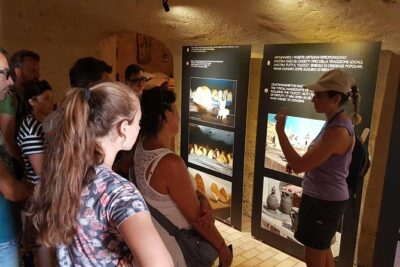



Meeting at VELO SERVICE Store and walking into Via Traiana
Your tour begins at the VELO SERVICE Store, bike rental and guided tours office, in the old town near Piazza Mercantile. It’s a good location because it keeps you close to the historic center, with easy walking connections for the rest of your day.
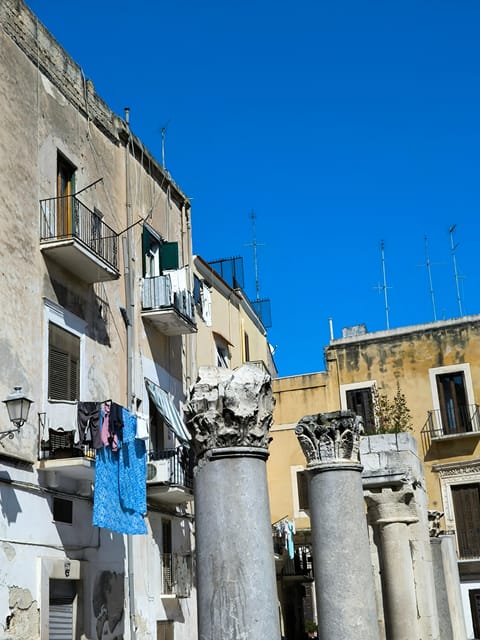
From there, you head to the archaeological starting point next to Via Traiana in Ferrarese Square. This matters because Via Traiana isn’t a random “old street.” It’s an ancient Roman road section built by Romans in the early II century A.D., so the guide can point out how Bari’s layout ties back to Roman movement and infrastructure.
Practical tip: arrive a little early so you can get oriented before the group sets off. This is one of those tours where the first few minutes shape how you’ll understand everything that follows.
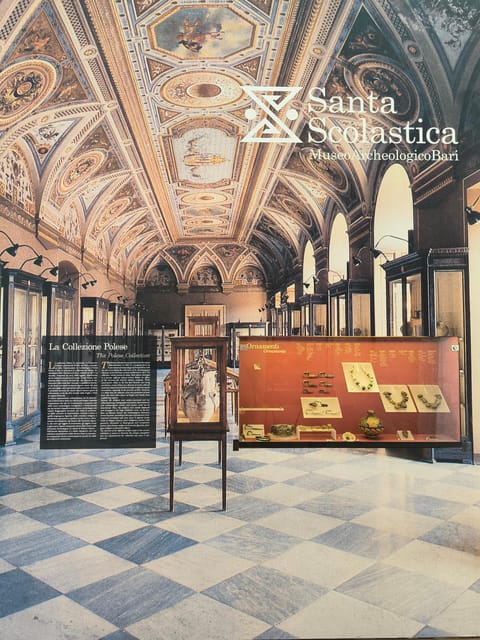
Santa Scolastica Archaeological Museum: your entry ticket moment
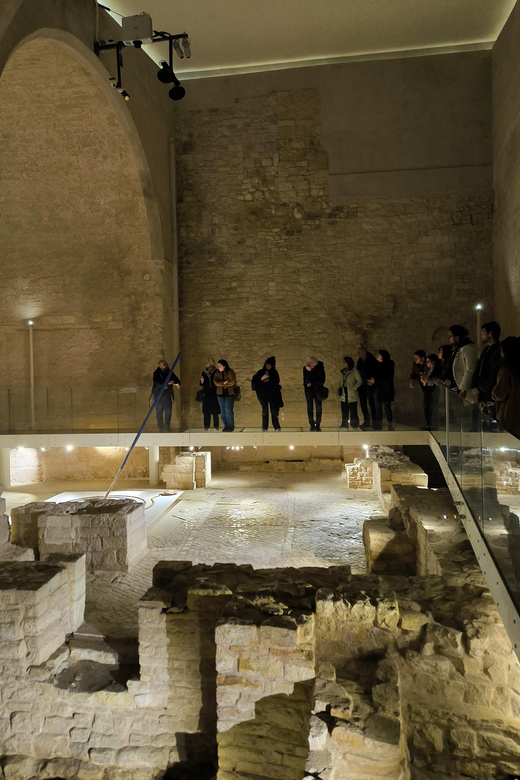
After the Roman-road start, the tour continues toward the Santa Scolastica Archaeological Museum. Even if you’re not a museum person, I like this stop because it shifts you from “seeing” to “reading” the city. Museums are where artifacts and architectural fragments help explain what you’re about to observe.
You should also care about the ticket value here. The experience includes admission tickets for two museum areas, which helps you avoid decision fatigue and last-minute ticket hunting. That makes the tour feel more like a structured archaeological route and less like a loosely guided walk.
If you’re the type who likes asking questions, this is a great moment to do it. Ask what the guide is emphasizing and how the layers connect. A guide with strong English (like Chiara, in past departures) can help turn a hallway of objects into a timeline you can actually use later while you’re exploring on your own.
Cathedral of Saint Sabinus and the Succorpo underground route
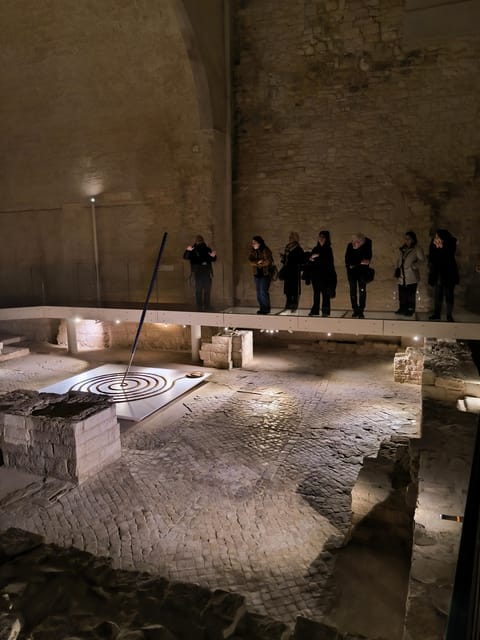
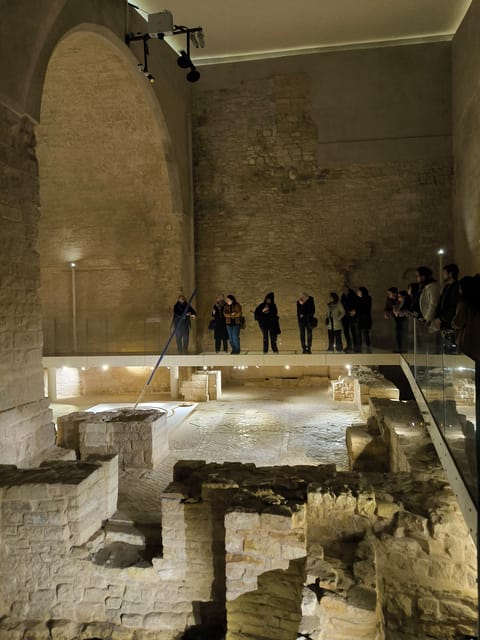
Then comes one of the most important parts of the experience: the Cathedral of Saint Sabinus, a precious example of Romanesque Apulian style. From the surface, it already looks like a key landmark. But the tour’s real payoff is that the cathedral hides a “whole itinerary” below ground in the Succorpo.
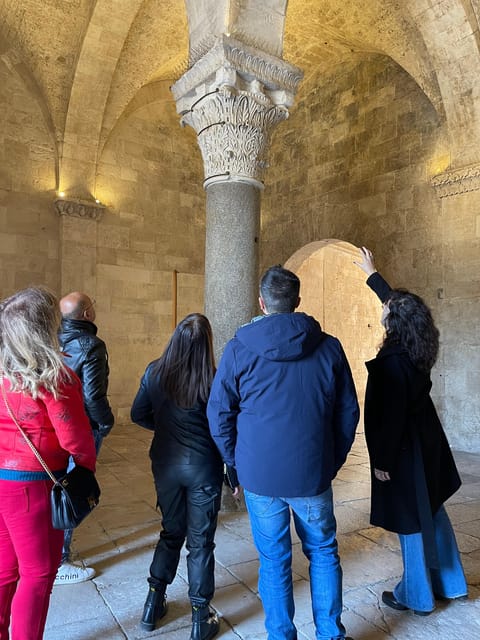
The Succorpo is where the tour earns its name. Instead of treating archaeology as a lecture, the guide uses the underground space to show you how earlier periods can live underneath later construction. You’re walking among layers, not just standing in front of a single era’s leftovers.
Potential drawback: underground sites can feel crowded or dim depending on the group size and timing. Keep your pace steady and listen for instructions about where to stand and when to move. If you’re hoping for extremely detailed historical context, you may need to ask follow-up questions—especially if you’re using English and the group’s language mix affects how deeply the guide can go.
Still, even when you just take it in visually, the underground route gives you a better sense of Bari’s continuity: the city didn’t reset every few centuries. It built, adapted, and reused.
- Matera: Sassi Tour with Cave House and Rupestrian Church★ 4.7 · 6,618 reviews
- Polignano a Mare: Speedboat Cruise to Caves with Aperitif★ 4.8 · 3,382 reviews
- Polignano a Mare: Cave Boat Tour with Aperitif★ 4.7 · 1,891 reviews
- Discover Matera, the ancient city – English tour★ 5.0 · 1,771 reviews
- Polignano a Mare: Boat Trip, Swim & Cave with Aperitif★ 4.8 · 1,300 reviews
Basilica of Saint Nicholas: ending at the relics and the East-West link
Your tour ends at the Basilica of Saint Nicholas, described as symbol of the union between East and West. That framing matters, because it explains why Bari mattered beyond Italy’s borders. The stop isn’t just about architecture—it’s also about what the basilica represents in terms of cultural exchange.
The basilica is also where the tour centers on the relics of the Saint. Relics can turn a building into a destination, and here that destination has a political and spiritual storyline attached. You get a clear sense that religious meaning was part of how Bari connected to the wider world.
This ending stop is often the best kind of finale: it’s imposing, solemn, and easy to hold in your mind after the tour. When you leave, you’ll likely look at the basilica’s role differently—less as a photo spot and more as a hinge point between cultural spheres.
Which archaeological sites you might visit (and why hours matter)
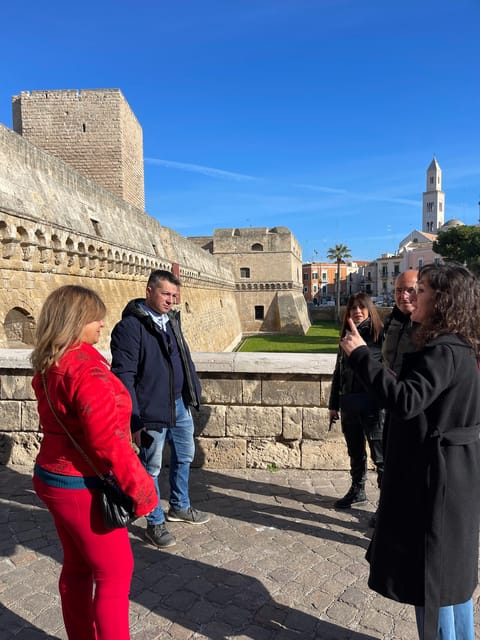
The experience is designed so that, according to museum opening hours and availability, you’ll visit two of the following archaeological sites. The list includes: Palazzo Simi, Swabian Castle, Basilica of Saint Nicholas with its precious Crypt, Cathedral Succorpo, and Saint Scolastica Museum.
This flexibility is practical. It means the operator can keep the core theme intact even when certain areas are closed. But it also means you should set expectations: your exact “two sites” may not match someone else’s day.
Here’s how to plan your mindset. If you care most about underground archaeology, aim to time your visit for that part of the route. If you’re more into architecture and power structures, ask (or check with the operator) which of the options like Palazzo Simi or Swabian Castle are most likely to be open on your date. Since the tour includes tickets for two museum areas, your day should still feel complete.
Price and value: is $58 for a Bari archaeology guide worth it?
At $58 per person for a 2-hour tour, the value comes from three things: expert guidance, access, and how much you cover on foot without rushing.
You’re not just paying for a walk. The included archaeological guide and admission tickets for two museum areas reduce the biggest hidden cost: paying entry fees separately and trying to coordinate them while on vacation.
Is it worth it if you’re on a tight schedule? Often yes, because the time is short and the payoff is structured. You also get context that’s hard to assemble quickly on your own—especially when you want to understand why Roman roads and church underground spaces matter to Bari’s layered story.
Where it might feel less worth it: if you prefer purely self-paced exploring and already know the archaeology well, you might feel guided commentary limits your freedom. But if you want help connecting the dots between eras, this price makes sense for what you’re handed: direction plus interpretation.
How to get the most out of your tour (language, questions, and overlap)
From the experience feedback, the biggest difference-maker is how much the guide can communicate with you. Chiara has been praised for speaking English very well, and both Chiara and Anna have been mentioned for being friendly and responsive. If you choose English, you’ll likely get the clearer storyline you’re expecting.
A quick strategy that improves nearly every guided history tour: ask one question early and then follow up as you go. Try something like: what changes when you move from the Roman layer to the early Christian layer? Or: what should I notice first in the underground route? Your guide can then shape the rest of the explanations around what you care about.
Also consider scheduling. If you already did a walking tour that covered similar street history earlier in your week, you may notice overlap—same sites, similar basic facts, different depth. This doesn’t make the tour bad. It just means you should save it for when you’re ready to learn the “how it all connects” part.
Finally, wear shoes that work on uneven old-town streets. You’ll do real walking plus indoor and underground sections, and comfortable feet keep your brain focused on what you’re seeing.
Who this Bari archaeologist tour suits (and who might want to skip)
This tour fits best if you want archaeology without feeling lost. If you like understanding “what period is this” and “why this place matters,” the guide-led timeline is exactly what you’ll use to keep Bari straight in your head.
It also works well for first-time visitors. Bari is visual, but it can be confusing if you’re trying to place Roman, medieval, and Byzantine threads yourself. With the archaeologist framing the path, the city becomes a timeline you can walk through.
If you’re multilingual and love asking questions, even better. You’ll get more from the guide’s passion and can steer the depth of the explanations.
Who might not love it: if you expected extremely detailed archaeology lectures at every stop, some people may feel the pace leaves less room for deep context. One more consideration is language. If you land in a situation where your language isn’t fully matching the group, the experience may feel lighter on historical framing than you hoped.
Should you book this Bari archaeology tour with VELO SERVICE?
I’d book it if you’re the type who wants your time in Bari to have meaning, not just movement. The combination of Via Traiana, the Succorpo underground route, and the Basilica of Saint Nicholas creates a strong “layers of the city” story in only two hours. Add in that you’re getting admission tickets for two museum areas, and the $58 price looks like practical value.
Skip—or at least reconsider—if you’re already seeing a lot of similar history content back-to-back and you’re looking for a slower, more lecture-heavy format. Also, if language is a concern for you, choose the tour language you’re most comfortable with and be ready to ask one or two clarifying questions right away.
If you want Bari to make sense fast, this is a smart way to do it.
FAQ
Where does the tour start?
The tour starts at the VELO SERVICE Store, which is in the old town near Piazza Mercantile.
How long is the guided tour?
The guided tour lasts about 2 hours.
What languages are available?
The tour is available in Italian and English.
What’s included in the price?
The price includes an admission ticket for 2 museum areas and an archaeological guide.
Which archaeological sites will we visit?
Depending on museum opening hours and availability, the tour visits two sites chosen from Palazzo Simi, Swabian Castle, Basilica of Saint Nicholas (including its crypt), Cathedral Succorpo, and the Saint Scolastica Museum.
Is it refundable if plans change?
Yes. Free cancellation is available up to 24 hours in advance for a full refund.
More Guided Puglia Day Tours
- Guided Tour of Matera Sassi
★ 4.5 · 1,312 reviews - Bari: Guided Walking Tour
★ 4.7 · 744 reviews - Alberobello: 2-Hour Guided Trulli Tour
★ 4.6 · 727 reviews - Bari: City Highlights Guided Bike Tour
★ 4.7 · 527 reviews - Tour of Alberobello and Guide to Matera, from Bari
★ 4.7 · 478 reviews - Guided Tour, Historic Center Sassi Rock Churches and Cave House
★ 5.0 · 461 reviews
More Tours in Bari
- Matera: Sassi Tour with Cave House and Rupestrian Church
★ 4.7 · 6,618 reviews - Polignano a Mare: Cave Boat Tour with Aperitif
★ 4.7 · 1,891 reviews - Discover Matera, the ancient city – English tour
★ 5.0 · 1,771 reviews - Guided Tour of Matera Sassi
★ 4.5 · 1,312 reviews - Bari’s Ultimate Street Food Tour – Small Group by Do Eat Better
★ 5.0 · 1,187 reviews - Polignano a Mare boat tour emotions, caves, diving and appetizers
★ 5.0 · 1,022 reviews
More Tour Reviews in Bari
- Matera: Sassi Tour with Cave House and Rupestrian Church
★ 4.7 · 6,618 reviews - Polignano a Mare: Speedboat Cruise to Caves with Aperitif
★ 4.8 · 3,382 reviews - Polignano a Mare: Cave Boat Tour with Aperitif
★ 4.7 · 1,891 reviews - Discover Matera, the ancient city – English tour
★ 5.0 · 1,771 reviews - Guided Tour of Matera Sassi
★ 4.5 · 1,312 reviews - Polignano a Mare: Boat Trip, Swim & Cave with Aperitif
★ 4.8 · 1,300 reviews