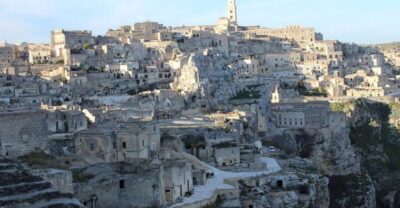
Matera’s sassi feel unreal at first. This 3-hour walk through Sasso Barisano and Sasso Caveoso strings together the big architectural moments and the human story of life carved into tuff. It’s done at a relaxed group pace (up to 20), so you’re not sprinting between viewpoints. I love how the tour balances buildings with everyday details, so you understand how these spaces worked, not just how they look.
I also like the stop-by-stop payoff: you go from a square with a palace backdrop, to a panorama over Barisano, down into underground rooms, and then to rock churches and a necropolis. One possible drawback: you’ll deal with real walking and uneven steps as you move up and down the sassi sides, so plan for it—especially on hotter days.
In This Review
- Key highlights
- Why the Two Sassi feel like two different worlds
- Starting at Palazzo Lanfranchi for the big picture
- Piazza Vittorio Veneto: churches, the fountain, and a clean viewpoint
- Down into the gravina: Casa Cava underground rooms
- A furnished cave house at Casa Grotta and the tuff craft
- Church of Santa Maria de Idris and the Barbaric Cemetery
- Ending on the city level with Lucanian product tasting
- Group size, pace, and what to wear
- Included tickets are the real value (and why it matters)
- Who should book this Sassi walk
- Should you book Altieri Viaggi’s two-Sassi tour?
- FAQ
- How long is the Complete tour of the two Sassi?
- Where does the tour start?
- Where does the tour end?
- What’s included in the ticket?
- Is private transportation included?
- How big is the group?
- Is there a mobile ticket?
- Are service animals allowed?
- Is it easy to reach with public transit?
- What is the cancellation policy?
Key highlights
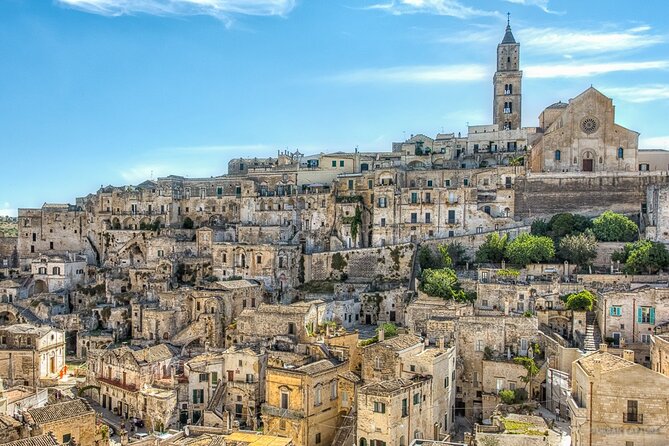
- Two districts in one route: Barisano first, then Caveoso, with sharp changes in scenery and mood
- Ticketed interiors: Casa Cava and the furnished cave house are included, so you see real rooms, not just exteriors
- Churches carved into the rock: Santa Maria de Idris is the kind of place you’ll remember long after the photos
- A 7th-century necropolis: the Barbaric Cemetery has around 150 rock-cut burials you can actually stand beside
- Views you earn: you get viewpoints over the gravina ravine and the cliff settlement areas
- A Lucanian finish: the tasting at the end is included, and it ties the whole morning to local food
Why the Two Sassi feel like two different worlds
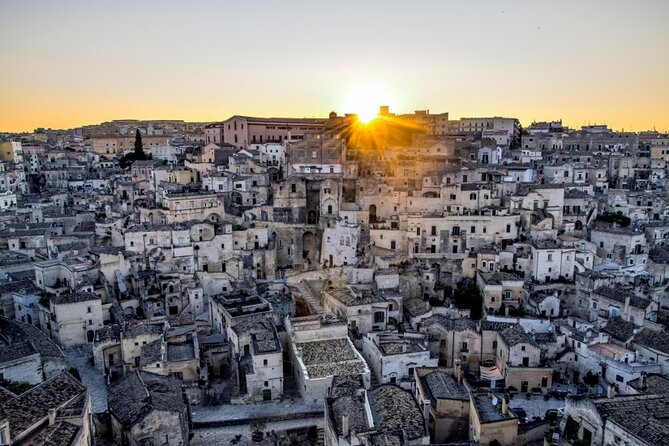
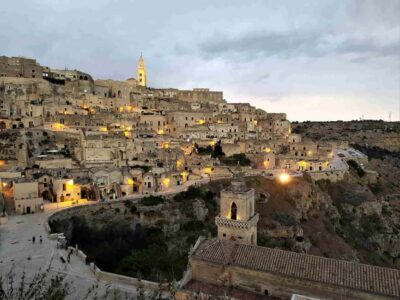
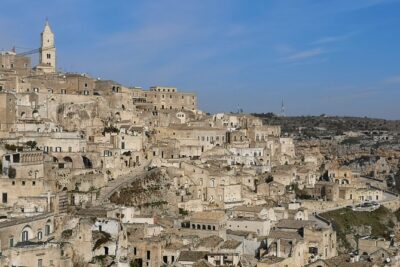
Matera’s “sassi” are ancient dwellings carved into tuff, a soft stone that lets people shape caves, corridors, and rooms into the hillside. What makes this tour special is that it doesn’t treat the Sassi as one big attraction. Barisano and Caveoso each have their own rhythm, and the route makes those differences easy to feel.
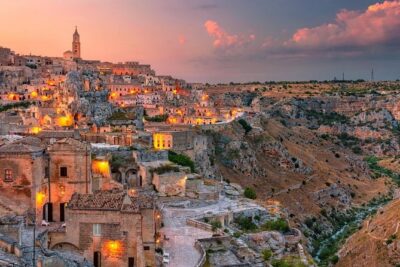
One of the most striking ideas you’ll hear is how space stacks vertically. In many spots, the roof of one home becomes the floor for the one above—so the settlement grows like a layered city. Add the gravina ravine with its stream cutting through the middle, and you get that odd, almost theatrical feeling of walking through a natural nativity-scene-like setting of alleys, stone, and shadow.
You’ll also see how the design supports daily life: courtyards become passages, rock becomes walls, and the terrain becomes part of the way people moved. That’s why this type of guided walk works better than wandering alone. You notice details faster when someone helps you read the place.
More Matera Sassi day trips that leave from Bari
Starting at Palazzo Lanfranchi for the big picture
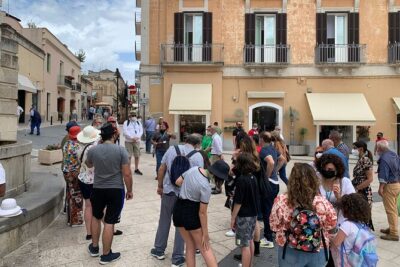
The tour begins in a small square near Piazzetta Pascoli, with a clear introduction to how the Sassi were formed—historically, architecturally, and socially. The highlight here is Museo di Palazzo Lanfranchi, which anchors the opening context. Before you start going up and down, you get the mental map: what tuff means for building, how the valley works, and why the settlement took the shape it did.
This is also a smart time to get your orientation. From street level, Matera can look like a maze of stone alleys. But after the talk, you start connecting the dots: which areas are higher, how the flow of paths likely evolved, and why some spots feel like “rooms” while others feel like “streets.”
If your guide is Barbara, you may notice a lot of information delivered in a fairly memorized way, and you’ll want to pay attention early to catch the key themes. If you end up with someone like Antonio or Stella, the storytelling tends to feel smoother, with an easy personality that makes the material land without effort. Either way, this first stop is where the rest of the walk makes sense.
Piazza Vittorio Veneto: churches, the fountain, and a clean viewpoint
From the starting context, the walk leads toward Piazza Vittorio Veneto, one of those spots that does two jobs at once: architecture on the ground, and drama in the distance. Along the route you’ll pass by two Baroque-style churches—Chiesa del Purgatorio and Chiesa di San Francesco d’Assisi—and you’ll also walk Via delle Beccherie, an old commercial corridor.
Then the square itself delivers the “look out” moment. The tour calls your attention to a 19th-century Ferdinand fountain, commissioned by Ferdinand II, King of the Two Sicilies. It’s not just a decorative stop; it helps date the layer-cake story of Matera—past and present, commerce and survival, stone and city planning.
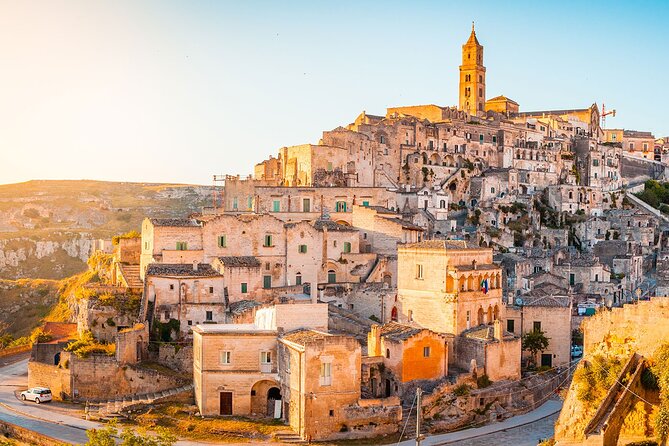
From here, you also get a panorama over Sasso Barisano. This is one of the best uses of a guided format: standing in the right spot, at the right time, so you can see what you’ve been walking through. You’ll understand the alleys below as a system, not random turns.
Down into the gravina: Casa Cava underground rooms
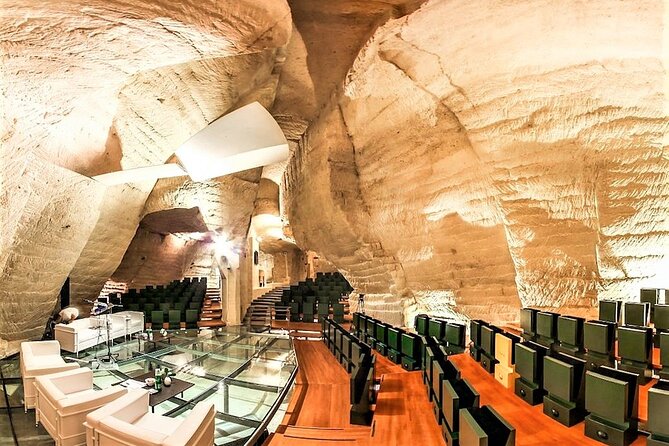
After the views, the tour lowers the temperature—literally, as many underground spaces feel cooler than the streets—and you head toward Casa Cava. This stop is the underground shift: you’re leaving the open-sky world and stepping into a space carved from rock.
Casa Cava matters because it shows what “dug into tuff” means in practice. Underground rooms aren’t a novelty; they connect to how people managed heat, water, and daily routines in a hard environment. Even with the limited time (about 15 minutes), this interior is one of those stops that gives you a tangible sense of scale: the thickness of stone, the feel of the room, and how light behaves in carved spaces.
For me, this is a key emotional pivot in the tour. Up in the squares, Matera is dramatic and picturesque. Down here, it becomes practical and human. The place stops being a postcard and starts feeling like a lived-in solution to real needs.
Practical tip: if you’re sensitive to tight spaces or dim light, mentally prepare before you head underground. The route includes both open air and caves, and the contrast is part of the experience.
- Guided Tour of Matera Sassi★ 4.5 · 1,312 reviews
- Polignano a Mare: Boat Trip, Swim & Cave with Aperitif★ 4.8 · 1,300 reviews
- Bari’s Ultimate Street Food Tour – Small Group by Do Eat Better★ 5.0 · 1,187 reviews
- Polignano a Mare boat tour emotions, caves, diving and appetizers★ 5.0 · 1,022 reviews
- Bari: Guided Walking Tour★ 4.7 · 744 reviews
A furnished cave house at Casa Grotta and the tuff craft
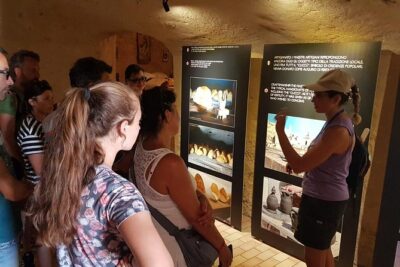
Next comes Casa Grotta Sassi di Matera – C’era Una Volta, where you step into a typically furnished cave house. This isn’t just an empty shell. The point is to show how a peasant civilization lived until the mid-1950s, when conditions changed and people moved out of these dwellings.
This stop also adds a craft angle. You’ll see the Sassi in Miniatura workshop—connected to a master tuff maker—so you understand that the skills used to carve and shape stone didn’t vanish. They transformed into a way to preserve, teach, and create.
At about 20 minutes, it’s long enough to take in the furniture and the logic of the room layout, but not so long that you lose the thread. I like this kind of timed visit because it keeps you moving while the story stays focused: survival life, then later artistic and educational preservation.
If you care about design details, watch how surfaces and partitions define zones. Even when rooms are carved, they still manage privacy and routine. It’s a good reminder that people made function out of stone that would otherwise look unusable.
Church of Santa Maria de Idris and the Barbaric Cemetery
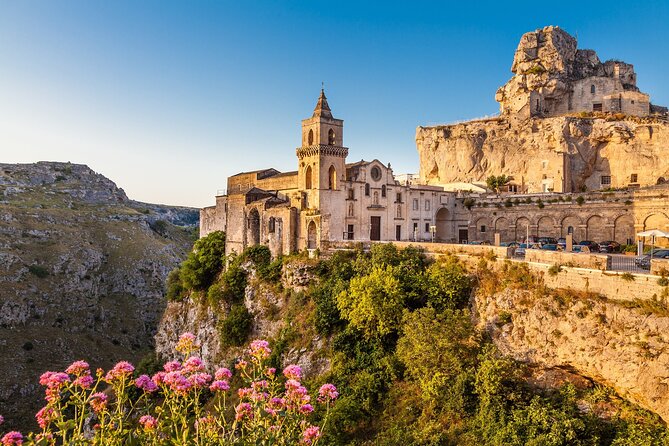
Now the tour heads into Sasso Caveoso, and you get one of the strongest stops in the entire walk: Church of Santa Maria de Idris. This is a rock-cut church, fully dug into the rock, and it’s described as a treasure chest of Italian-Greek monastic art, with precious iconographic testimonies from the 10th to 13th centuries.
That matters because this isn’t only about stone architecture. It’s also about culture. You’re seeing how religious traditions left material evidence in the caves—art and iconography that tell you who was shaping these spaces and why.
From there, the tour moves to an archaeological area you don’t want to rush: the Necropolis of the Barbaric Cemetery. You’ll see around 150 burials cut into the rock, still visible, dating back to the 7th century. Standing close to these rock graves changes how you see the sassi itself. It becomes not only a place of living, but also a place of memory.
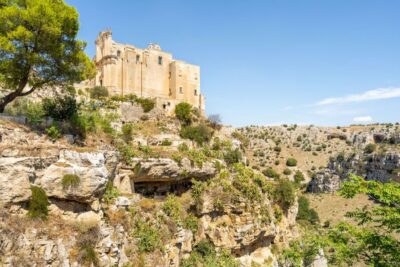
One more reason this stop is so effective: you get a wonderful view afterward, looking out over the cliff of the ravine and the settlement area known as Rione Casalnovo or Albanian neighborhood. The tour uses the viewpoint to connect past and present in a way that feels natural.
If you’re traveling with someone who usually skips “history talk,” this is where you can win them over. You don’t need to memorize dates to feel the weight of the place.
Ending on the city level with Lucanian product tasting
After the rock-cut world, the tour comes back up to the city level near the Provincial Palace area. The wrap-up includes a small tasting of typical Lucanian products, and that makes a nice change of pace after caves and churches.
I like food tastings like this when they’re short and local. You’re not forced into a long meal, but you still get a sense of what the region actually serves. And since the tour centers on Matera’s human story, the local food finish feels like the last page of the same book: place, people, and daily life.
Also, being near the end of the walk means you’re less likely to feel stressed about how far you still have to go. You get a final “settle down” moment before heading back.
Group size, pace, and what to wear
This tour caps at 20 travelers, which is large enough to feel social but small enough that you’re not fighting for attention. The route covers multiple levels—down into underground spaces, across viewpoints, and back up. Expect a solid walking day, even though it’s only about 3 hours total.
Here’s what I’d plan for:
- Comfortable shoes: stone steps and uneven ground are part of the sassi experience
- Sun and water: if you go in summer, you’ll want to pace yourself during outdoor sections
- A light layer: underground stops can feel cooler than street level
- Go slow on photos: you’ll want pictures, but keep moving so the guide can keep the flow
If you’re heat-sensitive, consider starting early in the day when possible. The tour’s structure gives you indoor/cave stops as you go, so you’ll get breaks from the sun—just not constant shelter.
Included tickets are the real value (and why it matters)
Even if you see the tour price listed as $0.00 in a promotion or demo context, the big value story is clear: you get multiple included admissions plus the tasting.
Included:
- rock church ticket
- typically furnished cave house ticket
- quarry house ticket (Casa Cava)
- tasting of typical products
Not included:
- private transportation
That bundle matters because the tour is built around interiors. If you were to visit these sites on your own, you’d be spending time lining up tickets and re-planning the route. Here, the guided flow helps you see the “why” behind the itinerary: square context first, then viewpoint, then underground living space, then religious and burial spaces, then local food.
In other words, you’re paying for time, structure, and access—so your morning feels efficient without feeling rushed.
Who should book this Sassi walk
This is a great fit if you want:
- a guided sense of how Barisano and Caveoso connect
- ticketed interiors, especially underground and furnished cave-house rooms
- a route that hits both architecture and human life details
- a small-group pace with room to look around
It may be less ideal if you have major mobility constraints, because the sassi terrain includes real climbing and descending. The tour does say most people can participate, but your comfort with uneven steps is the deciding factor.
If you love Matera for the “story behind the stone,” this one delivers. If you’re mainly chasing scenery, you’ll still get strong viewpoints, but you’ll enjoy it even more with the cultural context turned on.
Should you book Altieri Viaggi’s two-Sassi tour?
Yes, with a few smart caveats. Book it if you want to walk the two districts in a guided loop, see interiors that are hard to understand on your own, and finish with local food. The included tickets and tasting are a good indicator that the tour is designed for access, not just a walk-by.
Skip or think twice if you don’t handle hills, steps, or walking in heat well. Also, consider that guide style can vary: some guides like Barbara bring lots of information, but the English may be less smooth; others like Antonio, Stella, and Francesco are praised for personality and clarity.
If you can handle the walking, I’d treat this as the best first move in Matera—because it gives you the map and the meaning at the same time.
FAQ
How long is the Complete tour of the two Sassi?
It’s approximately 3 hours.
Where does the tour start?
The meeting point is Via Domenico Ridola, 61, 75100 Matera MT, Italy.
Where does the tour end?
The activity ends back at the meeting point.
What’s included in the ticket?
Included are tickets for the rock church, the furnished cave house, Casa Cava, and a tasting of typical Lucanian products.
Is private transportation included?
No, private transportation is not included.
How big is the group?
The tour has a maximum of 20 travelers.
Is there a mobile ticket?
Yes, the tour uses a mobile ticket.
Are service animals allowed?
Yes, service animals are allowed.
Is it easy to reach with public transit?
It’s near public transportation.
What is the cancellation policy?
You can cancel for a full refund up to 24 hours in advance. If you cancel less than 24 hours before the start time, the amount paid is not refunded.
More Tours in Bari
- Matera: Sassi Tour with Cave House and Rupestrian Church
★ 4.7 · 6,618 reviews - Polignano a Mare: Cave Boat Tour with Aperitif
★ 4.7 · 1,891 reviews - Discover Matera, the ancient city – English tour
★ 5.0 · 1,771 reviews - Guided Tour of Matera Sassi
★ 4.5 · 1,312 reviews - Bari’s Ultimate Street Food Tour – Small Group by Do Eat Better
★ 5.0 · 1,187 reviews - Polignano a Mare boat tour emotions, caves, diving and appetizers
★ 5.0 · 1,022 reviews
More Tour Reviews in Bari
- Matera: Sassi Tour with Cave House and Rupestrian Church
★ 4.7 · 6,618 reviews - Polignano a Mare: Speedboat Cruise to Caves with Aperitif
★ 4.8 · 3,382 reviews - Polignano a Mare: Cave Boat Tour with Aperitif
★ 4.7 · 1,891 reviews - Discover Matera, the ancient city – English tour
★ 5.0 · 1,771 reviews - Guided Tour of Matera Sassi
★ 4.5 · 1,312 reviews - Polignano a Mare: Boat Trip, Swim & Cave with Aperitif
★ 4.8 · 1,300 reviews
More Matera Sassi Day Trips
- Matera: Sassi Tour with Cave House and Rupestrian Church
★ 4.7 · 6,618 reviews - Discover Matera, the ancient city – English tour
★ 5.0 · 1,771 reviews - Guided Tour of Matera Sassi
★ 4.5 · 1,312 reviews - Tour di Alberobello e Matera in bus privato da Bari
★ 4.8 · 701 reviews - Matera: Sassi Tour with Entry to Rock Houses and Churches
★ 4.6 · 622 reviews - Tour of Alberobello and Guide to Matera, from Bari
★ 4.7 · 478 reviews