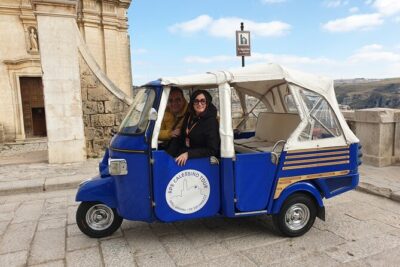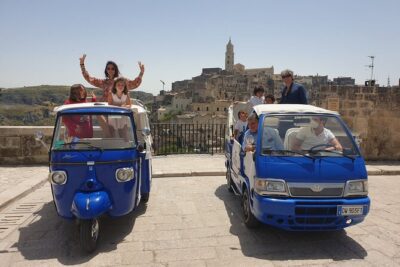
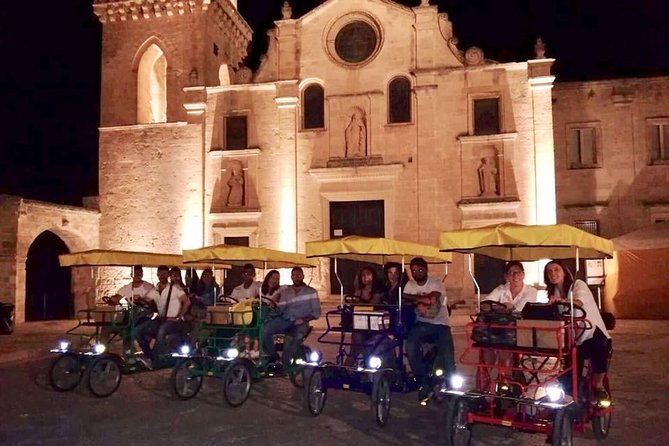
Matera’s hills, minus the footsore. This electric, pedal-assisted rickshaw tour is a smart way to see the Sassi di Matera without spending your day grinding uphill on foot. I also like that you get a personal audio guide in English, so you can pause at key spots and still feel in control of the pacing.
What makes the experience feel “easy” is the structure: a small group (up to 10), a leader who keeps you moving the right way, and a route built around the most important Sassi areas. You’ll also get stops like Casa Grotta Narrante (a cave house you can actually picture living in) and time at the Cattedrale di Matera.
One consideration: the rickshaw is electric, but you may still need to pedal on some hills. If you’re bringing someone who struggles with exertion, it’s worth thinking ahead about how much effort they can comfortably handle.
In This Review
- Quick reasons this tour works in Matera
- Why the electric rickshaw is the right idea for the Sassi
- Two hours, four focused stops: what you’ll actually see
- Casa Grotta Narrante: a cave home you can picture yourself in
- Small expectation check
- Cattedrale di Matera: quick access to a major church landmark
- What to do with your minutes
- Sasso Barisano viewpoint: built-up rock and the Gravina gorge
- Sasso Caveoso: the “dug into nature” feeling
- The audio guide in English: helpful, but know what it emphasizes
- How you might experience it
- Electric rickshaw practical tips: hills, pedaling, and group pace
- A few practical moves before you start
- Evening option insight
- Price and value: what your $38.52 covers
- Where to meet and how to plan your timing
- Who should book this rickshaw tour (and who should consider alternatives)
- Should you book this electric rickshaw tour of Matera’s stones?
Quick reasons this tour works in Matera

- Pedal-assisted rickshaw: less walking fatigue, still adds a bit of motion and fun
- English audio guide: you control the flow while learning what you’re seeing
- Small group pace: max 10 travelers, so the route stays manageable
- Casa Grotta Narrante stop: period-style cave-house context, not just a photo stop
- Sassi Barisano + Sasso Caveoso: viewpoints plus the more “dug into the rock” side
- Leader-guided route: less stress finding your way through the old lanes
Why the electric rickshaw is the right idea for the Sassi
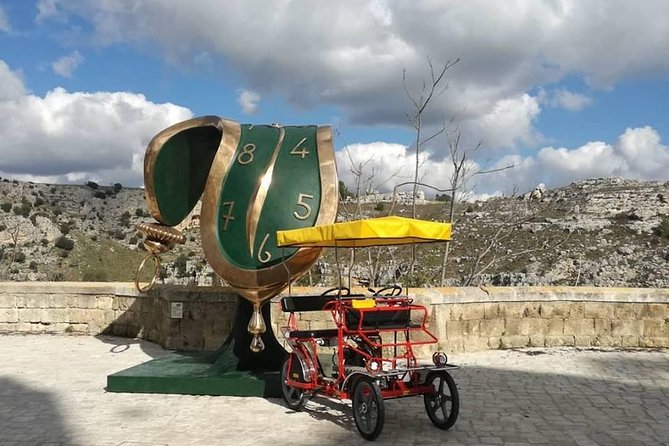
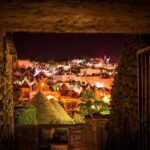
If you’ve ever visited Matera, you already know the deal: the Sassi are beautiful, but they’re not built for casual, flat sightseeing. Streets twist, slopes rise, and the cave districts sit like stair-stepping neighborhoods clinging to the rock.
This is where the electric rickshaw shines. Instead of choosing between two bad options—either doing lots of uphill walking or skipping parts of the Sassi—you get a middle path. You still move through the historic areas, but you’re not stuck with sore calves by the time you reach the best viewpoints.
The other big win is the format. You’re not trying to decode Matera while hauling a map and working around crowds. You follow the group leader for a stress-free route, then listen to your personal audio guide while you take in the details that make the Sassi so distinctive.
And yes, it’s also genuinely fun. It’s the kind of tour where people stop checking their phones and start looking around—because you’re traveling slowly enough to notice stonework, levels of caves, and how the neighborhoods are carved into the hillside.
More Vespa, tuk tuk and vintage Fiat 500 rides around Bari

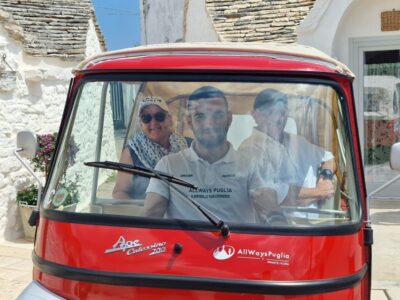
Two hours, four focused stops: what you’ll actually see
This experience runs for about 2 hours, and it’s paced as a sequence of short, meaningful stops. The total time matters because Matera can wear you down quickly, especially in warm weather. Here, you get a concentrated run through the key areas without turning it into an all-day hike.
You’ll make four main stops:
1) Casa Grotta Narrante (about 15 minutes)
2) Cattedrale di Matera (about 15 minutes)
3) Sasso Barisano (about 10 minutes)
4) Sasso Caveoso (about 10 minutes)
A practical note: you don’t do the longer, ticket-heavy “rock churches” style add-ons here. The tour includes admissions for the cave house and the Sasso stops, but rock churches and other paid attractions are not included—so plan accordingly if that’s your main priority.
Casa Grotta Narrante: a cave home you can picture yourself in
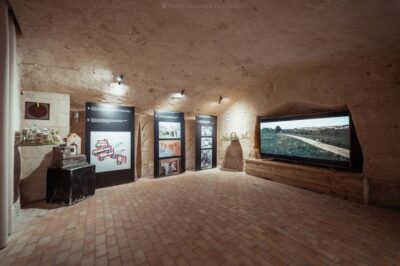
The highlight for most people is the stop at Casa Grotta Narrante. This is not just a quick glance at a carved doorway. You visit an ancient house that’s typically furnished with period furniture and utensils, so it feels closer to lived-in history than museum-only viewing.
Why this stop is so valuable: the Sassi weren’t just empty rocks. They were homes built into the landscape, shaped by how people lived before the districts were abandoned. When you step inside a cave house like this, you start to understand day-to-day life—space choices, practical design, and the realism of what it meant to live in the stone.
Time here is around 15 minutes, which is long enough to get the idea without making it feel like you’re trapped in a slow-moving indoor exhibit. It also makes the later Sassi viewpoint stops click, because you’re no longer seeing buildings as abstract shapes—you’re thinking about why people built them that way.
Small expectation check
A cave-house stop can’t cover everything. If you want deep, scholarly detail about daily life, you might later want a longer museum visit. But for a 2-hour rickshaw tour, this is the right “anchor stop.”
- Guided Tour of Matera Sassi★ 4.5 · 1,312 reviews
- Polignano a Mare: Boat Trip, Swim & Cave with Aperitif★ 4.8 · 1,300 reviews
- Bari’s Ultimate Street Food Tour – Small Group by Do Eat Better★ 5.0 · 1,187 reviews
- Polignano a Mare boat tour emotions, caves, diving and appetizers★ 5.0 · 1,022 reviews
- Bari: Guided Walking Tour★ 4.7 · 744 reviews
Cattedrale di Matera: quick access to a major church landmark
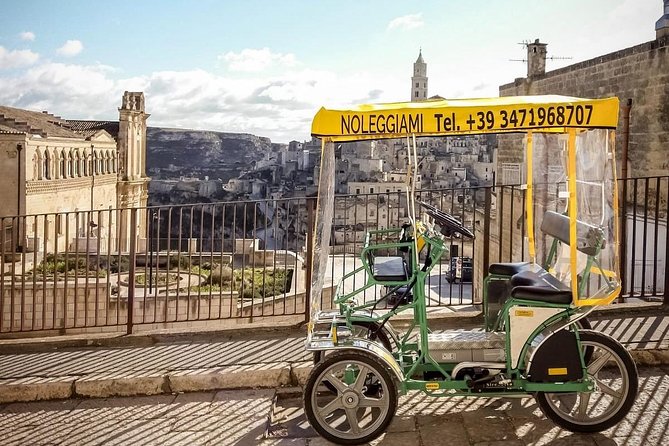
Next comes the Cattedrale di Matera, which is part of the main Catholic worship center in the city. You’ll have about 15 minutes for a free visit, with time to see the Madonna della Bruna and Sant’Eustachio areas.
This stop works well because it breaks up the cave scenery. Matera isn’t only “stone caves”—it’s also a working city with religious life centered on this cathedral. Even if you’re not a museum-goer, it helps you place the Sassi within the broader rhythm of the city.
What to do with your minutes
With only about 15 minutes, you’ll want to focus on the part of the cathedral you can see most clearly from where you stand. Think of it as a way to orient yourself: you look at the cathedral as a landmark, then return your attention to the Sassi nearby and how the city’s layers interact.
Sasso Barisano viewpoint: built-up rock and the Gravina gorge
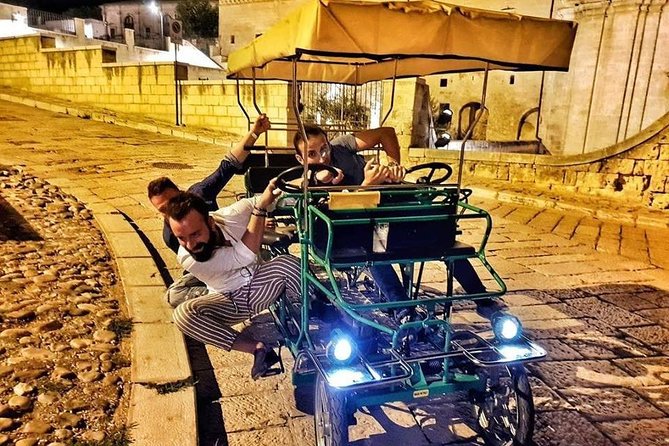
Sasso Barisano is the more panoramic side of the route, with a stop at a viewpoint called Barisano. This section tends to show more built environments than excavated-only spaces, and that difference matters.
It’s a good mental shift: instead of thinking of the Sassi as a single cave zone, you see how each pocket of the neighborhood has its own character. The viewpoint also gives you a bigger-picture relationship between the Sassi and the surrounding geography.
From Barisano, you can admire the Gravina stream gorge, which visually divides the ancient Sassi districts from the Murgia plateau. That’s the kind of information you usually struggle to grasp from street level. On this tour, you get the vantage point without needing to plan a hike.
Time is about 10 minutes. That’s enough for a few photos, a pause to take in the “division” of spaces, and a reset before you move on to the next cave area.
Sasso Caveoso: the “dug into nature” feeling
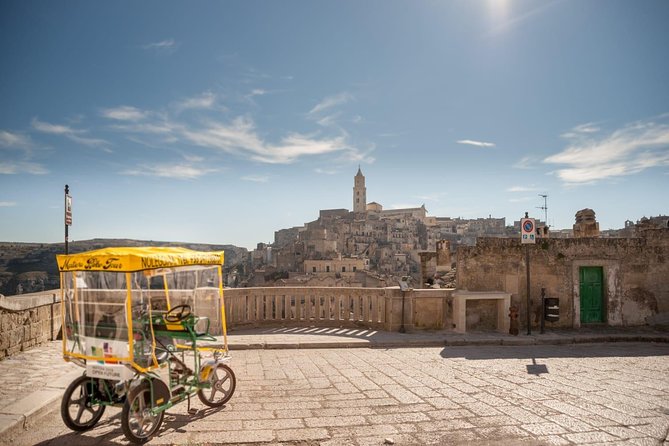
Then you head to Sasso Caveoso, where the cave homes feel even more integrated into the rock. The tour focuses on an area where the houses are almost all dug, and the effect is powerful even in a short visit.
If Sasso Barisano gives you the built-and-viewpoint perspective, Sasso Caveoso gives you the rawer, carved-in feeling—how people incorporated nature into daily living spaces. You’re seeing the architecture as adaptation: rock becomes wall, ceiling becomes shelter, and the whole neighborhood reads like a carefully managed conversation between humans and the landscape.
Time here is about 10 minutes, which means you should go in with a simple goal: look at the shape of the spaces and how the neighborhood is structured. Even quick visits can be memorable if you’re watching for patterns, not just taking pictures.
The audio guide in English: helpful, but know what it emphasizes
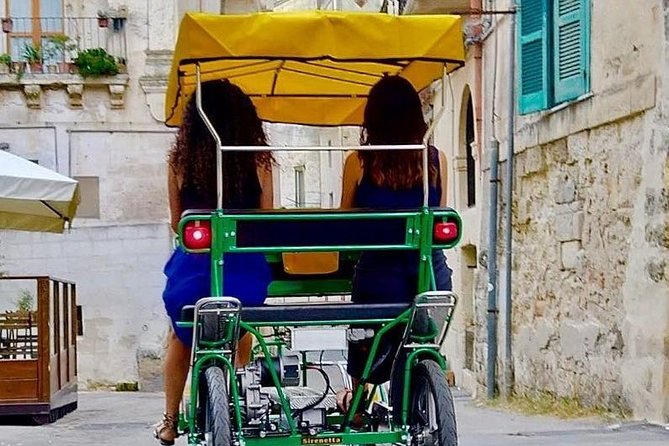
A big part of the value here is the personal audio guide. Having the narration at your own pace is a comfort perk—no scrambling to hear a guide over other groups, and no forcing yourself to walk faster just to catch the next explanation.
From the way the tour is described, the audio commentary tends to focus on what you’re seeing on the ground: architectural features and dates connected to churches and landmarks, plus direction to keep you connected to the route.
How you might experience it
If you love history as a story—politics, daily life, and why events shaped the Sassi—you might find the audio track more “tour-facts” than narrative. If you prefer hands-on, back-and-forth storytelling, you may wish you had more live conversation time (even though the route is still led by a guide).
That said, for a 2-hour overview, an audio guide is often the practical best-case: it keeps you informed without slowing the tour down.
Electric rickshaw practical tips: hills, pedaling, and group pace
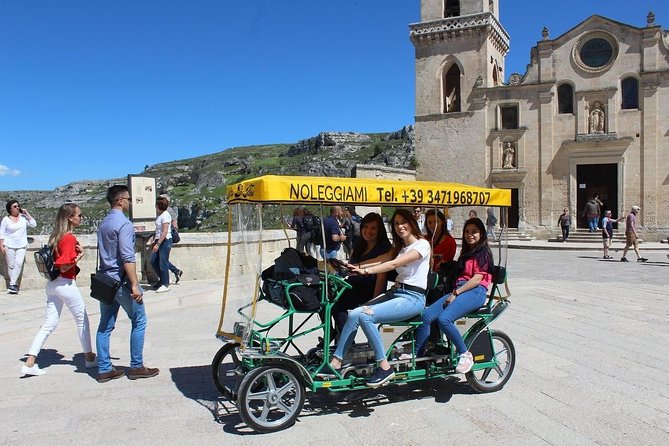
The core promise is less walking. Still, it’s not a “sit and float” ride. The rickshaws are described as pedal-assisted, and at least one traveler ran into a situation where the electric tuk-tuk still required pedaling.
So here’s the reality you should plan for: some hills likely mean extra effort. You don’t want to show up thinking you’ll never touch the pedals.
A few practical moves before you start
- Wear breathable layers and shoes you can grip well if you need to walk short bits or step on/off carefully.
- If you’re traveling with older adults or someone with limited stamina, choose a time of day when they can manage exertion comfortably.
- Stay close to your group leader. The tour depends on everyone being on schedule, and waiting can throw off the whole pace.
Group size is capped at 10 travelers, which helps keep things from feeling chaotic. But even small groups can lose time if people drift.
Evening option insight
Some departures run in the evening, and that can mean softer light and a nicer vibe for stopping and looking over the Sassi. If you’re sensitive to heat, evening is often the smartest choice in Matera.
Price and value: what your $38.52 covers
At $38.52 per person, you’re paying for a package, not just a ride. Here’s how the value breaks down from what’s included:
Included:
- Use of pedal assisted rickshaw
- Personal audio guides
- Admission/ticket included for Casa Grotta Narrante
- Admission/ticket included for Sasso Barisano
- Admission/ticket included for Sasso Caveoso
- Cattedrale di Matera visit is listed as free
Not included:
- Rock churches and other paid attractions
So you’re getting transportation through the historic area plus entrance coverage for multiple key stops, all bundled into about 2 hours. That matters because in Matera, the “extras” add up fast when you’re trying to DIY it—tickets, finding the right route, and losing time to navigation.
Also, the tour is generally booked about 38 days in advance on average, which is a hint that good times can fill up. If your travel dates are fixed, booking sooner usually keeps your options open.
Where to meet and how to plan your timing
The tour starts and ends back at the meeting point at Matera Bike Tour, Via Casalnuovo 23, 75100 Matera MT, Italy.
You’ll be near public transportation, which helps if you’re staying outside the immediate center. The route is designed so the end is where you started—handy when you’re planning dinner afterward.
My practical advice: don’t treat this like a casual drop-in. Show up on time, because you’re riding through tight historic lanes and the schedule is built around short stops.
Who should book this rickshaw tour (and who should consider alternatives)
This is a great fit if:
- You want a fast, focused overview of the Sassi without hours of uphill walking
- You like structure: a leader handles routing, and you get audio explanations at each stop
- You want the “big hits” (cave house, cathedral, two Sassi areas) in about 2 hours
It may be less ideal if:
- You want lots of rock-church time and paid interiors beyond what’s included
- You dislike any physical effort—because pedaling may still be needed
- You strongly prefer a live guide “conversation style” over audio narration
It’s also a solid family option. The tour is small-group and short in duration. Still, if kids or older relatives get tired easily on hills, plan your comfort level first.
Should you book this electric rickshaw tour of Matera’s stones?
If your goal is to see Matera’s Sassi efficiently, learn enough to make the sights click, and arrive ready to enjoy the rest of your day, I think this is a smart booking. The electric rickshaw reduces the biggest pain point—walking fatigue—while the included cave-house stop gives you more meaning than a pure photo tour.
Book it if you’re planning a tight itinerary, want the main districts (Barisano and Caveoso), and appreciate learning through an English audio guide. Consider an alternative or adjust expectations if you want more rock-church interiors or if your group includes someone who may struggle with pedaling on hills.
If you hit a happy schedule and show up ready to go at the group pace, this is one of the more practical ways to appreciate Matera without turning your trip into a calf workout.
More Tours in Bari
- Matera: Sassi Tour with Cave House and Rupestrian Church
★ 4.7 · 6,618 reviews - Polignano a Mare: Cave Boat Tour with Aperitif
★ 4.7 · 1,891 reviews - Discover Matera, the ancient city – English tour
★ 5.0 · 1,771 reviews - Guided Tour of Matera Sassi
★ 4.5 · 1,312 reviews - Bari’s Ultimate Street Food Tour – Small Group by Do Eat Better
★ 5.0 · 1,187 reviews - Polignano a Mare boat tour emotions, caves, diving and appetizers
★ 5.0 · 1,022 reviews
More Tour Reviews in Bari
- Matera: Sassi Tour with Cave House and Rupestrian Church
★ 4.7 · 6,618 reviews - Polignano a Mare: Speedboat Cruise to Caves with Aperitif
★ 4.8 · 3,382 reviews - Polignano a Mare: Cave Boat Tour with Aperitif
★ 4.7 · 1,891 reviews - Discover Matera, the ancient city – English tour
★ 5.0 · 1,771 reviews - Guided Tour of Matera Sassi
★ 4.5 · 1,312 reviews - Polignano a Mare: Boat Trip, Swim & Cave with Aperitif
★ 4.8 · 1,300 reviews
More Vespa, Tuk Tuk & Fiat 500 Rides
- Bari: Old Town Guided Eco-Friendly Rickshaw Tour
★ 4.9 · 355 reviews - Bari Rickshaw Tour
★ 5.0 · 233 reviews - Alberobello Guided Segway and Mini Golf Cart Tour
★ 5.0 · 221 reviews - Ape Tour Matera – Panoramic tour in ape calessino
★ 5.0 · 176 reviews - Alberobello: Private Tuk Tuk Tour with Audio Guide
★ 4.8 · 172 reviews - Ape Calessino Tour Sassi of Matera “Standard”
★ 4.5 · 159 reviews