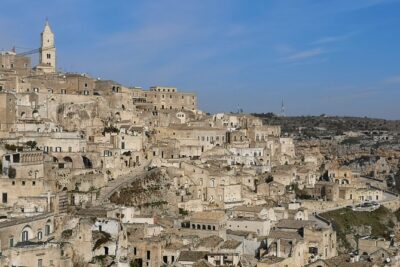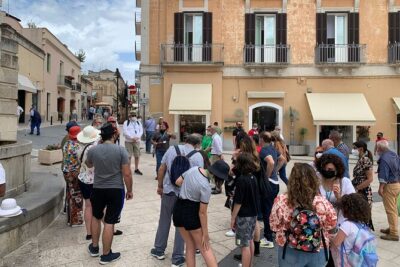
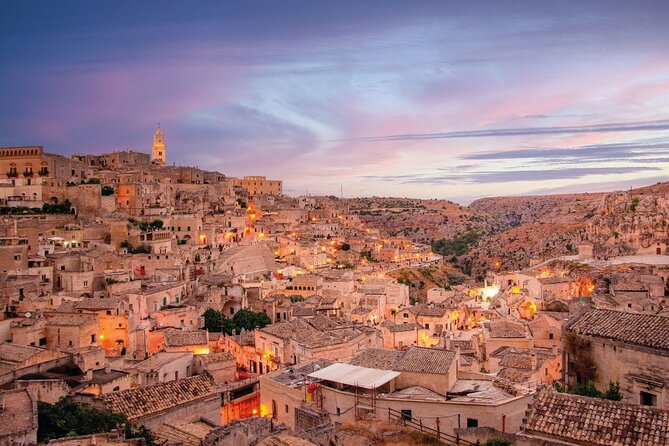
Matera feels like a living puzzle. This self-guided route in Matera strings together major sights with an audio-and-text guide that keeps your pace comfortable and your questions answered as you walk. I also like the practical local-food advice built into the guide, so you’re not stuck guessing where to eat after the churches and rock-cut streets.
One catch: you’ll rely on your smartphone—headphones aren’t included, and you’ll need internet to use the guide smoothly. If you prefer a traditional human-led tour (with real-time Q&A), this won’t feel the same. Still, for the price and the number of places you hit, it’s a smart way to get oriented.
In This Review
- Key things you should know before you go
- Price and value: why this Matera audio walk is such a bargain
- How the self-guided audio tour actually works on your phone
- Starting at Ipogeo Materasum and ending at Castello Tramontano
- Stop 1: Hypogeum Materasum (Matera Sotterranea) and the city under the city
- Piazza Vittorio Veneto: Palazzo dell’Annunziata and the Provincial Library
- Stop 2: Palombaro Lungo—Matera’s underground water system
- Stop 3: Sassi di Matera and the three main areas
- Stop 4: The Duomo on Civita—Maria Santissima della Bruna and Sant’Eustachio
- Casa Noha: a noble family home carved into the Civita area
- Stop 5: Church of Santa Maria de Idris in the Sasso Caveoso
- Stop 6: Chiesa di San Pietro Caveoso with three statues niches
- Stop 7: Church of Purgatory and its baroque message
- Timing and pacing: short stops that keep you from wandering too long
- What the guide includes beyond monuments: food tips and written context
- Practical considerations: the smartphone, the route, and extra entrances
- Who this Matera walk is best for
- Should you book this Matera walking tour with audio and written guide?
- FAQ
- How long is the Matera walking tour with audio and written guide?
- What is the price per person?
- What languages are available for the audio guide and text?
- Do I need my own headphones?
- Do I need internet on my smartphone?
- Where does the tour start and where does it end?
- Are admission tickets included for Palombaro Lungo and the Duomo?
- How will I receive my guide activation information?
- What if I need to cancel?
Key things you should know before you go
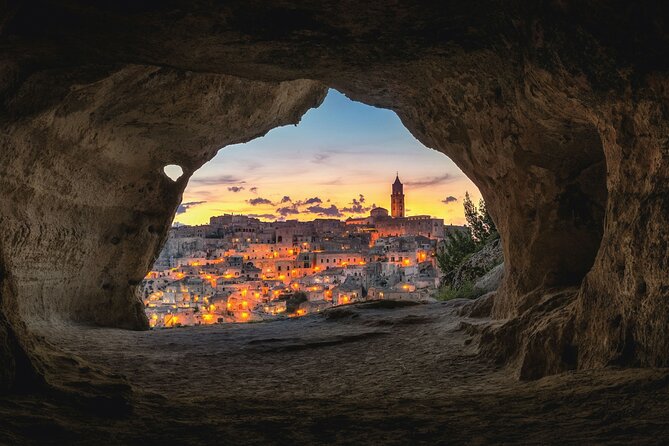
- Google Maps routing does the heavy lifting, so you’re not memorizing turns in the Sassi maze.
- Audio plus written narration is available in Eng, Esp, Ita, Ger, and Fr, so you can switch formats when you want.
- Some big monuments require separate admission, including Palombaro Lungo and the Duomo, so plan a little extra.
- Visits are timed in short chunks (about 20 to 30 minutes), which helps you avoid wandering too long when you’re sightseeing.
- The walk starts at Ipogeo Materasum and finishes at Castello Tramontano, which is a nice way to end on higher, castle views.
- There’s no headphone bundle, so bring your own or use your phone speaker if you must.
Price and value: why this Matera audio walk is such a bargain
At about $7.83 per person for a 3 to 4 hour route, this is the budget-friendly option that still covers the essentials. You’re not paying for a long, sit-down experience—you’re paying to get a guided route through the Sassi, with clear explanations and the right order of stops.
The real value is how it reduces decision fatigue. In Matera, you could easily spend your first hours just trying to figure out where you are. This guide-style approach helps you move from place to place with a story attached, so you’re not just collecting photos.
That said, the price comes with tradeoffs. You’re not buying a live guide’s full flexibility, and some sites need separate admission tickets. If you’re the type who wants someone to adapt the walk to your interests on the fly, you may feel a bit boxed in by the audio pacing.
More Matera Sassi day trips that leave from Bari
How the self-guided audio tour actually works on your phone
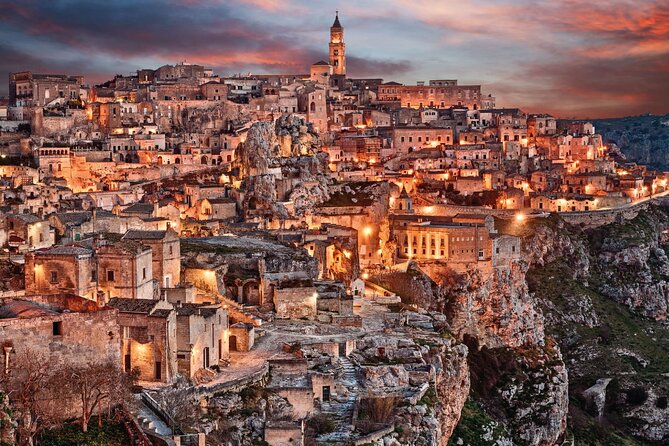
This is designed so you can walk on your own while the guide talks you through what matters. You get digital guide content plus audio and text in multiple languages. You’ll also see Google Maps integration, which is meant to connect the narration to where you are.
You’ll need a smartphone with internet connection to use the digital guide, and you activate the experience using details from your voucher and the messages provided around booking. The guide can be listened to through your phone speakers or through your own headphones—headphones are not included.
Here’s the practical part: treat your phone like part of your tour kit. If battery life is uncertain, bring a portable charger. Matera is full of stone stairways and tight lanes, and you don’t want to be stuck searching for power while the audio fades out.
Starting at Ipogeo Materasum and ending at Castello Tramontano
The walk begins at Ipogeo MateraSum Recinto XX Settembre, 7. That start matters because it puts you right at the concept Matera is famous for: life shaped inside tuff rock.
You’ll end at Castello Tramontano, Via del Castello. Ending at a castle gives you that natural “arrival” feeling—like you reached the top of the story rather than just finishing a route. It’s also a good position to re-orient yourself for the rest of your evening.
The tour window is wide (listed opening hours cover essentially the whole day). In practice, that means you can plan around your appetite for walking, not just a fixed departure time.
Stop 1: Hypogeum Materasum (Matera Sotterranea) and the city under the city

Your first stop is Ipogeo Materasum, also known as Matera Sotterranea. This place is described as a complex excavated in the tuff rock—often called a city under the city. That phrasing isn’t just marketing. When you enter spaces carved from the same rock that shaped the streets above, the whole settlement makes more sense.
What I like about starting here is that it sets the theme early: Matera wasn’t built in a flat, easy-to-reach way. It was carved, adapted, and reused. With the audio and written narration, you’re not just looking at rock passages—you’re getting context for how the underground world fits into the surface one.
A reasonable consideration: underground sites can make you want to move more slowly, because you’re watching, listening, and absorbing all at once. Give yourself a few extra minutes so you don’t feel rushed right at the beginning.
More guided Bari tours and Puglia day trips we rate
- Guided Tour of Matera Sassi★ 4.5 · 1,312 reviews
- Bari: Guided Walking Tour★ 4.7 · 744 reviews
- Bari: City Highlights Guided Bike Tour★ 4.7 · 527 reviews
- Guided Tour, Historic Center Sassi Rock Churches and Cave House★ 5.0 · 461 reviews
- Bari: Old Town Guided Eco-Friendly Rickshaw Tour★ 4.9 · 355 reviews
Piazza Vittorio Veneto: Palazzo dell’Annunziata and the Provincial Library
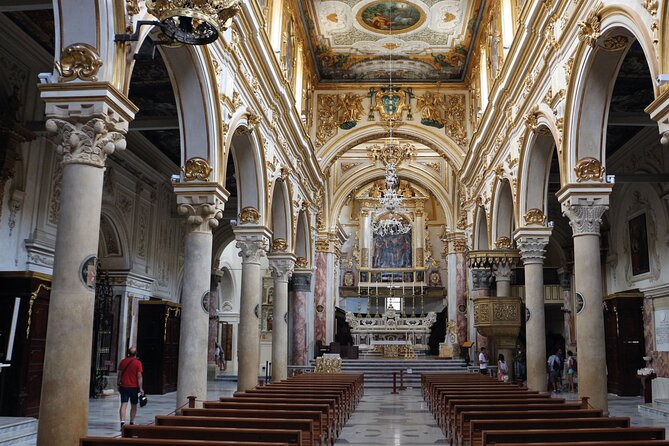
Next up is Palazzo dell’Annunziata, in Piazza Vittorio Veneto. The building currently houses the Provincial Library Tommaso Stigliani.
This stop works well even if you’re not a library person. It grounds you in a modern use of historic architecture. Matera isn’t only preserved as a museum-like set of rocks. Some of these buildings still play an active role, and that makes the city feel alive.
In a city where you might otherwise focus only on underground and churches, this is a nice pause. It also helps you orient yourself before you move into the deeper Sassi areas.
Stop 2: Palombaro Lungo—Matera’s underground water system
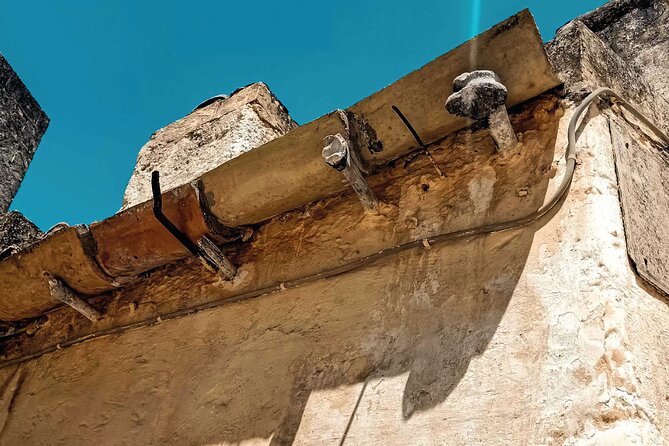
Then you head to Palombaro Lungo. A palombaro is an underground structure meant to collect and store water, and Matera’s version sits under Piazza Vittorio Veneto. It was built in several phases starting in the 16th century.
This is one of the most practical concepts you’ll learn on the walk: water storage shaped settlement patterns. When you understand that, the Sassi stop being just dramatic cave dwellings and turns into a real human survival system.
Important for planning: admission ticket is not included for Palombaro Lungo. So set aside a little extra budget and check the site’s entry approach when you arrive. If you want a smooth flow, try to avoid arriving at the cistern with zero time buffer.
Stop 3: Sassi di Matera and the three main areas
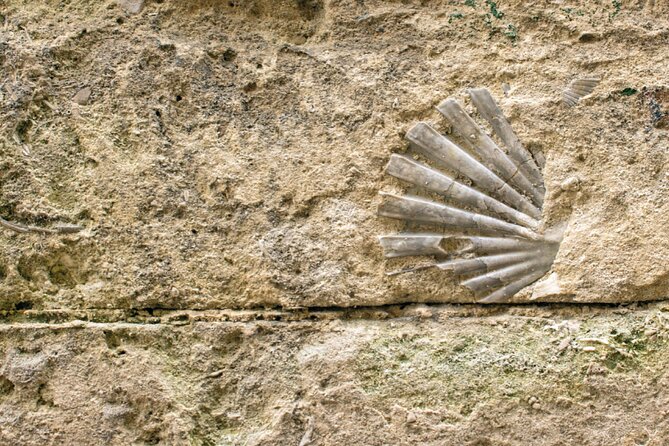
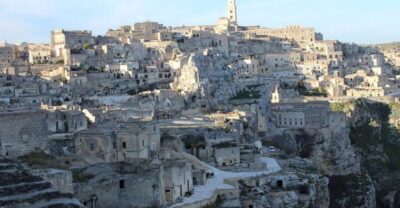
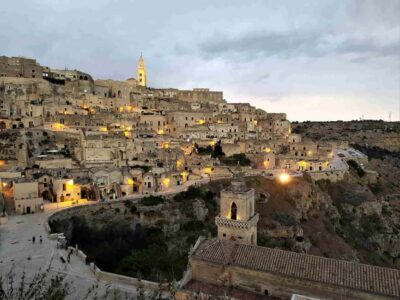
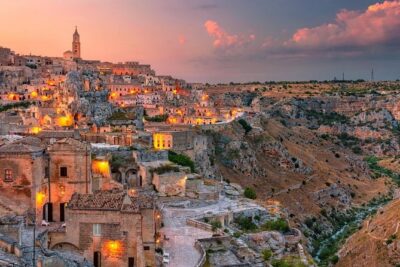
Now you’re in the heart of it: Sassi di Matera. The guide explains that the historical area is divided into three main zones:
- Sasso Barisano (north-west)
- Sasso Caveoso (south)
- Civita (the center that separates them)
This is also marked as admission free, so it’s an ideal stop to slow down and simply take in how the rock shapes streets, homes, and views.
The reason this part is valuable is simple: once you grasp the three-area layout, your photos stop feeling random. You start seeing why one street opens toward a church, why a viewpoint sits where it does, and why the rock colors change as you move.
Stop 4: The Duomo on Civita—Maria Santissima della Bruna and Sant’Eustachio
On Civita, the highest point, sits Cattedrale di Matera, also known as the Duomo of Matera. It was completed in 1270 and built on the spot where the first settlement of the Sassi originated. Before the cathedral, there was a Benedictine monastery dedicated to Sant’Eustachio, consecrated in 1082.
That timeline is exactly the kind of detail that makes a self-guided tour feel smarter. Instead of just saying this is old, the guide helps you connect old layers: monastery to cathedral, first settlement to today’s landmark.
Planning note: admission ticket is not included for the cathedral. If you’d like to go inside, make sure you’re ready to pay separately. Also, because the visit window is short, aim to arrive when you can actually spend time reading details rather than just rushing for the next stop.
Casa Noha: a noble family home carved into the Civita area
The guide then takes you to Casa Noha, located in the Civita district on a natural rock that separates the two main Sassi areas. The building dates to the 16th and 17th centuries and was once home to the noble de Noha family.
This stop is useful because it shows you Matera wasn’t only about humble dwellings. The architecture tells you that elites lived right inside the same rock-and-street ecosystem.
If you like photography, this is a moment to pause. Casa Noha tends to reward looking slowly—especially at how the building’s features sit against the surrounding stone.
Stop 5: Church of Santa Maria de Idris in the Sasso Caveoso
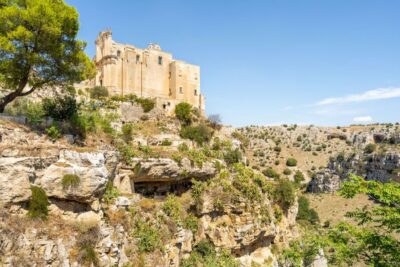
Next is Santa Maria de Idris, in the middle of Sasso Caveoso, on the rocky promontory of Monterrone. The guide notes it’s partly dug into the rock and partly built after a vault collapse that occurred before the 16th century.
That detail is more than technical trivia. It explains why Matera’s sacred spaces don’t always look like one single construction style. They reflect repairs, redesigns, and survival after structural problems.
Because the stop is timed (about 20 minutes), I suggest you use your time efficiently: first, take in the overall form; then, focus on the sections where you can sense the mix of dug-and-built construction.
Stop 6: Chiesa di San Pietro Caveoso with three statues niches
Then you hit Chiesa di San Pietro Caveoso, located in the heart of the Sassi in Sasso Caveoso. The baroque façade has three niches. Inside are statues of:
- St. Paul on the right
- St. Peter on the left
- Madonna della Misericordia in the center
This is the kind of stop that really works with audio. Even in a short visit window, the guide’s explanation helps you notice what you’d otherwise miss. You’re not just walking past a church façade—you’re locating symbolism.
This stop is listed as admission free, which is a nice bonus after paying separate tickets for some other key sites.
Stop 7: Church of Purgatory and its baroque message
Your final church stop is Chiesa del Purgatorio. It’s baroque and dedicated to the deceased, with the theme of death and the redemption of souls.
This is a lighter-feeling ending than the underground caves, but it still fits Matera’s story: people lived with hardship, and religion gave structure to fear, loss, and hope.
Because this stop is also admission free, you can linger a little without feeling like you’re spending money for every minute. Use it as your emotional cooldown before you walk on toward the finish at Castello Tramontano.
Timing and pacing: short stops that keep you from wandering too long
The route uses a tight rhythm: many stops are around 20 to 30 minutes. In a place like Matera, that’s actually a good thing. The Sassi can trick you into spending half your day looking at one corner because the stone texture is so photogenic.
This format helps you balance:
- enough time to understand each sight
- enough forward motion to still see multiple churches and major landmarks
If you want to move slower, you can—your phone audio lets you pause and restart. Just be aware that if you stop for long breaks, you may start feeling behind the suggested pacing.
What the guide includes beyond monuments: food tips and written context
I like that the guide doesn’t stop at stones and churches. It includes best advice for local restaurant with authentic food. It also offers tips for monuments, history, and curiosities, plus written support alongside the audio.
That combination is handy because Matera is packed. Some people want to listen while walking. Others want to read when they stop at a viewpoint. Having both formats lets you control your learning style instead of forcing one way.
If you’re trying to plan your evening, open the guide section that contains restaurant suggestions before you reach the last church. You’ll feel less rushed when you’re choosing a place to eat.
Practical considerations: the smartphone, the route, and extra entrances
Before you book, understand the “mechanics” so it doesn’t feel frustrating in the middle of the walk.
Headphones and internet
- You’ll need a smartphone with internet to use the digital guide.
- Headphones are not included, but you can use phone speakers.
Maps and navigation
The route leans on Google Maps. That’s helpful when you’re in a maze of lanes. Still, if you strongly dislike following on-screen navigation, you might find the route less intuitive than a classic guided group walk.
Separate admissions
From the key sites listed, you should plan for separate tickets at least for:
- Palombaro Lungo
- Cattedrale di Matera (Duomo)
Other stops are marked free or don’t specify ticket notes, so focus your planning on the places clearly flagged as not included.
Guide activation
Your voucher and the messages sent after booking are where you’ll find instructions to activate the guide. The instructions you need can arrive in your voucher and also by WhatsApp and email (including the night before). If you set this up at home, you’ll walk with fewer surprises.
Who this Matera walk is best for
This experience fits well if you want:
- a low-cost way to see a lot in a few hours
- a choice between audio and text
- a route you can follow with Google Maps
- built-in local restaurant recommendations
It may not be ideal if you’re the kind of person who wants a guide to improvise, answer questions live, and tweak the walk based on your interests. Also, if smartphone navigation and screen-based instructions make you tense, you might find the experience more stressful than you hoped.
Should you book this Matera walking tour with audio and written guide?
Yes—if your goal is to get your bearings fast and see the core Matera sights without paying for a pricier guided group. The route links underground wonder (Materasum) to the water story (Palombaro Lungo), the Sassi layout (Barisano/Caveoso/Civita), and standout churches like San Pietro Caveoso with its three niches and Purgatory with its baroque message.
Book with a small mindset shift: you’re buying an excellent self-guided framework, not a live escort. Make sure you have internet access, charge your phone, and budget for the entrances that are clearly listed as not included. Do those three things and you’ll feel the value quickly.
FAQ
How long is the Matera walking tour with audio and written guide?
It lasts about 3 to 4 hours.
What is the price per person?
The price is $7.83 per person.
What languages are available for the audio guide and text?
The guide is available in English, Spanish, Italian, German, and French.
Do I need my own headphones?
Headphones aren’t included. You can listen through your smartphone speakers or use your own headphones if you have them.
Do I need internet on my smartphone?
Yes. You need a smartphone with an internet connection to use the digital guide.
Where does the tour start and where does it end?
It starts at Ipogeo MateraSum Recinto XX Settembre, 7, Matera, Italy and ends at Castello Tramontano, Via del Castello, Matera, Italy.
Are admission tickets included for Palombaro Lungo and the Duomo?
No. Palombaro Lungo and the Cathedral (Duomo) have admission tickets not included. The Sassi di Matera, Chiesa di San Pietro Caveoso, and Chiesa del Purgatorio are listed as free.
How will I receive my guide activation information?
Confirmation is received at booking. The instructions to activate the digital guide are included in your voucher, and they’re also provided in messages after booking and by email the night before the experience.
What if I need to cancel?
You can cancel for free up to 24 hours in advance for a full refund. If you cancel within 24 hours of the start time, you don’t receive a refund.
More Tours in Bari
- Matera: Sassi Tour with Cave House and Rupestrian Church
★ 4.7 · 6,618 reviews - Polignano a Mare: Cave Boat Tour with Aperitif
★ 4.7 · 1,891 reviews - Discover Matera, the ancient city – English tour
★ 5.0 · 1,771 reviews - Guided Tour of Matera Sassi
★ 4.5 · 1,312 reviews - Bari’s Ultimate Street Food Tour – Small Group by Do Eat Better
★ 5.0 · 1,187 reviews - Polignano a Mare boat tour emotions, caves, diving and appetizers
★ 5.0 · 1,022 reviews
More Tour Reviews in Bari
- Matera: Sassi Tour with Cave House and Rupestrian Church
★ 4.7 · 6,618 reviews - Polignano a Mare: Speedboat Cruise to Caves with Aperitif
★ 4.8 · 3,382 reviews - Polignano a Mare: Cave Boat Tour with Aperitif
★ 4.7 · 1,891 reviews - Discover Matera, the ancient city – English tour
★ 5.0 · 1,771 reviews - Guided Tour of Matera Sassi
★ 4.5 · 1,312 reviews - Polignano a Mare: Boat Trip, Swim & Cave with Aperitif
★ 4.8 · 1,300 reviews
More Matera Sassi Day Trips
- Matera: Sassi Tour with Cave House and Rupestrian Church
★ 4.7 · 6,618 reviews - Discover Matera, the ancient city – English tour
★ 5.0 · 1,771 reviews - Guided Tour of Matera Sassi
★ 4.5 · 1,312 reviews - Tour di Alberobello e Matera in bus privato da Bari
★ 4.8 · 701 reviews - Matera: Sassi Tour with Entry to Rock Houses and Churches
★ 4.6 · 622 reviews - Tour of Alberobello and Guide to Matera, from Bari
★ 4.7 · 478 reviews