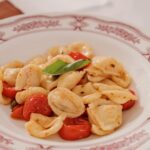
One bite of Apulia starts with flour. This Monopoli Masseria Spina experience pairs a guided history walk with a hands-on pasta lab, so you get the stories and the skills in the same 2.5-hour visit. I like the mix of real working-farm features you see up close, like the underground olive press, and I love the practical part where you learn typical regional pasta shapes instead of just watching.
The one catch: the pasta workshop is about making, not necessarily eating on-site. One review notes the pasta wasn’t cooked and eaten during the class, so plan on taking your creations away (and eating later elsewhere).
In This Review
- Key things to know before you go
- Masseria Spina in Monopoli: why this tour feels more real
- The 2.5-hour flow: from rupestrian settlement to pasta dough
- Rupestrian settlement and necropolis: where the story starts
- Minor Church and Spina Piccola fortified tower: small stops with big meaning
- Internal citrus grove: agriculture as part of the design
- Underground olive press and dye works: the work behind the romance
- Masseria Spina Grande: the red facade and the Baroque church stop
- Admire the red exterior and main structure
- Baroque Church of the Immaculate Conception
- The pasta-making lab: hands-on Apulian shapes, not just a demo
- What you might make, and what to expect on timing
- Price and value: is $71 for 2.5 hours a fair deal?
- Group size, languages, and how this affects your experience
- What to bring, and how to plan the rest of your day
- Who should book this tour, and who should skip it
- Should you book Masseria Spina’s pasta lab?
- FAQ
- How long is the Monopoli Masseria Spina guided tour with pasta lab?
- What’s included in the $71 price?
- Do I get to make pasta, or is it just a tasting?
- How big is the group?
- What languages are offered?
- Where do I meet the guide?
Key things to know before you go
- Small-group pacing (up to 10 people) means more time for questions during both the walk and the pasta lab
- Masseria Spina’s Parco Rurale includes a guided tour plus park entry, so you’re not piecing things together
- Underground olive press + dye works add a side of Apulia that goes beyond houses and churches
- Citrus grove and fortified tower stops help you picture how this place operated day to day
- Your pasta shapes come from included ingredients, guided step by step
- Food and drinks are listed as not included, so bring your own plans for afterward
Masseria Spina in Monopoli: why this tour feels more real
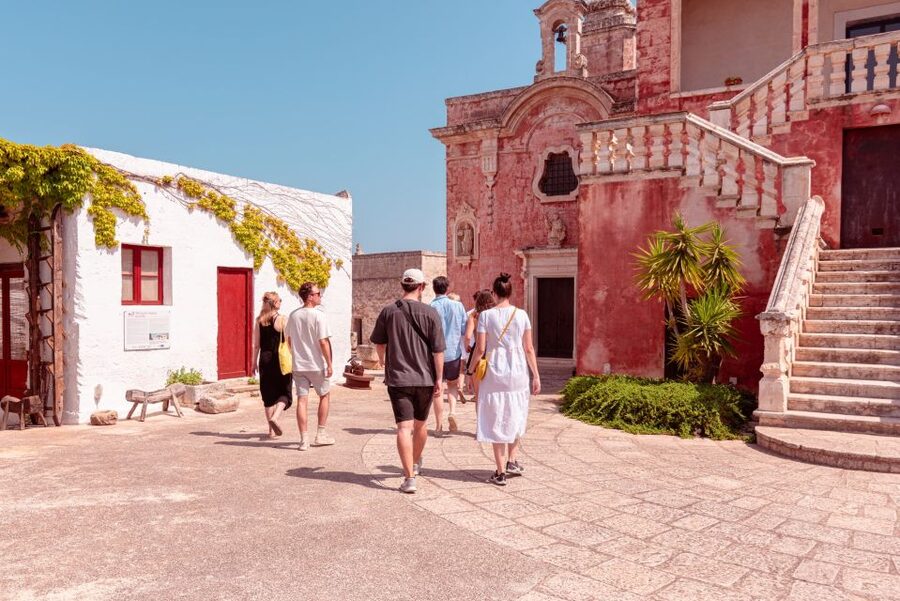
This isn’t a “stand and take photos” kind of food experience. You’re walking through the Parco Rurale at Masseria Spina, a historic fortified farmhouse complex where the land, the buildings, and the food work are all tied together. You learn the setting first, then you make the food. That order matters, because the pasta lab lands with context instead of feeling random.
If you care about Apulia beyond the postcard basics, you’ll enjoy the way the guide points out practical parts of the site: how olive oil production worked underground, how the fortified structures were laid out, and how agriculture showed up across the property. It’s the kind of history you can almost smell and touch.
And the best part for your end of the evening: you don’t just leave with memories. You should leave with pasta shapes you can enjoy later, ready for a home taste test.
More Monopoli and Adriatic coast outings from Bari


The 2.5-hour flow: from rupestrian settlement to pasta dough
You meet your guide at the Masseria Spina Resort in Parco Rurale (the Historical Tour, Tasting & Experiences meeting point). The schedule is compact, so expect a steady walking pace with stops that actually teach you something at each point.
Rupestrian settlement and necropolis: where the story starts
The tour begins by moving through the settlement area, where you can spot the rupestrian settlement elements that shaped life here. Then you head toward the necropolis. Even if you’re not a deep-history person, a necropolis stop gives you a clear sense of time depth, which helps later when you see fortified structures and working features.
One practical note: this part is outdoors. Wear shoes you’re comfortable walking in, especially if the ground is uneven.
Minor Church and Spina Piccola fortified tower: small stops with big meaning
Next come the Minor Church and the Spina Piccola fortified tower, described as the first fortified structure. This is the kind of stop that helps you understand the “why” behind the architecture. You start to see how defense and daily life were built into the same complex.
These are short segments, but they help you connect the dots. By the time you reach the main farmhouse features, you’re not just looking at pretty buildings. You’re reading a system.
More guided Bari tours and Puglia day trips we rate
- Guided Tour of Matera Sassi★ 4.5 · 1,312 reviews
- Bari: Guided Walking Tour★ 4.7 · 744 reviews
- Bari: City Highlights Guided Bike Tour★ 4.7 · 527 reviews
- Guided Tour, Historic Center Sassi Rock Churches and Cave House★ 5.0 · 461 reviews
- Bari: Old Town Guided Eco-Friendly Rickshaw Tour★ 4.9 · 355 reviews
Internal citrus grove: agriculture as part of the design
Inside the property, you also visit the internal citrus grove. This is more than a scenic break. It’s a reminder that fortified farm life relied on steady food sources, and citrus fits into that rhythm.
It’s also a good contrast after the stone-and-history sections. If your guide points things out clearly, you’ll come away with a better mental map of the site as an operating place, not just a museum.
Underground olive press and dye works: the work behind the romance
A highlight in the description is the ancient underground olive press, plus the dye works. This section is especially valuable if you’ve ever wondered what “food history” really means beyond recipes.
You’re seeing production infrastructure. That changes how you think about olive oil, agriculture, and the money and labor that sustained places like this. It also adds variety to the walk, since you’re not only dealing with buildings and walkways—you’re dealing with industrial function.
Masseria Spina Grande: the red facade and the Baroque church stop
After the more functional production stops, you’ll shift toward the iconic architecture.
Admire the red exterior and main structure
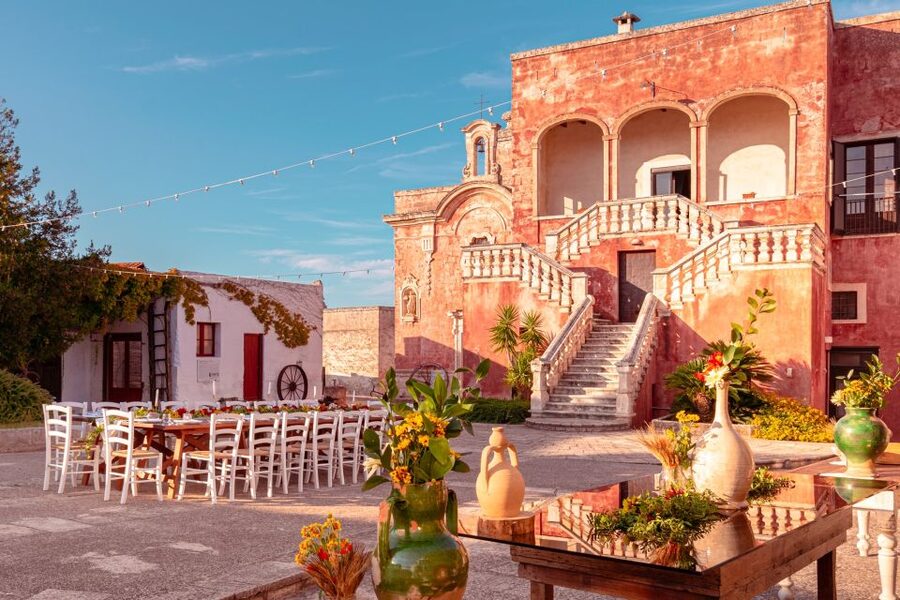
You’ll get to see the external facade of Masseria Spina Grande, including its defining red color and the majestic main structure. This is the visual “anchor” of the site. It’s also a helpful moment for you to orient yourself: once you know what you’re looking at and why it matters, the rest of the complex falls into place in your mind.
Baroque Church of the Immaculate Conception
The tour also includes the Baroque Church of the Immaculate Conception. Church stops can feel like a detour on some tours. Here, it works because you’re still within one functioning historic complex, so the church fits the broader picture of life, faith, and community on the property.
The pasta-making lab: hands-on Apulian shapes, not just a demo
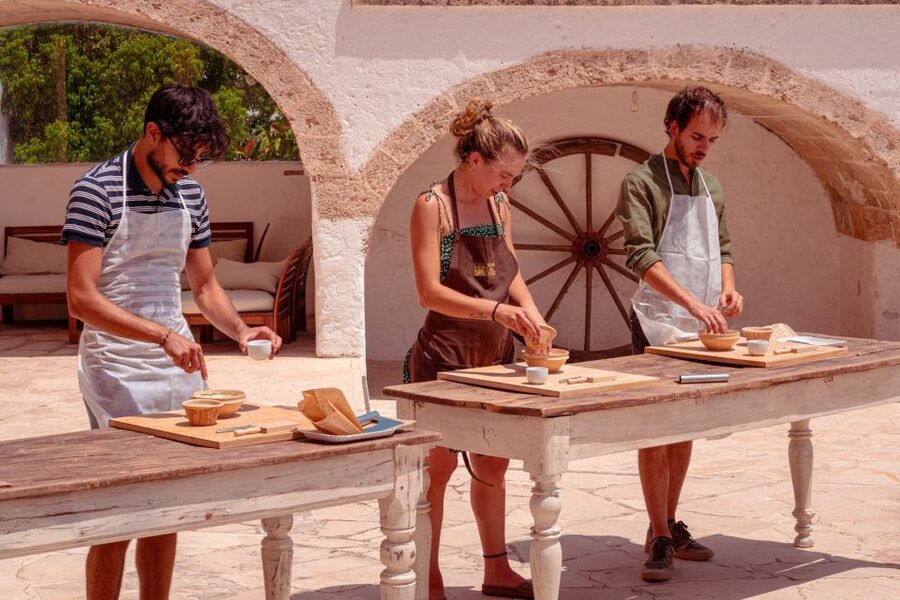
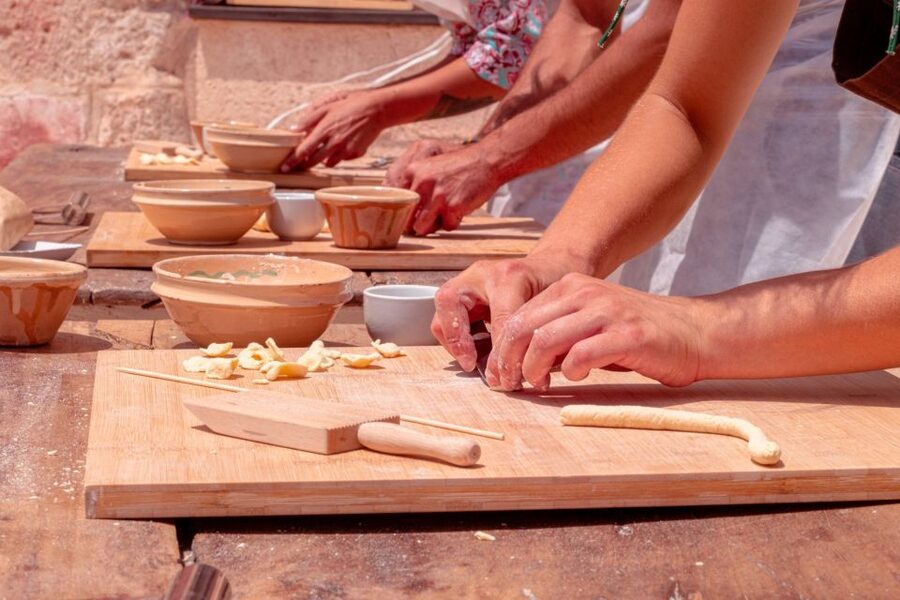
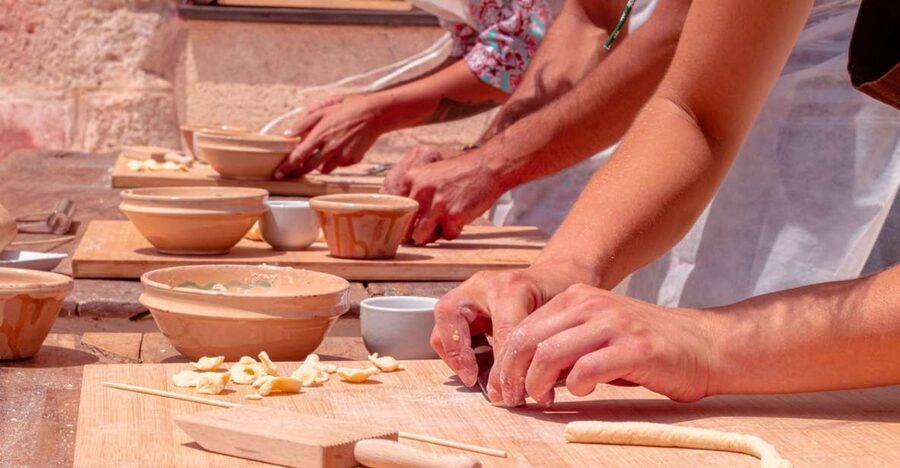
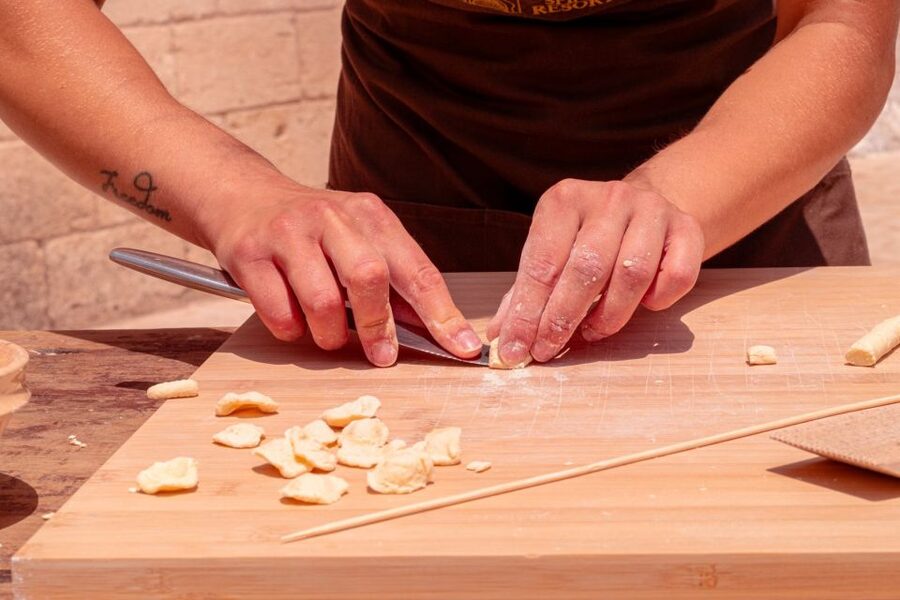
Then you switch gears from walking to hands-on learning. The pasta lab comes after the guided tour, and you use included ingredients under guided instruction to create typical Apulian pasta shapes.
You’ll like this part most if you enjoy doing things with your hands. The value isn’t only in the end result. It’s in learning the technique well enough to repeat it later.
A useful way to think about it: the guide is teaching you how to shape pasta in an Apulian style, which is much more practical than hearing general food history. If you’ve ever bought pasta abroad and wished you understood why a shape matters, this workshop connects that gap.
What you might make, and what to expect on timing
The exact shapes aren’t listed in the provided info, but the focus is clearly on typical pasta shapes of Apulia. One review specifically describes making three different pastas from scratch, so the lab likely includes multiple shapes rather than a single cookie-cutter result.
One consideration based on a review: the class may not include cooking and eating the pasta right there. So if you want a full sit-down meal or a hot pasta moment during the tour, you may need to plan that separately.
Price and value: is $71 for 2.5 hours a fair deal?
At $71 per person for 2.5 hours, you’re paying for more than a short walk. What’s included is a guided walking tour, Parco Rurale historical park entry, and a guided pasta lab with ingredients. You also get a small group size capped at 10 participants, which is a real quality factor for hands-on lessons.
Is it pricey? It’s not cheap, but it also isn’t the kind of tour where you pay for sightseeing alone. You’re getting both a historical walk and a skill you can take home.
Food and drinks are listed as not included. That’s normal for a focused class format. It also means you should budget for a snack or meal after, especially if you skipped lunch earlier in the day.
Group size, languages, and how this affects your experience
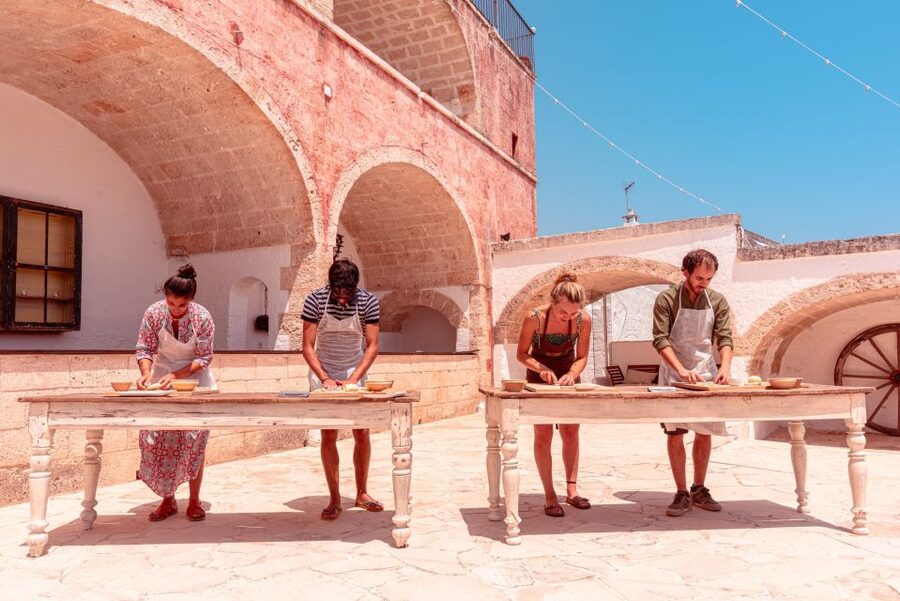
This is a live tour guide experience, offered in Italian and English, with a small group size (up to 10). That size is one reason the experience seems to work well. When you’re learning a technique like pasta shaping, you don’t want to be stuck watching while the guide moves on.
One review named a guide, Elaina, praising her knowledge and ability to answer questions, and that’s the kind of interaction that makes a difference in a workshop setting. Even if you don’t get Elaina, you can expect a guide who stays engaged with the group.
What to bring, and how to plan the rest of your day
Because food and drinks aren’t included, you’ll want to plan your timing around your meal. If the pasta isn’t cooked on-site, the best strategy is to treat this as a make-and-take experience.
You’ll also be walking through multiple parts of the property, including underground features and farm buildings. Wear comfortable shoes and dress for warm or changeable weather. The duration is short enough (2.5 hours) that you don’t need a full-day commitment, but long enough that you’ll notice if you picked uncomfortable footwear.
For your day plan, Monopoli works well as a base. This tour gives you a strong Apulia story without forcing you into an all-day itinerary.
Who should book this tour, and who should skip it
You should book if:
- You want an Apulia experience that mixes history with doing (pasta shaping, not just tasting)
- You like learning how food traditions connect to where people lived and worked
- You prefer small groups and real-time Q&A during a hands-on activity
You might skip it if:
- You mainly want to eat during the activity and aren’t interested in making pasta to take away
- You’re looking for a long, leisurely tour with lots of free time. This runs in a tight 2.5-hour window
Should you book Masseria Spina’s pasta lab?
If you’re choosing between a generic walking food tour and an activity with a real skill component, this one is the better bet. The walking portion gives you strong context through the site’s production features like the underground olive press, and the pasta lab gives you a tangible outcome you can repeat later.
Just go in with realistic expectations: it’s about making pasta, not necessarily serving it to you hot during the tour. With that in mind, this is a smart, high-value way to spend a half-afternoon in Monopoli and learn a piece of Apulia you can actually bring home.
FAQ
How long is the Monopoli Masseria Spina guided tour with pasta lab?
The experience lasts 2.5 hours.
What’s included in the $71 price?
It includes a guided walking tour, Parco Rurale historical park entry ticket, pasta lab ingredients, and a guided pasta lab.
Do I get to make pasta, or is it just a tasting?
You make pasta shapes in a guided workshop. Food and drinks are listed as not included.
How big is the group?
The group is limited to 10 participants.
What languages are offered?
The live tour guide is available in Italian and English.
Where do I meet the guide?
Meet your guide at the Masseria Spina Resort in Parco Rurale, at the Historical Tour, Tasting & Experiences meeting point.
More Tours in Bari
- Matera: Sassi Tour with Cave House and Rupestrian Church
★ 4.7 · 6,618 reviews - Polignano a Mare: Cave Boat Tour with Aperitif
★ 4.7 · 1,891 reviews - Discover Matera, the ancient city – English tour
★ 5.0 · 1,771 reviews - Guided Tour of Matera Sassi
★ 4.5 · 1,312 reviews - Bari’s Ultimate Street Food Tour – Small Group by Do Eat Better
★ 5.0 · 1,187 reviews - Polignano a Mare boat tour emotions, caves, diving and appetizers
★ 5.0 · 1,022 reviews
More Tour Reviews in Bari
- Matera: Sassi Tour with Cave House and Rupestrian Church
★ 4.7 · 6,618 reviews - Polignano a Mare: Speedboat Cruise to Caves with Aperitif
★ 4.8 · 3,382 reviews - Polignano a Mare: Cave Boat Tour with Aperitif
★ 4.7 · 1,891 reviews - Discover Matera, the ancient city – English tour
★ 5.0 · 1,771 reviews - Guided Tour of Matera Sassi
★ 4.5 · 1,312 reviews - Polignano a Mare: Boat Trip, Swim & Cave with Aperitif
★ 4.8 · 1,300 reviews
More Monopoli & Adriatic Coast Trips
- Monopoli: 2.5 Hour Boat Tour to the Polignano a Mare Caves
★ 4.8 · 223 reviews - Monopoli Shared tour by Gozzo boat to the Polignano caves
★ 5.0 · 164 reviews - Alberobello, Monopoli Polignano Small Group Guided Tour from Bari
★ 5.0 · 104 reviews - Monopoli: Exclusive Shared Boat Tour
★ 4.9 · 93 reviews - Boat tour from Monopoli to the caves of Polignano a Mare
★ 4.5 · 77 reviews - Monopoli: Walking Street Food Tour
★ 4.5 · 67 reviews