In This Review
- A 20-minute oil lesson with real flavor
- Key highlights to look for
- Meeting at Apulia – la finestra sul mare in Monopoli
- Price and timing: why $12.03 works (when you do the tasting right)
- Your seven-oil sensory flight: the “multivarietal first” approach
- Coratina, Picholine, and Peranzana: how to read the flavor clues
- Coratina: bitter, spicy, and artichoke-leaning
- Picholine: similar family, different elegance
- Peranzana: green tomato, apple, banana notes
- A practical way to taste during the flight
- The olive-growing story you’ll actually use
- Cooking advice at home: what changes after a tasting like this
- Small group, close attention, and a session that fits real travel days
- Who this Monopoli oil tasting suits best
- Should you book this oil tasting in Monopoli?
- FAQ
- How long is the private oil tasting experience?
- How many olive oil types will I taste?
- Where does the experience start and end?
- What languages are offered?
- What’s the group size limit?
- Is confirmation provided after booking?
- Is the experience refundable if I cancel?
A 20-minute oil lesson with real flavor
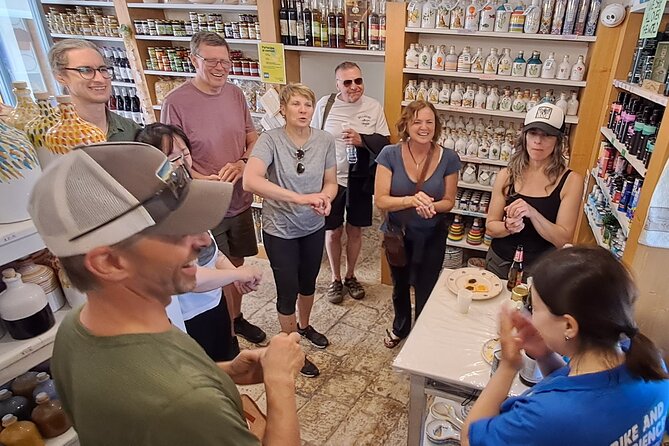
If you think olive oil is just olive oil, this tasting corrects that fast. You’ll sample seven extra virgin olive oils from Apulia, then connect what you taste to how the olives are grown, harvested, and made.
I especially liked the sensory comparisons between oils that are all “extra virgin,” yet taste totally different. I also appreciated the practical focus on cooking, not just fancy descriptions. One thing to consider: this is a short session (about 20 minutes), so it’s best if you want a smart taste-and-learn stop, not a long, full tour.
Key highlights to look for
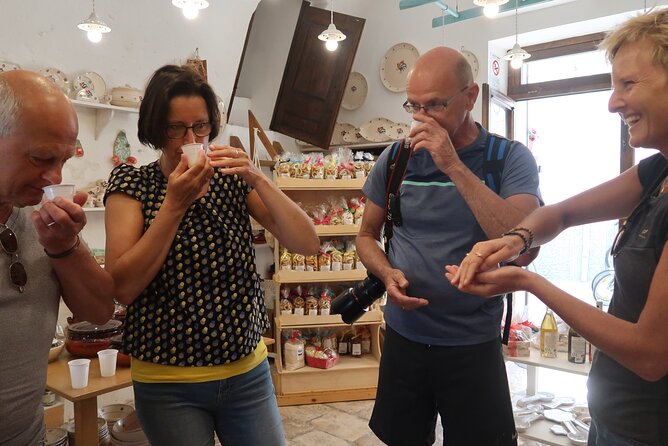
- Seven oils in one tasting: start with a cold-extracted multivarietal, then move into specific monovarietals
- Coratina as a star comparison: bitter, spicy, with artichoke notes and polyphenol power
- Picholine’s elegant twist: similar character to Coratina, but with different scent personality
- Peranzana’s fruitier hints: green tomato, apple, and banana notes
- Cooking advice that sticks: guidance on using each oil type in real meals
- Small group, up to 10 people: a calmer setting for questions and close attention
More Monopoli and Adriatic coast outings from Bari


Meeting at Apulia – la finestra sul mare in Monopoli
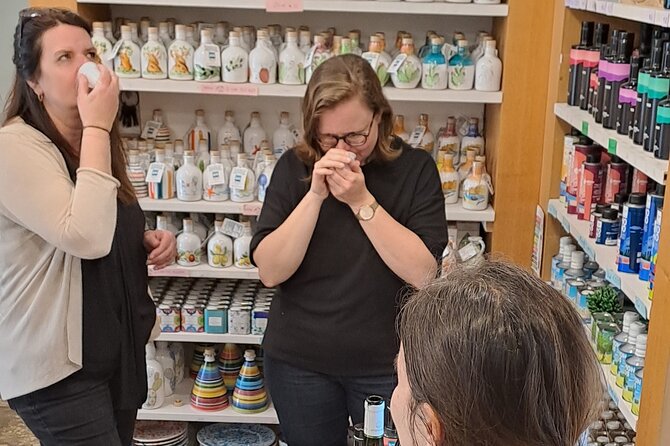
You meet at Apulia – la finestra sul mare, at Via Porto, 8/n, in Monopoli (right by the sea). The location matters because it sets the tone: this tasting is tied to local growing and production, not some generic olive-oil pitch.
From the start, the experience is set up to be easy to plug into your day. It returns to the same meeting point at the end, so you’re not wandering across town afterward trying to remember where you parked.
The session is offered in English, and there’s evidence it can also be delivered in French for some bookings (handy if you prefer that language or want something beyond English). It’s a private-style tasting in a small group, so you’ll likely get more back-and-forth than in big group food stops.
Practical note: the meeting point is near public transportation, and most people can participate. Service animals are allowed too, which makes it simpler if you travel with one.
Price and timing: why $12.03 works (when you do the tasting right)
At about $12.03 per person for roughly 20 minutes, this isn’t a “slow food experience” meant to take over your afternoon. It’s more like a sharp, focused education you can fit between sightseeing blocks.
So the value depends on what you want. If you want to taste widely, learn the differences, and leave with a clearer idea of how to choose oil at home, the math makes sense. You’re getting a guided sensory journey that includes multiple varieties, plus context on harvesting and production techniques.
Also, because it’s limited to a maximum of 10 travelers, you’re not fighting for attention. In a short format, that small-group size feels important. You’re more likely to taste closely, ask questions, and actually connect flavors to explanations.
If you’re looking for an all-day olive farm visit with a long walk-through and lots of stops, this isn’t that. Think of it as a concentrated tasting with background.
Your seven-oil sensory flight: the “multivarietal first” approach
The tasting is designed like a guided palate workout. It starts with a cold-extracted multivarietal extra virgin olive oil, described as fragrant, slightly bitter, and spicy. That profile is a smart warm-up because it gives you a baseline: a “balanced Apulia” flavor you can compare against as you move through the lineup.
Then the session shifts into monovarietal territory, meaning each oil comes from a single olive type. That’s where the experience really earns its keep. When you taste a monovarietal right after the multivarietal, you start noticing how bitterness, spice, and aromatic notes can change even when the oil is still extra virgin.
You’ll taste seven types in total, and while not every variety is named in the description you’re given, the comparison focus clearly lands on three key monovarietals: Coratina, Picholine, and Peranzana. Expect the guide to keep tying the flavors back to the production story: how olives become oil, and how those choices show up in your glass.
For you, the goal isn’t to memorize flavor terms. It’s to walk away understanding why one oil is better suited to certain cooking moments than another.
More private Bari tours and day trips with a driver
- Full Private 3h Excursion to the Sassi di Matera★ 5.0 · 451 reviews
- Matera: 3-hour Private Full Sassi di Matera Guided Tour★ 4.8 · 316 reviews
- Alberobello: Private Tuk Tuk Tour with Audio Guide★ 4.8 · 172 reviews
- From BARI: Tour of Matera and Alberobello by private bus, visit 2 UNESCO sites★ 4.7 · 99 reviews
- Matera: Private Walking Tour★ 4.9 · 78 reviews
Coratina, Picholine, and Peranzana: how to read the flavor clues
This tasting is built around differences you can actually notice. Here’s what to listen for while you sip.
Coratina: bitter, spicy, and artichoke-leaning
Coratina is described as a bitter and spicy oil with hints of artichoke. It’s also noted as rich in polyphenols and considered among the best in the country. Translation: it’s the bold one in the lineup, the oil that shows up loud on the palate.
If you like a more intense, peppery olive oil character, this is likely your anchor. It’s also a useful reference point because bitterness and spice can make an oil feel more “structured,” especially when paired with dishes that need backbone.
Picholine: similar family, different elegance
Picholine is presented as having similar characteristics to Coratina, but with unique elegance and scents. So if Coratina feels intense and sharp, Picholine is more about refined aromatic identity.
This is the oil for people who want a strong taste but don’t want it to be all bite. It can also help you learn a bigger lesson: two oils can share a “bitter/spicy” lane and still feel totally different because of aroma and nuance.
Peranzana: green tomato, apple, banana notes
Peranzana is described with hints of green tomato, apple, and banana. That’s a very different direction from the artichoke-and-pepper profiles. It tends to read as fruitier and fresher, even when it still has the extra virgin attitude.
This variety is a great palate bridge if you generally think of olive oil as mostly savory. It helps you notice that olive oil can carry fruit-like aromas and that those cues can matter when choosing an oil for certain meals.
A practical way to taste during the flight
During a short tasting, the biggest mistake is trying to figure everything out at once. Instead, I suggest you pick one feature to track per oil: bitterness, spice, or fruit/vegetable aromatics. Once you can label those quickly, the guide’s explanations about production and use make much more sense.
The olive-growing story you’ll actually use
A big part of the value here is that the tasting isn’t just sensory. You’ll also get explanations of Apulian olive growing, with details on harvesting and production techniques.
That matters because it turns your experience from random “tastes good” into something you can repeat. Once you understand how harvesting and processing influence flavor, you’ll start noticing what to look for when you buy oil later.
The experience also gives advice on how to use the different types of oil in cooking. Even if you’re not a super technical cook, that kind of guidance is useful. It helps you match oil personality to dish needs, instead of treating all extra virgin olive oil as interchangeable.
For example, oils with sharper bitterness and spice can be a better match for stronger flavors or dishes where you want an assertive finish. Fruitier, aromatic-leaning oils often work well when you want a lighter touch or a more pronounced aromatic lift. The exact pairing is best worked out with the guide’s input during your tasting.
Cooking advice at home: what changes after a tasting like this
Once you’ve tasted oils side by side, your kitchen decisions get easier. You start asking better questions, like: Do I want peppery intensity or softer elegance? Do I want more bitter structure or more fruit-forward aromatics?
This is where the experience earns points beyond flavor. The tasting includes guidance on using each type of oil in cooking, which can help you avoid the common mistake of using the wrong oil for the dish you’re trying to make.
If you’re the kind of person who buys olive oil once or twice a year and then forgets about it, this tasting can reset that habit. You’ll be better at noticing what you like, and that makes you more likely to choose something intentionally next time.
And if you’re already cooking with good oil, this can deepen your understanding. For you, the benefit is learning how variety choice shows up in everyday taste. That means you can get more out of a small bottle by using it in the right moments.
Small group, close attention, and a session that fits real travel days
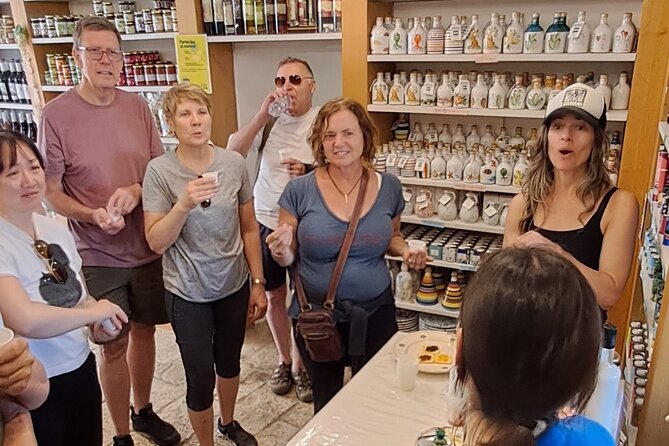
This experience caps at 10 travelers, which is important for a tasting that lasts about 20 minutes. You get enough structure to move through the flight, but not so many people that it turns into a rushed show.
It also helps that it’s run by Apulia – la finestra sul mare, a local company centered on the Monopoli area. Based on the way the experience is described, it feels like a straightforward local product education rather than a generic stop.
You’ll also get a mobile ticket, and confirmation happens at booking. That’s not the glamorous part, but it matters when you’re traveling and juggling days.
The overall pacing is practical. You meet, taste, learn the differences, get usage guidance, and then you’re back where you started. If your schedule includes beaches, old towns, and long walks, this is a neat “fuel stop” that doubles as education.
Who this Monopoli oil tasting suits best
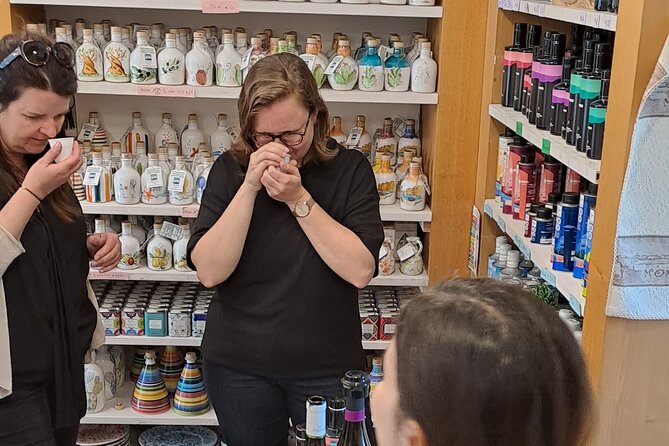
This is a great fit if you enjoy food details and want a guided tasting without committing an entire half-day or full day. You’ll be happy here if you’re curious about Apulian extra virgin olive oils and want to taste the differences between varieties like Coratina, Picholine, and Peranzana.
It also suits:
- Couples and small groups who want a calm, focused activity
- Food-first travelers who like hands-on learning
- People who want language support in English, with possible French availability
If you want a long guided tour with many locations, this might feel too short. But if you want a compact, high-impact introduction to what olive oil variety really changes, this format hits the sweet spot.
Should you book this oil tasting in Monopoli?
I’d book it if you want a smart, locally rooted experience that leaves you with clearer buying and cooking instincts. The price is low enough that it doesn’t feel like a risk, and the structure gives you real comparisons rather than one-off tastes.
The main reason not to book is simple: the session is about 20 minutes. If you’re hoping for a slow, big production tour or a multi-stop excursion, look for something longer. But if you want a tight, flavorful education near the sea in Monopoli, this is an easy yes.
FAQ
How long is the private oil tasting experience?
The experience lasts about 20 minutes.
How many olive oil types will I taste?
You’ll taste seven types of Apulian extra virgin olive oil.
Where does the experience start and end?
It starts at Apulia – la finestra sul mare (Via Porto, 8/n, 70043 Monopoli BA, Italy) and ends back at the same meeting point.
What languages are offered?
The experience is offered in English, and French may be available for some sessions.
What’s the group size limit?
The experience has a maximum of 10 travelers.
Is confirmation provided after booking?
Yes, you receive confirmation at the time of booking.
Is the experience refundable if I cancel?
Cancellation is free up to 24 hours in advance for a full refund. If you cancel less than 24 hours before the start time, the amount paid is not refunded.
More Private Puglia Day Tours
- Full Private 3h Excursion to the Sassi di Matera
★ 5.0 · 451 reviews - Matera: 3-hour Private Full Sassi di Matera Guided Tour
★ 4.8 · 316 reviews - Alberobello: Private Tuk Tuk Tour with Audio Guide
★ 4.8 · 172 reviews - From BARI: Tour of Matera and Alberobello by private bus, visit 2 UNESCO sites
★ 4.7 · 99 reviews - Matera: Private Walking Tour
★ 4.9 · 78 reviews - Bari: Tour Polignano Alberobello Matera (Private or Shared)
★ 4.8 · 76 reviews
More Tour Reviews in Bari
- Matera: Sassi Tour with Cave House and Rupestrian Church
★ 4.7 · 6,618 reviews - Polignano a Mare: Speedboat Cruise to Caves with Aperitif
★ 4.8 · 3,382 reviews - Polignano a Mare: Cave Boat Tour with Aperitif
★ 4.7 · 1,891 reviews - Discover Matera, the ancient city – English tour
★ 5.0 · 1,771 reviews - Guided Tour of Matera Sassi
★ 4.5 · 1,312 reviews - Polignano a Mare: Boat Trip, Swim & Cave with Aperitif
★ 4.8 · 1,300 reviews
More Monopoli & Adriatic Coast Trips
- Monopoli: 2.5 Hour Boat Tour to the Polignano a Mare Caves
★ 4.8 · 223 reviews - Monopoli Shared tour by Gozzo boat to the Polignano caves
★ 5.0 · 164 reviews - Alberobello, Monopoli Polignano Small Group Guided Tour from Bari
★ 5.0 · 104 reviews - Monopoli: Exclusive Shared Boat Tour
★ 4.9 · 93 reviews - Boat tour from Monopoli to the caves of Polignano a Mare
★ 4.5 · 77 reviews - Monopoli: Walking Street Food Tour
★ 4.5 · 67 reviews