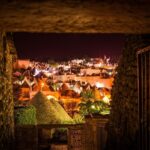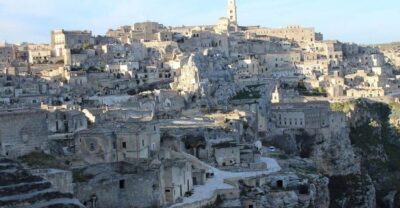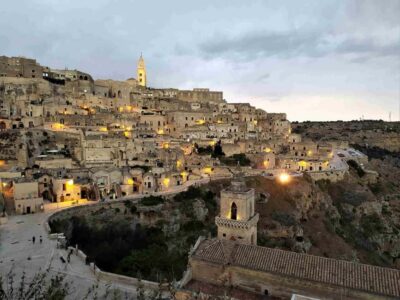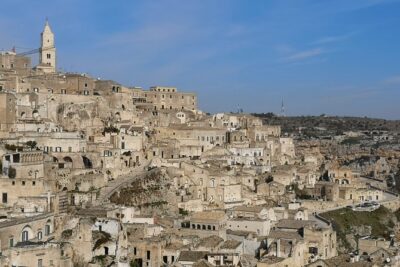
Matera’s stones make sense faster on foot. This small-group walk ties UNESCO Matera sights to the stories behind them, starting at Piazza Vittorio Veneto. In a couple hours you’ll go from looking at rock to understanding why the place is so famous.
I love two things most: the guided pacing (no rushing, and you can ask questions), and the fact that you get a rupestrian church entrance included—not just a quick stop from the street. When guides are strong, like the Angela, Stella, and Stefania named in past tours, the whole city clicks faster.
One thing to consider: the route is on uneven stone and the experience needs good weather, so bring grippy shoes and expect some slow walking steps.
In This Review
- Key highlights to know before you go
- Why a guided Matera walk is worth your time
- Piazza Vittorio Veneto start: views and an instant orientation
- Walking the historic center: stone houses, churches, and cave dwellings
- The rupestrian church entrance: seeing more than the exterior
- The newly restored cathedral: a landmark that helps you anchor the walk
- Group size and timing: what max 15 people means for your comfort
- Price and value: what you’re really paying for at $28.81
- What to do before and after: pair the walk with a model-house visit
- Who this tour is best for (and who might skip it)
- Should you book this Matera walking tour?
- FAQ
- How long is the walking tour?
- Where does the tour start?
- What time does the tour begin?
- Is a ticket included?
- What is included in the tour price?
- How many people are in the group?
- When will I get confirmation after booking?
- What if the weather is bad?
Key highlights to know before you go
- UNESCO Matera explained through what you can actually see
- Max 15 people for a small-group feel and personal attention
- Rupestrian church entrance included
- Start on Piazza Vittorio Veneto with a balcony view and orientation
- Mobile ticket for easier check-in
- 2 hours 30 minutes that ends back where it starts
Why a guided Matera walk is worth your time
Matera is a UNESCO World Heritage Site, and it was also named European Capital of Culture 2019. That’s impressive on paper. What’s trickier is how much history is hiding in plain sight—especially in a city where so much is carved into the rock and built around what the land already offers.
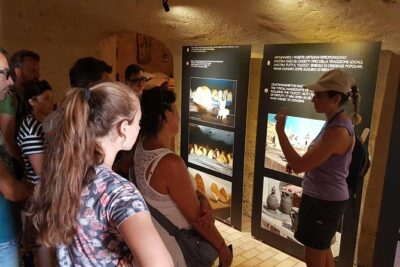
This tour is interesting because it doesn’t ask you to guess. You walk through the historic center seeing stone houses, churches, and cave dwellings, while your guide puts the pieces together in a way that independent wandering often misses. If you’ve ever stared at an old church façade and wished someone would explain what you’re looking at, you’ll understand the value fast.
The reviews also point to what matters on the ground: guide skill and the ability to keep things clear. Angela gets praised for very good English and solid knowledge. Stella is described as enthusiastic and patient, with explanations delivered without time pressure. That matters because Matera is visually dramatic, but you still need context to make the details meaningful.
More Matera Sassi day trips that leave from Bari
Piazza Vittorio Veneto start: views and an instant orientation
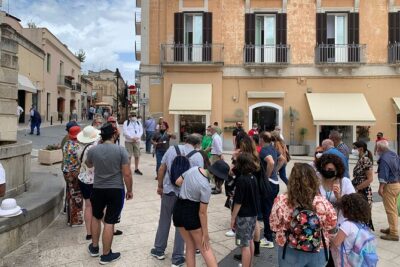
You meet at Info Matera Tourist Information, at Piazza Vittorio Veneto, 39. The start time is 10:30 am, and the tour ends back at the meeting point—nice if you’re trying to keep the rest of your day simple.
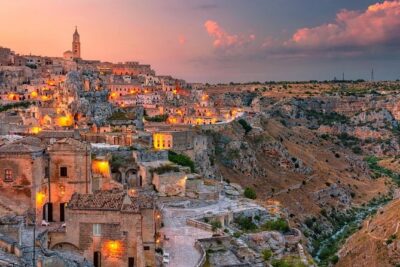
The tour begins with you gathering in the square and listening to the guide’s history and context. Then you enjoy the view from the balcony. That matters more than it sounds. Matera is built in layers, and that first wide view helps your brain organize what you’ll see next while you’re down in the streets.
Expect this to be more than a meet-and-greet. You’re basically getting your bearings first, so when you start seeing carved spaces and rock-cut architecture, you’ll know how to connect them instead of treating everything like separate photo stops.
Walking the historic center: stone houses, churches, and cave dwellings
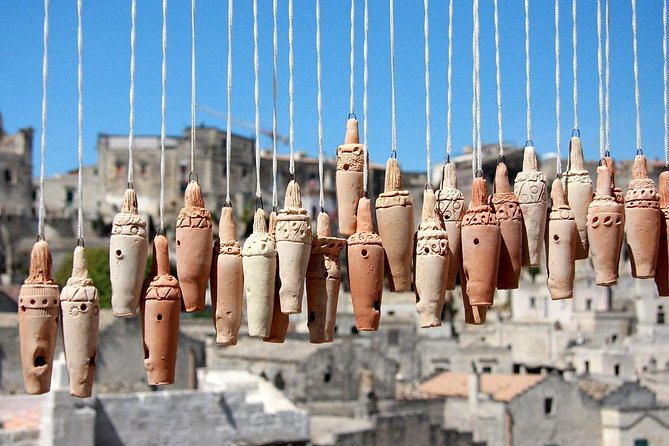
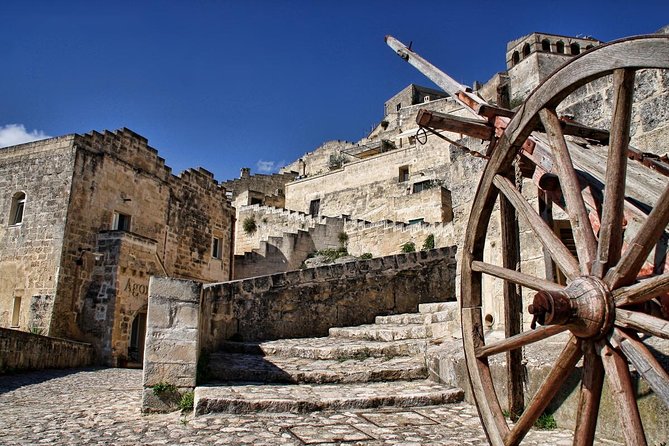
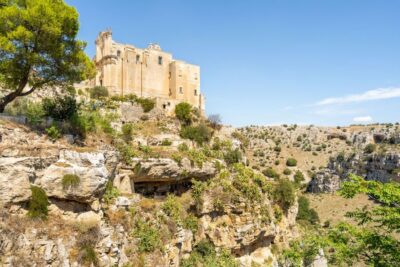
From the start, you explore much of the historic center on foot. The big theme is what you can spot with your eyes: stone houses and churches carved into the rock, plus those famous cave dwellings.
What I like about this format is the pace. Two hours 30 minutes is long enough to get into the rhythm of the city, but short enough that you’re not trapped for half a day. Your guide also helps you notice patterns—like how buildings relate to the rock, and how religious sites and homes share the same carved-in world.
There are a few practical benefits of doing this guided walk early. First, you learn how to read the city visually. Second, you can return on your own later and aim for the spots that interested you most. It’s easier to wander with a plan after someone gives you the map in your head.
The guide approach also matters. Past tours praised a non-rushed flow, so you’re not constantly sprinting to the next location. If you’re the kind of person who likes photos but also likes understanding what you photographed, this tends to fit well.
The rupestrian church entrance: seeing more than the exterior
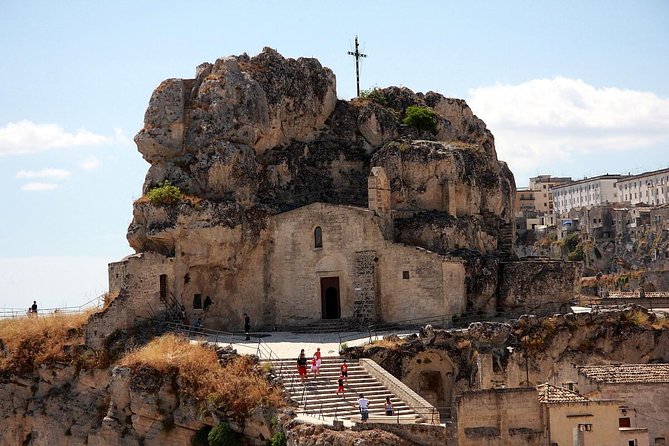
One of the best value pieces here is included: rupestrian church entrance. That turns the tour from sightseeing into something more physical. You’re not just looking at a doorway and moving on; you get access to a carved church space as part of the experience.
Rupestrian churches are built into the rock, and that changes how you experience the site. Inside, you get a stronger sense of how people adapted daily life to the terrain. You also get a chance to understand the role these spaces played—something your guide can explain while you’re standing in the right place.
If you’re comparing tours, this is a key detail. Many walking tours give you the outside view and recommend you buy your own tickets later. Here, you’re already covered for the church entrance.
More Bari walking tours through the old town lanes
- Bari: Pasta Experience Walking Tour★ 4.7 · 660 reviews
- Bari Walking City Tour★ 4.5 · 511 reviews
- Matera’s Sassi Walking Tour – History & Culture★ 5.0 · 476 reviews
- Bari: Walking Street Food Tour★ 4.7 · 458 reviews
- Sassi di Matera: Guided Walking Tour with Cave House/Church★ 4.7 · 343 reviews
The newly restored cathedral: a landmark that helps you anchor the walk
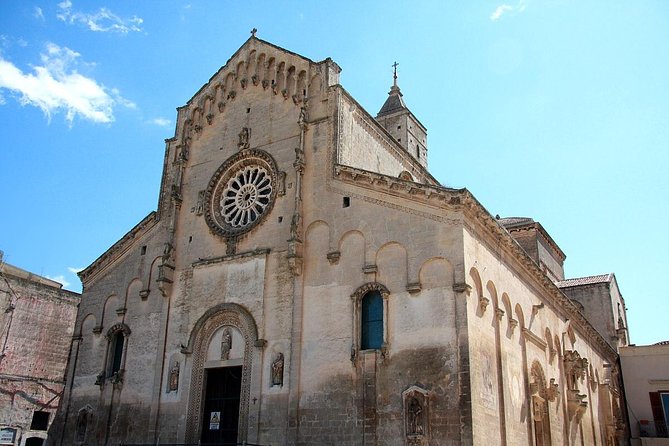
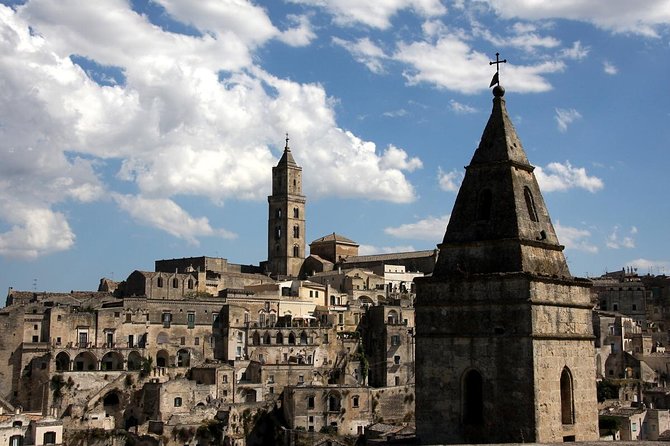
During the walk, you also get to admire the newly restored cathedral. Even if you’re not someone who plans church visits, a landmark like this helps you anchor everything else you’re seeing.
Why? Because Matera can feel like a jumble of rock, steps, and stone façades until you have a reference point. A major cathedral gives your eyes a fixed spot while the smaller, carved details draw your attention around it. In practice, it’s one of those moments that makes the tour feel coherent instead of just a sequence of streets.
This is also the kind of sight where having a guide makes a difference. You’ll likely understand what was restored and why it matters more than just noticing that the building looks crisp.
Group size and timing: what max 15 people means for your comfort
This is a small-group tour with a maximum of 15 travelers. That upper limit is important because Matera streets can get tight, and viewpoints don’t always allow a huge crowd. With fewer people, your guide can keep an eye on the group and respond when someone asks a question.
The experience is about 2 hours 30 minutes. That timing is a sweet spot for first-timers: long enough to cover a lot of the historic center, but short enough to still have energy left to explore on your own after. It’s also helpful if you only have one morning (or one afternoon) in Matera.
A quick practical note: the tour is described as requiring good weather. If conditions are rough, expect the organizer to adjust with a different date or a full refund. And in any case, wear shoes with traction. The city is made for walking, but it’s not smooth pavement-style walking.
Price and value: what you’re really paying for at $28.81
The price is $28.81 per person, and the tour includes a tour guide plus the rupestrian church entrance. For a 2.5-hour guided walking experience in a UNESCO-listed destination, that’s fairly straightforward value: you’re paying for expertise and access, not just movement through streets.
The biggest “value” factor here is the combination:
- A guide who can explain what you’re seeing (instead of leaving you to guess)
- A church entrance you don’t have to arrange yourself
The tour also uses a mobile ticket, which reduces friction when you arrive. Less time fiddling with paperwork means more time getting started.
What’s not included is only described generally as what isn’t mentioned. So for your planning, just assume any additional museums, meals, and optional sites are on you unless listed as included.
What to do before and after: pair the walk with a model-house visit
One of the strongest recommendations from past tours is visiting the model house to understand how people lived. Even if you don’t get that part during the walk, it’s a smart pairing after you’ve learned the city’s basics. Seeing a recreated or interpreted living space can help you translate the cave dwellings from “cool to look at” into “make sense to imagine.”
After the tour, you’ll also be in the right spot to keep exploring around Piazza Vittorio Veneto. Since the experience ends back at the meeting point, you can easily continue at your own pace without needing another plan to get back across town.
If you want to make your day even smoother, do this: wear comfortable layers, carry water, and allow time for photos. Matera rewards slow looking, and a guided walk gives you the context to do it without feeling lost.
Who this tour is best for (and who might skip it)
This walking tour is a strong match if you:
- Want a guided route through Matera’s historic center in a short timeframe
- Enjoy learning how architecture and daily life connect
- Like small groups and don’t want a big crowd experience
- Prefer a tour that includes a key entrance rather than only viewpoints
You might consider skipping if you:
- Only want to wander on your own with no structure or explanations
- Have very limited mobility and know that uneven, stone walking will be an issue
- Are traveling when the weather is likely to be poor and you’d rather avoid outdoor plans
That said, the tour notes that most people can participate, so it’s not written as a specialized, niche route. Just be realistic about footwear and the outdoors part.
Should you book this Matera walking tour?
I think you should book it if you want Matera to click in real time. The included rupestrian church entrance and the fact that your guide connects UNESCO significance to what you’re walking past make it feel like more than a typical checklist tour.
Book it especially if it’s your first visit. The start at Piazza Vittorio Veneto gives you orientation, and the rest of the walk helps you read the city instead of only recording it. Guides like Angela, Stella, and Stefania are specifically mentioned for clear English, enthusiasm, and patience—exactly what you want when the city’s details can be easy to miss.
If you’re deciding last-minute, my rule is simple: if you’ll be in Matera long enough to explore on your own afterward, a guided foundation is worth it. If you only want one quick look and nothing more, then you may not need a guide. For most people, though, $28.81 plus a church entrance for a 2.5-hour small-group walk is a good deal.
FAQ
How long is the walking tour?
The tour lasts about 2 hours 30 minutes.
Where does the tour start?
It starts at Info Matera Tourist Information, Piazza Vittorio Veneto, 39, 75100 Matera MT, Italy.
What time does the tour begin?
The start time listed is 10:30 am.
Is a ticket included?
Yes. This experience uses a mobile ticket.
What is included in the tour price?
A tour guide is included, along with entrance to a rupestrian church.
How many people are in the group?
The group has a maximum of 15 travelers, keeping it small.
When will I get confirmation after booking?
Confirmation is received within 48 hours of booking, subject to availability.
What if the weather is bad?
The experience requires good weather. If it’s canceled due to poor weather, you’ll be offered a different date or a full refund.
More Tours in Bari
- Matera: Sassi Tour with Cave House and Rupestrian Church
★ 4.7 · 6,618 reviews - Polignano a Mare: Cave Boat Tour with Aperitif
★ 4.7 · 1,891 reviews - Discover Matera, the ancient city – English tour
★ 5.0 · 1,771 reviews - Guided Tour of Matera Sassi
★ 4.5 · 1,312 reviews - Bari’s Ultimate Street Food Tour – Small Group by Do Eat Better
★ 5.0 · 1,187 reviews - Polignano a Mare boat tour emotions, caves, diving and appetizers
★ 5.0 · 1,022 reviews
More Tour Reviews in Bari
- Matera: Sassi Tour with Cave House and Rupestrian Church
★ 4.7 · 6,618 reviews - Polignano a Mare: Speedboat Cruise to Caves with Aperitif
★ 4.8 · 3,382 reviews - Polignano a Mare: Cave Boat Tour with Aperitif
★ 4.7 · 1,891 reviews - Discover Matera, the ancient city – English tour
★ 5.0 · 1,771 reviews - Guided Tour of Matera Sassi
★ 4.5 · 1,312 reviews - Polignano a Mare: Boat Trip, Swim & Cave with Aperitif
★ 4.8 · 1,300 reviews
More Matera Sassi Day Trips
- Matera: Sassi Tour with Cave House and Rupestrian Church
★ 4.7 · 6,618 reviews - Discover Matera, the ancient city – English tour
★ 5.0 · 1,771 reviews - Guided Tour of Matera Sassi
★ 4.5 · 1,312 reviews - Tour di Alberobello e Matera in bus privato da Bari
★ 4.8 · 701 reviews - Matera: Sassi Tour with Entry to Rock Houses and Churches
★ 4.6 · 622 reviews - Tour of Alberobello and Guide to Matera, from Bari
★ 4.7 · 478 reviews