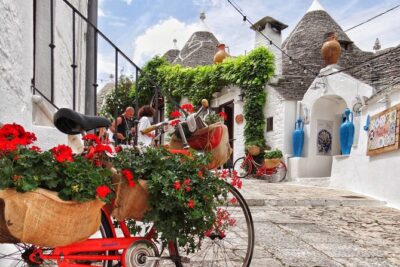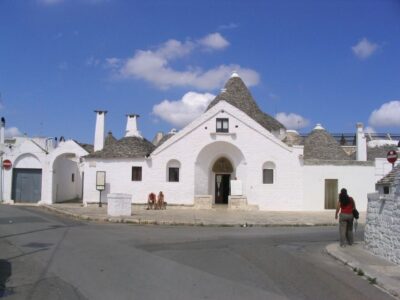

Trulli stop you mid-walk. This Alberobello walking tour turns the famous white-topped cone houses into a story you can actually follow, with clear explanations of the dry-stone building technique and the legends behind it. It’s set in the Itria Valley and backed by UNESCO heritage status since 1996.
What I like most is the mix of architecture and people. You’re not just staring at pretty houses, you’re getting the why behind the details, plus a local guide who shares facts with personality—think Guido (often praised for visuals and even a self-made photo book of old photos and maps) or Xenia (praised for pacing, local life context, and a warm, prepared style). The other big win is that the route includes short photo stops and time in areas that feel more like real neighborhoods than an all-tourist corridor.
One drawback to plan for: Alberobello can get crowded, and that can make it a little harder to hear your guide during busy stretches. Also, since this is an outdoors walk, you’ll want comfortable shoes and to dress for sun and shade—even though many guides make a point of seeking cooler spots.
In This Review
- Key highlights you’ll notice right away
- Trulli and UNESCO: why this walk feels different
- The 2-hour route: where you’ll go and why the timing works
- Start at Piazza Sacramento: setting your bearings fast
- Trulli Panoramic View (10 minutes): the fast payoff stop
- Aia Piccola (20 minutes): where the trulli feel more lived-in
- The guiding style that turns photos into understanding
- Price and value: is $43 per person worth it?
- Comfort, crowds, and when timing matters
- Who this tour fits best
- Should you book this Alberobello trulli walking tour?
- FAQ
- Where does the tour start?
- How long is the walking tour?
- What time does it run?
- Where does the tour end?
- What languages are offered?
- Is pickup included?
- Are museum tickets included?
- Is it suitable for children?
- Is the tour wheelchair accessible?
- What is the cost?
- Should I worry about bad weather or rain?
- What’s the cancellation policy?
- Can I reserve without paying right away?
Key highlights you’ll notice right away
- Local storytelling from Guido or Xenia-style guiding that connects legends to what you’re seeing
- Trulli architecture explained on the ground, including the dry-stone construction tradition
- Stops designed for photos, with a short panoramic moment and time in quieter areas
- Time in Aia Piccola (20 minutes) for a more residential feel among trulli
- A 2-hour format that’s long enough for meaning, short enough to keep your energy
- Families are covered, with children’s activities included
Trulli and UNESCO: why this walk feels different
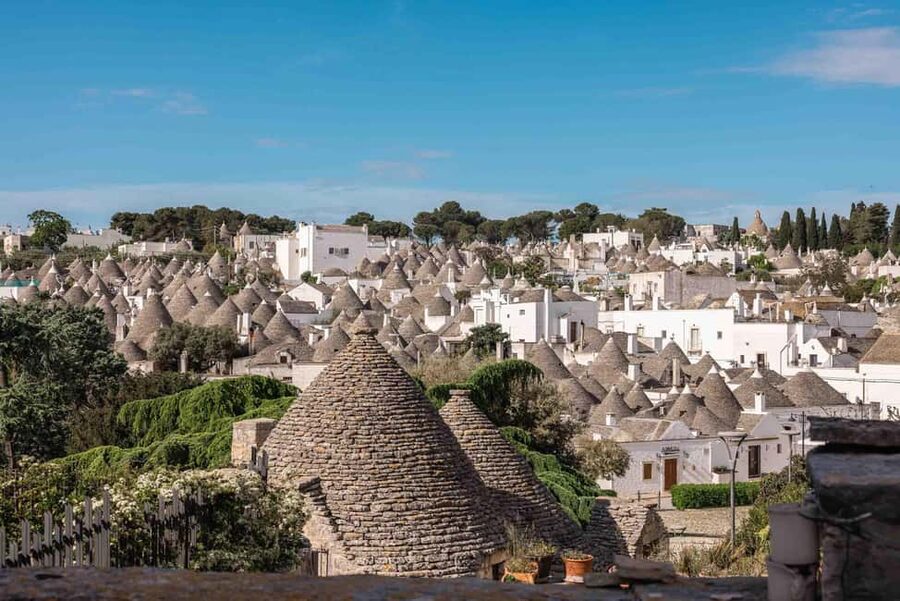
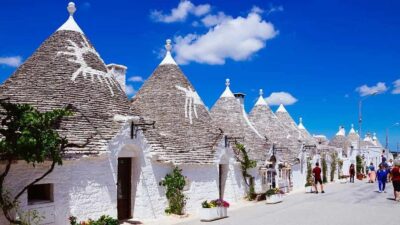
Alberobello’s trulli aren’t just a pretty postcard. They’re a specific building tradition: dry-stone construction, built without mortar, shaped into those iconic cone roofs with whitewashed tops. UNESCO recognized this heritage, and once someone points out how the stones, the roof shape, and the layout connect, the town starts to make sense in a way that self-guided wandering often doesn’t.
I like that this tour doesn’t treat trulli as museum objects. Instead, it frames them as living structures in a real town where people still walk, shop, and move through narrow streets. When you hear the legends alongside the practical “how it’s built” details, the whole place clicks: the cones aren’t random design, and the stories aren’t just for entertainment. They help you read the town.
Also, you’re in Apulia, so the setting matters. Alberobello sits in the Itria Valley, and that’s part of why these trulli look so timeless—white walls, stone textures, and views that seem built for lingering. This walk is basically a guided way to see that timeless look and understand what created it.
More Alberobello trulli tours from Bari

The 2-hour route: where you’ll go and why the timing works
This experience is designed as a focused town walk on Alberobello’s northern side, lasting about 2 hours. In practice, that length is the sweet spot for first-time visitors: you get enough time for real explanations and multiple stops, without turning your day into one long trudge.
You also get a natural “start here, end here” flow:
- You begin in the town center.
- You hit a viewpoint for context.
- You spend time in Aia Piccola, a smaller, more atmospheric pocket.
- You finish at a central endpoint so you can keep exploring right after.
What that means for you: you can book this early-ish or mid-day, get the big picture, then use the remaining time to wander on your own. You’ll also be free to drop into a café or browse boutiques without feeling like you’re cutting your tour short.
Start at Piazza Sacramento: setting your bearings fast
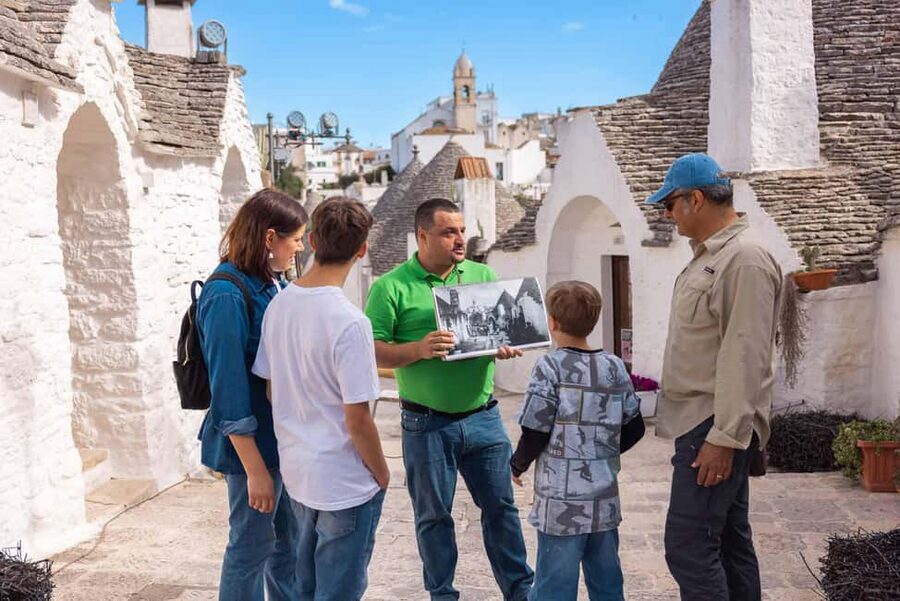
Your walking tour begins at Piazza Sacramento, the kind of meeting point that helps you get oriented quickly. If you’ve never been to Alberobello, this is smart: trulli streets can look like a maze, and having a first anchoring point reduces stress.
From this start, your guide leads you through the town’s older streets—labyrinthine alleys where the cones appear and disappear as you turn corners. This is where good guiding really matters. A trulli wall can look like a wall, until someone explains what to notice (construction approach, roof function, why the town looks the way it does). Starting in the center keeps you close to the “main story,” even as you move toward quieter pockets later.
Practical tip: arrive a few minutes early. In tight historic areas, it takes a moment to find the right spot and get everyone grouped before you head off.
Trulli Panoramic View (10 minutes): the fast payoff stop
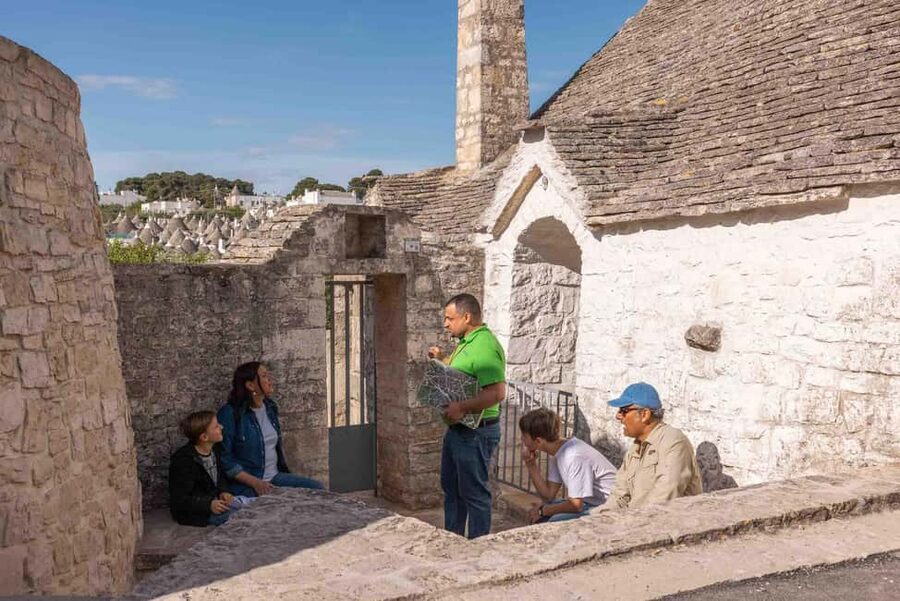
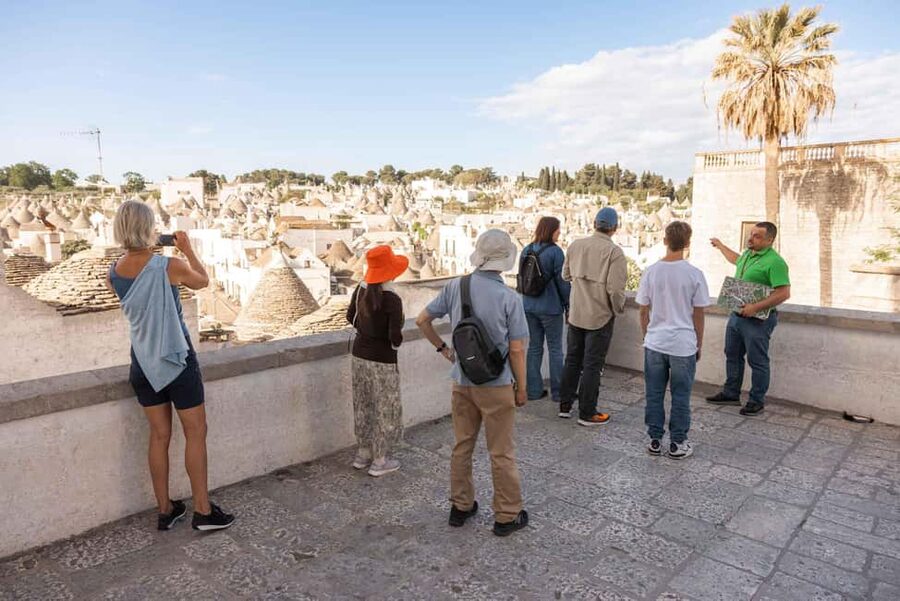
Next comes a short 10-minute guided segment at the Trulli Panoramic View. This isn’t a long sit-down moment—it’s more like a quick elevation of the story. You look out, you see how the roof shapes repeat across the area, and you get context for how the town’s trulli pattern creates that recognizable Alberobello look.
Why this stop matters: it helps your eyes understand geometry. After a viewpoint, the alleys and side streets feel less random. You start noticing where the cones cluster and how the town’s layout frames the houses.
If you’re planning photos, treat this as your primary “get the overview” moment. Bring your phone fully charged and be ready to move quickly. Short stops work best when you’re set.
More Bari walking tours through the old town lanes
- Bari: Pasta Experience Walking Tour★ 4.7 · 660 reviews
- Bari Walking City Tour★ 4.5 · 511 reviews
- Matera’s Sassi Walking Tour – History & Culture★ 5.0 · 476 reviews
- Bari: Walking Street Food Tour★ 4.7 · 458 reviews
- Sassi di Matera: Guided Walking Tour with Cave House/Church★ 4.7 · 343 reviews
Aia Piccola (20 minutes): where the trulli feel more lived-in
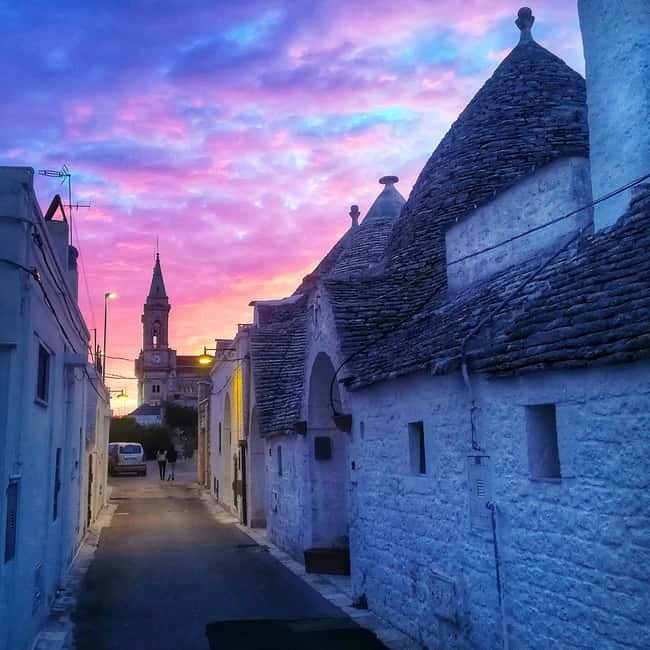
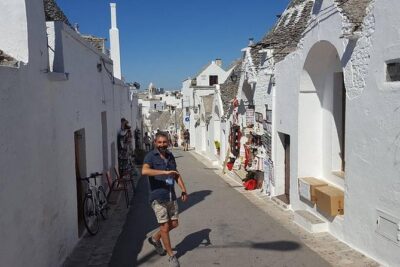
The tour then spends about 20 minutes in Aia Piccola, Alberobello. This is one of the most useful parts of the experience because it’s where the town can feel less like an open-air show and more like a neighborhood. Even if you’ve seen trulli photos online, this kind of street-level view is different.
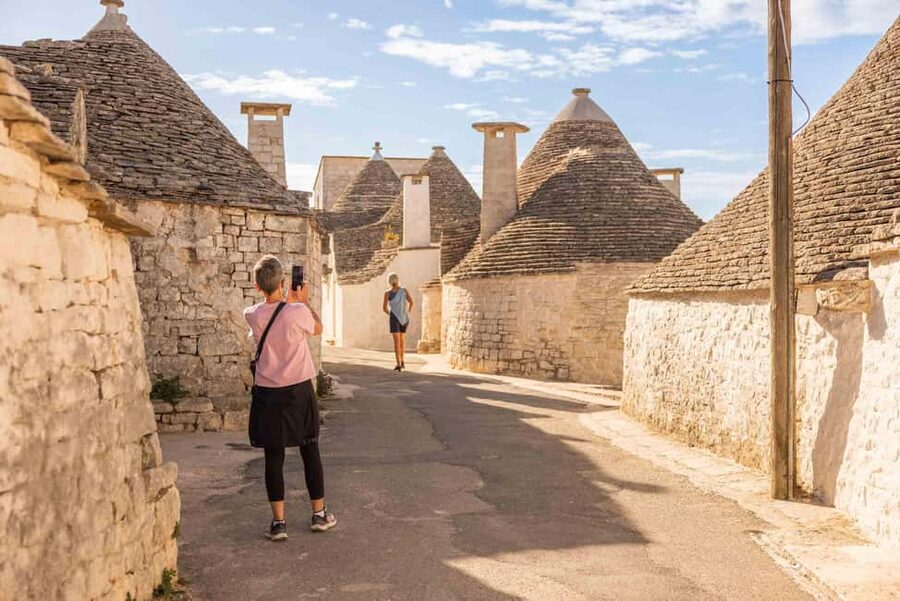
In Aia Piccola, you’ll likely notice more texture: the way stone reads up close, the way rooftops sit against the sky, and the small scale of the streets. Guides often connect this area to the idea that trulli aren’t just display pieces—they’re part of daily town life.
There’s also a real pacing advantage here. Several accounts praise guides who keep the group moving but not rushed, and who look for shade when the sun gets intense. That matters because you’ll get the best learning when you can actually listen without overheating.
Photo tip: at street level, wide shots matter less than angles. Look for lines of roofs leading into the alleys, and for spots where white-tipped cones repeat across the frame.
The guiding style that turns photos into understanding
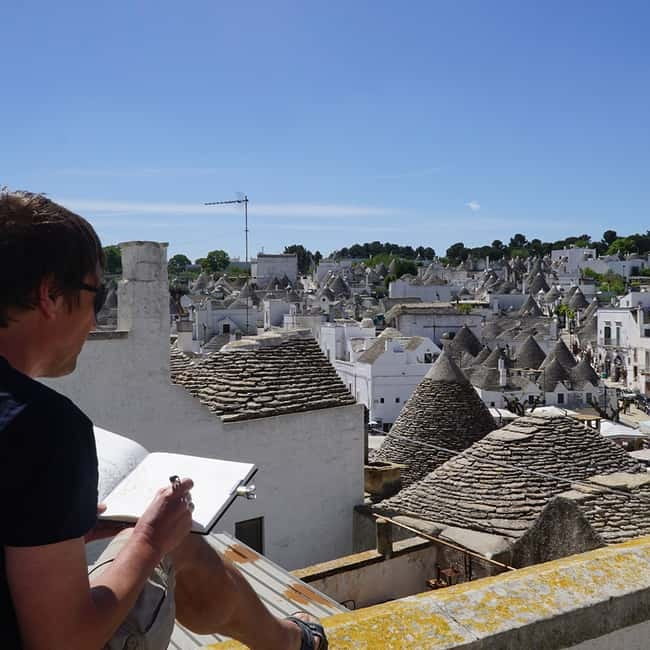
The strongest praise for this tour centers on the guide. The names you’ll hear most often include Guido and Xenia, and both are described as locally rooted, prepared, and attentive to what the group needs in real time.
Here’s what that looks like in practice:
- Storytelling tied to what you’re seeing, not just a list of dates.
- Humor that keeps the walk from turning into a lecture.
- Visual aids. Guido is specifically noted for using a self-made photo book of old images and maps, plus smart visual explanations.
- Q&A comfort. You’re not just listening; you’re getting your questions handled.
- Fact-checking. One highlight mentioned debunking fake news, which is a big deal in places where myths spread quickly.
- Practical pacing. Multiple accounts mention the guide searching for shade and being thoughtful about breaks and comfort.
- Local recommendations at the end. People mention food suggestions, which is useful because you’ll likely finish with hunger and a head full of questions about where to go next.
If you care about authenticity, this is a key point: guides are praised for steering away from the most obvious tourist-only path and toward areas that feel more residential. That’s how you get a better sense of Alberobello as a place, not just a scene.
Price and value: is $43 per person worth it?
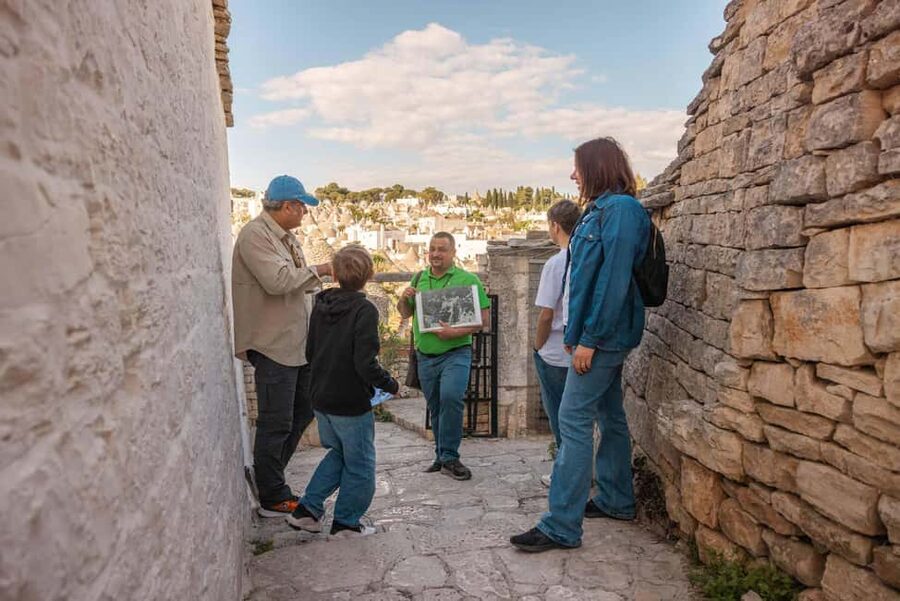
At $43 per person for about 2 hours, you’re paying mainly for three things: a local guide, structured walking time, and guided stops where the explanations land. Museums aren’t part of the deal, so you’re not paying extra ticket fees for exhibits you might never want.
That can make the value feel very fair if your goal is understanding architecture and stories—because the money goes to a human who can point out details in the moment. It also helps that children’s activities are included, which can matter for families who want something more than just standing around.
What’s not included is important for planning:
- No pickup and drop-off, so you’ll want to factor in how you’ll get to Piazza Sacramento on your own.
- No museum entry tickets, so if you plan to visit museums, you’ll add those separately.
If your schedule is tight and you want a high-impact first look at trulli, this price-to-time ratio is usually strong. If you’re already an architecture nerd and want zero guiding costs, you could go self-guided—but you’d miss the legend threads and the “what to notice” coaching that makes the town easier to read.
Comfort, crowds, and when timing matters
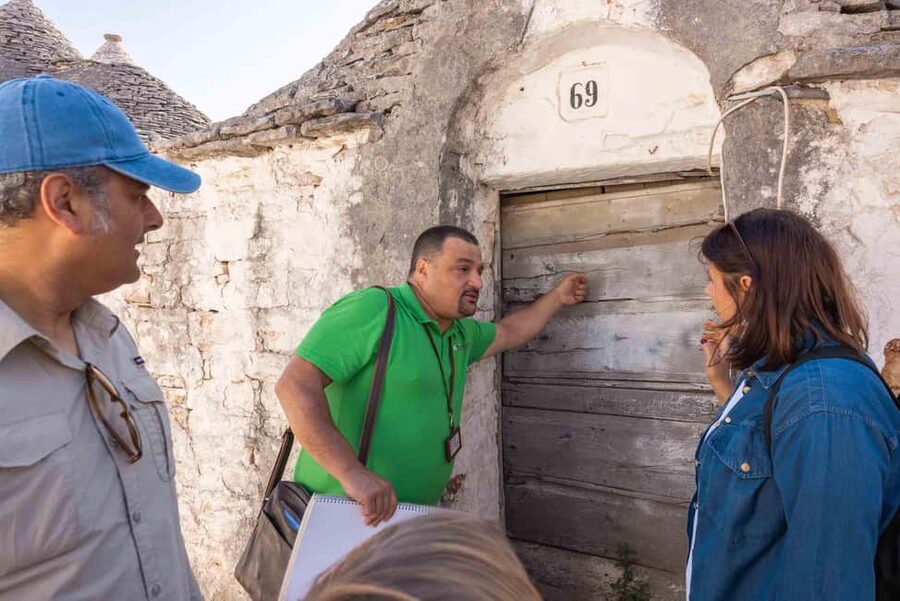
This is a walking tour in a historic center. That means two things: expect uneven footpaths and expect crowds. One account specifically notes that crowded conditions from multiple large groups can make it harder to hear your guide.
So here’s how you make it work:
- Wear comfortable shoes you trust on older streets.
- Bring water, especially in warmer weather.
- If you’re sensitive to noise, consider choosing a starting time that avoids the busiest rush windows (since starting times vary, you can use availability to find a quieter slot).
On the good side, guides are praised for looking for shade and keeping the pace manageable. In hot weather, that can be the difference between enjoying the learning and just wanting the walk to end.
And because the tour ends centrally at Largo Martellotta, you’re not stuck far away from cafés or shops afterward. You can transition smoothly into free time.
Who this tour fits best
This walk is a strong match if:
- You’re visiting Alberobello for the first time and want the trulli story explained in a practical way.
- You like architecture, legends, and local context more than you like big-ticket museum time.
- You’re traveling with kids and want the tour to include something for them, not just adult commentary.
- You’d rather see the town through a local’s lens—especially with guides praised for steering toward quieter, more residential trulli areas.
It’s also a good pick if you want a manageable time commitment. Two hours feels right for most people: enough to learn, short enough to keep your energy for the rest of Apulia.
One more point: the tour is listed as wheelchair accessible. You’ll still want to use your judgment on street surfaces, but it’s a positive inclusion if mobility is part of your planning.
Should you book this Alberobello trulli walking tour?
Yes—if your goal is to understand Alberobello beyond the photos. This tour’s value comes from the guide-driven details: how the trulli work, why they look the way they do, and the legends that give the town personality. The 2-hour format also makes it easy to fit into a day without draining you.
I’d book it especially if you’re choosing between “wander on your own” and “learn with someone local.” The praise around guides like Guido (visual photo book and maps) and Xenia (prepared, paced, local life context) suggests you’ll leave with a clearer mental map of what you saw and what it means.
Only skip it if you already know the trulli construction story in depth and you prefer total freedom with no guided structure. Otherwise, this is one of the most straightforward ways to get a meaningful first pass at UNESCO trulli without turning it into a long day.
FAQ
Where does the tour start?
The tour starts at Piazza Sacramento.
How long is the walking tour?
The duration is 2 hours.
What time does it run?
Starting times vary, so you’ll need to check availability to see the exact start time options.
Where does the tour end?
The tour finishes at Largo Martellotta, 70011 Alberobello BA, Italy.
What languages are offered?
The live tour guide is available in English and Italian.
Is pickup included?
No. Pickup and drop-off are not included, so you’ll arrange your own way to the meeting point.
Are museum tickets included?
No. Museums entry tickets are not included.
Is it suitable for children?
Yes. Children’s activities are included as part of the experience.
Is the tour wheelchair accessible?
It’s listed as wheelchair accessible.
What is the cost?
The price is $43 per person.
Should I worry about bad weather or rain?
The provided details don’t mention weather rules, so you might want to check the specific day’s conditions and the operator’s guidance before you go.
What’s the cancellation policy?
You can cancel up to 24 hours in advance for a full refund.
Can I reserve without paying right away?
Yes. It offers reserve now & pay later, meaning you can book and pay nothing today.
More Tours in Bari
- Matera: Sassi Tour with Cave House and Rupestrian Church
★ 4.7 · 6,618 reviews - Polignano a Mare: Cave Boat Tour with Aperitif
★ 4.7 · 1,891 reviews - Discover Matera, the ancient city – English tour
★ 5.0 · 1,771 reviews - Guided Tour of Matera Sassi
★ 4.5 · 1,312 reviews - Bari’s Ultimate Street Food Tour – Small Group by Do Eat Better
★ 5.0 · 1,187 reviews - Polignano a Mare boat tour emotions, caves, diving and appetizers
★ 5.0 · 1,022 reviews
More Tour Reviews in Bari
- Matera: Sassi Tour with Cave House and Rupestrian Church
★ 4.7 · 6,618 reviews - Polignano a Mare: Speedboat Cruise to Caves with Aperitif
★ 4.8 · 3,382 reviews - Polignano a Mare: Cave Boat Tour with Aperitif
★ 4.7 · 1,891 reviews - Discover Matera, the ancient city – English tour
★ 5.0 · 1,771 reviews - Guided Tour of Matera Sassi
★ 4.5 · 1,312 reviews - Polignano a Mare: Boat Trip, Swim & Cave with Aperitif
★ 4.8 · 1,300 reviews
More Alberobello Trulli Tours
- Alberobello: 2-Hour Guided Trulli Tour
★ 4.6 · 727 reviews - Tour di Alberobello e Matera in bus privato da Bari
★ 4.8 · 701 reviews - Tour of Alberobello and Guide to Matera, from Bari
★ 4.7 · 478 reviews - UNESCO’s Alberobello and Matera from Bari
★ 4.5 · 271 reviews - Alberobello and Matera Bus Tour, from Bari
★ 4.5 · 250 reviews - Alberobello: History Walking Tour
★ 4.6 · 223 reviews