Altamura feels like a living backstreet museum, where bread and stone both have stories. This private walk is built for you to grasp the town’s medieval layout fast, then slow down where it matters—inside churches, around the cathedral, and into the old-town lanes tied to local baking. You get a guide who can point out what’s actually worth your time, instead of handing you a map and hoping for the best.
Two things I especially like: you spend real time in Centro Storico with a licensed guide, and you leave knowing how Altamura’s bread culture still echoes the past. One possible drawback: since it’s a walking tour on old streets, plan for cobbles and some uneven footing, especially if you’re not thrilled by a lot of time on foot.
In This Review
- Key things to prioritize on this Altamura walk
- Centro Storico in 2 hours: how your guide turns Altamura into a readable town
- Frederick II’s Altamura Cathedral: the anchor stop you’ll remember
- A short list of churches to watch for, and why they matter
- Bread ovens, focaccia, and why food belongs on this walk
- Custom pace and an energetic guide can change everything
- Price and value: what $244.35 per group really means
- Timing your day in Altamura: morning vs afternoon and what to do afterward
- How much walking are you signing up for?
- Should you book this Altamura walking tour?
- FAQ
- How long is the Altamura walking tour?
- What is the price for the tour?
- Is this tour private?
- What’s included in the tour price?
- What should I do about food during the tour?
- Where does the tour start and end?
Key things to prioritize on this Altamura walk
- A fast route through Centro Storico that still gives you time to linger
- Frederick II of Hohenstaufen’s cathedral connection, tied to the Holy Roman Empire
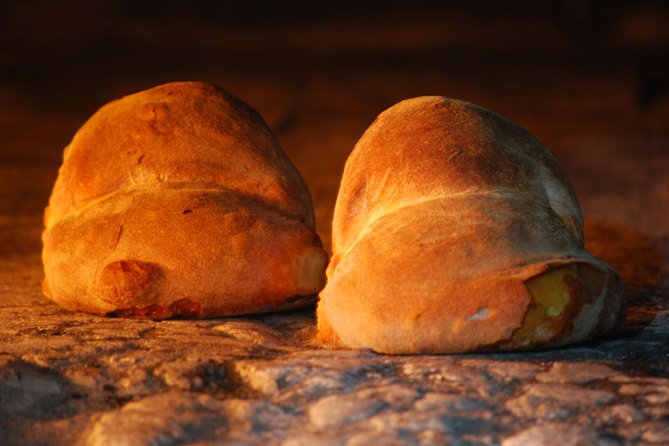
- Stops focused on bread and focaccia, including mentions of historic wood-burning ovens
- Custom pace and focus, so you can spend more time where you care most
- Morning or afternoon options, which helps you fit the walk into a tight day
- Private group format (up to 15), so your group stays together with the guide
Centro Storico in 2 hours: how your guide turns Altamura into a readable town
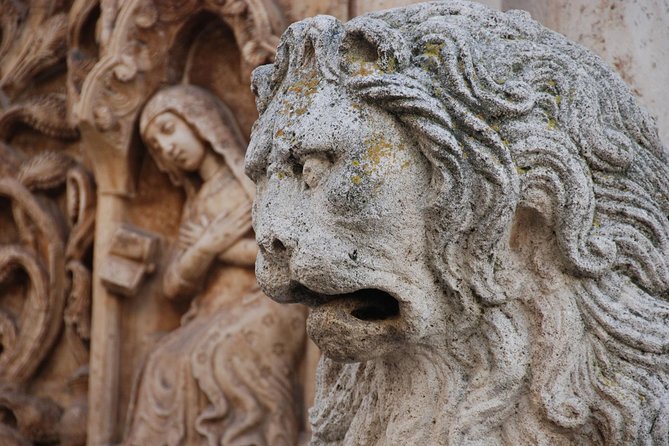
Altamura’s old center is the kind of place where a map is helpful but not enough. The streets twist, the viewpoints change block to block, and the sights repeat in small variations. That’s exactly why this tour works: the guide gives you a clear route through the historic core so you don’t waste time wandering without context.
You’ll start at Piazza Zanardelli and head into the Centro Storico, entering the historical center from an ancient gate. From there, the tour is structured around the big anchors you can’t reliably find on your own—especially the main cathedral and the cluster of important churches. Then you get time to drift through the smaller lanes where the town’s practical life is still visible, not just the postcard angles.
The pacing is one of the best features. You can set the tempo and put emphasis where you want it: architecture, street life, or bread-baking tradition. For a town like Altamura, that flexibility matters. People who care about church details will want longer looks at stone and design. People who care more about food will want more time near bakeries and bread shops (sampling is available, but it’s at your own expense).
More Bari walking tours through the old town lanes


Frederick II’s Altamura Cathedral: the anchor stop you’ll remember
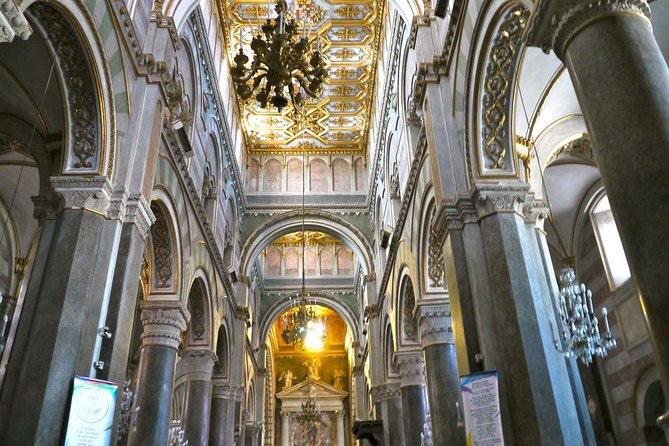
The tour’s main highlight is the Cathedral of Altamura, strongly linked to Emperor Frederick II of the Hohenstaufen family. It’s not just a stop where you stand and move on. With a guide, you’re more likely to understand how the cathedral fits into the broader medieval story of the town—built during the Holy Roman Empire era, and positioned as a defining feature of the old center.
When you visit, look at the cathedral as a “gravity point.” In old Italian towns, the major church often shapes how streets behave around it. After your time there, the rest of the old town makes more sense because you can mentally map what you’re seeing back to that center.
A second reason this stop is valuable: the guide helps you connect the cathedral to the surrounding religious sites. The itinerary includes churches such as St. Blaise, St. Nicholas, and the Greek Church. Even if you don’t go deep into architectural terms, you’ll still get a clearer sense of why Altamura has this mix of religious identities and styles gathered close together.
A short list of churches to watch for, and why they matter
The walk threads through the medieval center by visiting multiple churches, not just one. That approach turns your 2 hours into something more meaningful because each church adds a different “chapter” to the area you’re walking through.
Here’s what you should expect, in practical terms:
- St. Blaise: You’ll get context on its role within the old center and what it represents for the town’s medieval religious footprint.
- St. Nicholas: Another point of reference that helps you understand how Altamura’s spiritual life shaped daily movement through the streets.
- Greek Church: This is the sort of stop that makes a guide’s explanations useful. You’re not just looking at a building; you’re seeing proof that different traditions intersect in one compact area.
The benefit isn’t that you collect a checklist of names. It’s that you understand the logic of the neighborhood: why these buildings cluster where they do, and how that clustering helps you read the town as you walk.
One consideration: since the tour is about top sights in a few hours, you won’t have all-day pacing inside each church. You’ll get a guided overview and then the chance to linger if your group’s pace allows it. If you’re the type who needs long quiet time inside religious spaces, consider choosing a tour time when you won’t feel rushed to move on.
Bread ovens, focaccia, and why food belongs on this walk
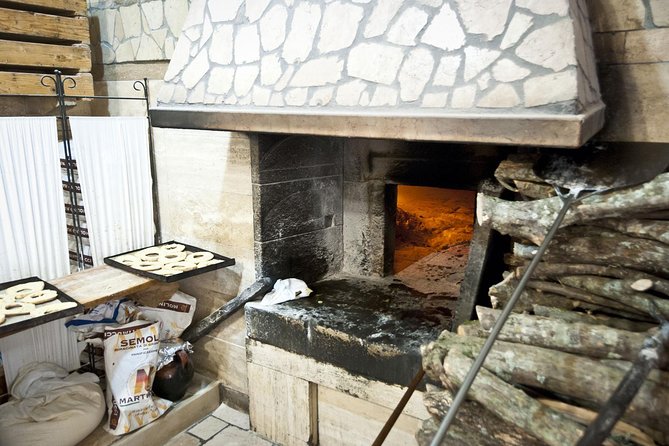
Altamura has a bread reputation for a reason, and this tour treats bread as part of the town’s identity, not an optional add-on. Your guide connects medieval Altamura to the bread-baking tradition, including references to old wood-burning ovens where cooking and bread-making traditions have continued in some form.
That link is more interesting than it sounds. Bread in historic towns wasn’t only about taste; it shaped routines, community life, and how neighborhoods operated. When your guide explains that background while you’re walking through the streets, the town feels less like scenery and more like a working past.
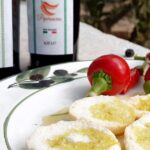
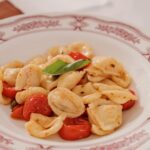
You’ll also have the chance to taste local treats. The tour specifically suggests stopping into traditional bakeries for focaccia and other bready treats at your own expense. I like this setup because you stay flexible. You can sample what you’re actually craving rather than being forced into a set “tour menu.”
Practical tip if you care about food: bring a small appetite plan. If you’re planning lunch afterward, consider a couple of tastings during the walk and save the bigger meal for later. If you’re skipping lunch, then go a little more generous with your bakery choices during the tour window.
- Guided Tour of Matera Sassi★ 4.5 · 1,312 reviews
- Polignano a Mare: Boat Trip, Swim & Cave with Aperitif★ 4.8 · 1,300 reviews
- Bari’s Ultimate Street Food Tour – Small Group by Do Eat Better★ 5.0 · 1,187 reviews
- Polignano a Mare boat tour emotions, caves, diving and appetizers★ 5.0 · 1,022 reviews
- Bari: Guided Walking Tour★ 4.7 · 744 reviews
Custom pace and an energetic guide can change everything
This is a private walking tour, so it’s not a scripted bus experience. The guide can customize the pace and focus to match your group, and that’s a huge deal for a compact old-town route where people typically have very different interests.
In at least one recent experience, the guide was Stefania, described as enthusiastic and energetic, with good humor and the ability to accommodate a schedule. Even if your guide is different, the style you want is the same: someone who can keep the group moving while still making time for questions and small detours when something is worth a pause.
Also, because it’s a private format, you’re not stuck with the pace of random strangers. If you want to slow down for a better look at a facade, ask. If you want more emphasis on the bread thread of the story, ask. This is the kind of tour where a little back-and-forth improves the whole day.
Price and value: what $244.35 per group really means
The tour price is $244.35 per group for up to 15 people, and it’s about 2 hours. That means the value depends on how many people are actually in your group.
- If you book and fill up close to the max (15 people), the cost works out to roughly $16 per person for a licensed guide.
- If it’s a smaller group, the per-person cost rises, but you still get a private, tailored walk rather than a generic shared tour.
What you’re paying for is mainly the guide’s time and the fact that someone handles the “where do we go next” problem for you in a medieval street grid. The tour also includes the licensed guide, and admission tickets are listed as free. So you’re not dealing with a stack of separate attraction fees during the 2-hour window.
One more practical note: this isn’t a long sit-down experience, and it doesn’t include lunch. That can be a positive if you like to eat on your own schedule. It can be a drawback if you’re hoping the tour itself becomes a full meal plan. You’ll need to decide what you want to do before or after.
Timing your day in Altamura: morning vs afternoon and what to do afterward
You can choose a morning or afternoon tour, which is more helpful than it sounds in southern Italy. Old towns often feel very different depending on the time of day. A morning tour can give you cooler walking conditions and easier light for photos. An afternoon tour can fit better with other plans around Bari and the surrounding area.
The tour ends back at the meeting point at Piazza Zanardelli, which makes it easy to continue your day without figuring out a new departure location. If you want a concrete lunch idea from a real-world experience: one person mentioned eating at Trattoria del Corso for home-cooking-style specialties, including many appetizers and homemade pasta. That’s a solid example of what you can aim for after the walk, even if you pick a different spot.
If you’re scheduling a bigger meal, I’d plan it right after the tour. You’ll have worked up an appetite from the walking, and you’ll be in the right mindset because the bread story will still be fresh.
How much walking are you signing up for?
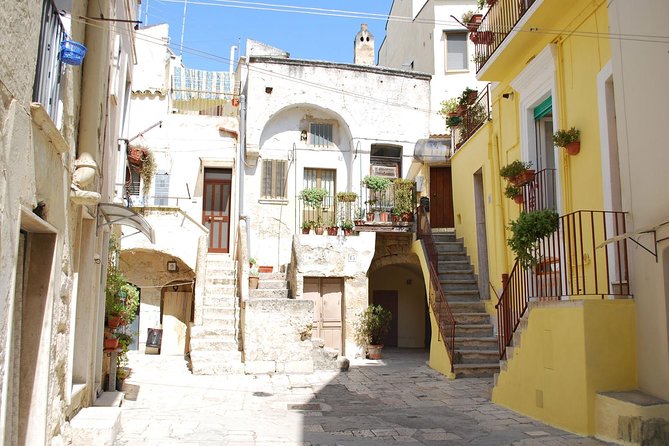
The tour is listed as about 2 hours, and the whole concept is walking through the historic center and church areas. There’s no mention of a vehicle ride, and it includes a stroll through Centro Storico with stops at the cathedral and multiple churches.
So the main “fit” question is simple: do you feel comfortable walking through old-town streets for a couple of hours? If yes, you’ll likely find this tour very efficient. If not, you may need to choose your route more carefully or discuss pace adjustments with the guide when you start.
The good news: the description says most people can participate, and the tour is a private group activity, meaning the guide can adjust to your group’s needs as much as possible within the time limits.
Should you book this Altamura walking tour?
Book it if you want a tight, high-value introduction to Altamura’s medieval center with a guide who connects what you see to what the town has been doing for centuries—especially the cathedral and the bread tradition. It’s also a strong choice if you like food and history as equals, not one as a side quest.
Skip or think twice if you’re mainly looking for a long, slow wander with zero structure. This tour is built for “top sights in a few hours,” so it’s about direction and clarity. You’ll be grateful for that structure in the old streets, but it’s not designed to turn into a half-day of free roaming.
If you can, choose the morning or afternoon slot that matches your comfort level for walking and your hunger level for focaccia afterward. Then go with the mindset that the guide is your shortcut to understanding a town that would otherwise be hard to read quickly.
FAQ
How long is the Altamura walking tour?
The tour lasts about 2 hours.
What is the price for the tour?
It costs $244.35 per group, for groups up to 15 people.
Is this tour private?
Yes. It’s a private tour/activity, so only your group participates.
What’s included in the tour price?
A licensed guide is included. Admission ticket information is listed as free.
What should I do about food during the tour?
Lunch is not included. You can visit traditional bakeries for focaccia and other treats at your own expense.
Where does the tour start and end?
It starts at Piazza Zanardelli, 70022 Altamura BA, Italy, and ends back at the meeting point.
More Walking Tours through Old Bari
- Bari: Guided Walking Tour
★ 4.7 · 744 reviews - Bari: Pasta Experience Walking Tour
★ 4.7 · 660 reviews - Bari Walking City Tour
★ 4.5 · 511 reviews - Matera’s Sassi Walking Tour – History & Culture
★ 5.0 · 476 reviews - Bari: Walking Street Food Tour
★ 4.7 · 458 reviews - Sassi di Matera: Guided Walking Tour with Cave House/Church
★ 4.7 · 343 reviews
More Tours in Bari
- Matera: Sassi Tour with Cave House and Rupestrian Church
★ 4.7 · 6,618 reviews - Polignano a Mare: Cave Boat Tour with Aperitif
★ 4.7 · 1,891 reviews - Discover Matera, the ancient city – English tour
★ 5.0 · 1,771 reviews - Guided Tour of Matera Sassi
★ 4.5 · 1,312 reviews - Bari’s Ultimate Street Food Tour – Small Group by Do Eat Better
★ 5.0 · 1,187 reviews - Polignano a Mare boat tour emotions, caves, diving and appetizers
★ 5.0 · 1,022 reviews
More Tour Reviews in Bari
- Matera: Sassi Tour with Cave House and Rupestrian Church
★ 4.7 · 6,618 reviews - Polignano a Mare: Speedboat Cruise to Caves with Aperitif
★ 4.8 · 3,382 reviews - Polignano a Mare: Cave Boat Tour with Aperitif
★ 4.7 · 1,891 reviews - Discover Matera, the ancient city – English tour
★ 5.0 · 1,771 reviews - Guided Tour of Matera Sassi
★ 4.5 · 1,312 reviews - Polignano a Mare: Boat Trip, Swim & Cave with Aperitif
★ 4.8 · 1,300 reviews