Bari is the kind of place that rewards slow looking. This walking tour plus pasta lesson packs major stops into about two hours, and you also get a hands-on meal that feels local, not staged. I love the way the route links iconic churches with street-level history, and I love that the pasta part happens with real Bari tradition, including wine and tasting along the way.
One thing to consider: the tour can feel fast-paced. If you want lots of time for photos at every corner, plan to focus on the highlights and catch up on a longer self-guided wander afterward.
In This Review
- Key things to know before you go
- The mix that works: old-town Bari + orecchiette hands-on
- Getting your bearings fast (and why the pace matters)
- Stop 1: Basilica San Nicola and Bari’s cross-faith draw
- Stop 2: Cattedrale di San Sabino and the Succorpo beneath your feet
- Stop 3: Castello Normanno Svevo—castle, art, and a different kind of history
- Stops 4 and 5: Piazza Ferrarese and Piazza Mercantile (where the city meets)
- The pasta experience: learning orecchiette and eating what you make
- What you drink and taste (and why it’s part of the lesson)
- Guides make the difference (especially in a short 2-hour window)
- Price and value: is $52.12 worth it?
- Who should book this pasta-walk (and who should skip it)
- Practical tips so it goes smoothly
- Should you book Bari’s pasta walking tour?
- FAQ
- How long is the Bari walking tour with pasta?
- What’s included in the price?
- Do I need to pay for entry to the sights?
- Where do I meet the guide?
- Is the tour offered in English?
- What group size should I expect?
- Can I get a refund if I cancel?
Key things to know before you go
- Bari Vecchia highlights in one loop: San Nicola, San Sabino, Normanno-Svevo Castle, and two central piazzas
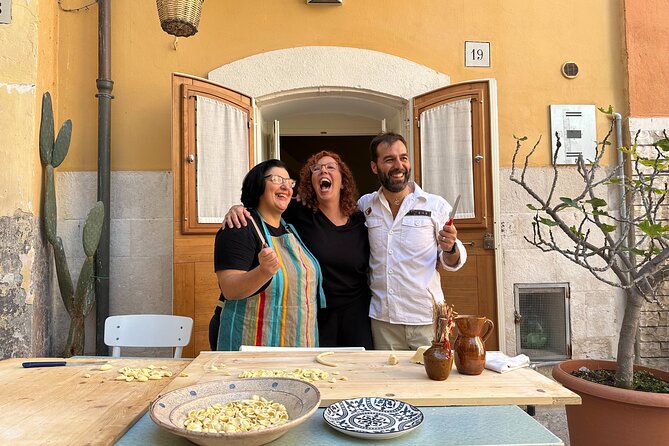
- Orecchiette made with a local: you learn the technique, then eat what you help make
- Small group size (up to 15): easier questions, less waiting, and a more personal feel
- Underground history at San Sabino: the Succorpo (Roman walls beneath the cathedral)
- Apulian finds at Piazza Ferrarese: a restored area where an ancient Roman road stretch was uncovered
- Food stops beyond pasta: a tasting mix, and you might also get small extras like gelato and even a musical moment
The mix that works: old-town Bari + orecchiette hands-on
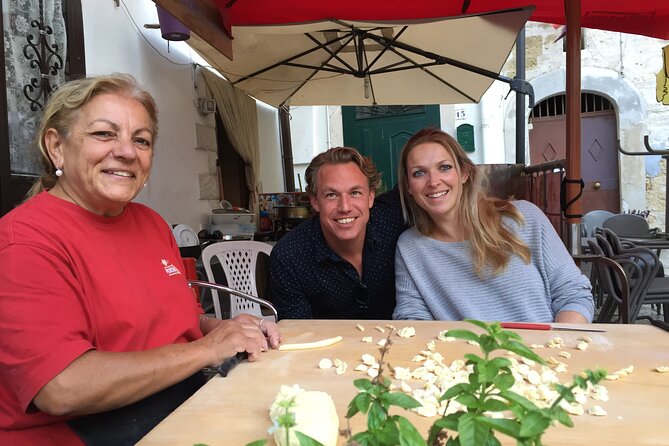
This is a smart format for a first visit. You start with Bari’s landmarks—the kind that define the city skyline and the stories locals tell—and then you shift into food, where you actually do something with your hands.
A big part of the value is how tightly the tour connects “why this matters” with “what people eat here.” The guide weaves the religious, Roman, Norman, and civic layers together, so you’re not just ticking off sights. When you then make orecchiette, it lands as another way Bari carries tradition forward.
The tour is designed to be doable even if your day is packed. It runs about 2 hours, and it’s built around walking with short stops so you keep moving without feeling like you’re sprinting through the city.
More orecchiette and Puglia cooking classes around Bari
Getting your bearings fast (and why the pace matters)
You’ll meet at Strada Vallisa, 81, 70122 Bari and end back at the same spot. That back-to-base ending is useful: you don’t have to reorganize your day or worry about transport from a random corner of old town.
The group is capped at 15 people, which helps a lot. You’re not lost in a crowd. You can ask questions, and guides can keep track of everyone. In the feedback, the pace is praised as easy and well organized, with some guides also managing the timing around shade when the weather turns hot.
The trade-off is that the schedule is tight. One person noted they barely had time for photos, so go into this expecting “see the essentials, get the story” rather than “lingering photography session.” If photos matter most to you, do your extra camera time after the tour.
Stop 1: Basilica San Nicola and Bari’s cross-faith draw
The tour starts with Basilica San Nicola (Basilica of Saint Nicholas). This church is a major pilgrimage destination for both Roman Catholics and Orthodox Christians. That alone makes it a standout in Bari: it’s not just local architecture, it’s a living part of faith across borders.
The ticket note is simple: entry is free for this stop. That matters for value because you can spend your energy on the place, not on figuring out fees or timing.
What I like about this opening is the way it sets the tone. Bari’s identity is deeply tied to movement—pilgrims, merchants, relics, and ideas—so starting at a pilgrimage anchor makes everything else you see feel connected.
Stop 2: Cattedrale di San Sabino and the Succorpo beneath your feet
Next up is the Cattedrale di San Sabino, seat of the archbishop for Bari-Bitonto and dedicated to Saint Sabinus, whose relics arrived here in the 9th century.
Here’s the payoff you don’t want to miss: the stop centers on the Succorpo, a set of underground Roman walls inside/under the cathedral area. This is one of those “Bari surprises you when you look under the surface” moments. It turns the cathedral from a quick exterior stop into a deeper sense of layered time.
One practical detail: admission isn’t included for this stop. So if you’re counting on built-in access, double-check how the guide handles entry on the day. Even if you only get the main courtyard view, you’ll still hear the context for why people come here.
More Bari walking tours through the old town lanes
- Bari: Pasta Experience Walking Tour★ 4.7 · 660 reviews
- Bari Walking City Tour★ 4.5 · 511 reviews
- Matera’s Sassi Walking Tour – History & Culture★ 5.0 · 476 reviews
- Bari: Walking Street Food Tour★ 4.7 · 458 reviews
- Sassi di Matera: Guided Walking Tour with Cave House/Church★ 4.7 · 343 reviews
Stop 3: Castello Normanno Svevo—castle, art, and a different kind of history
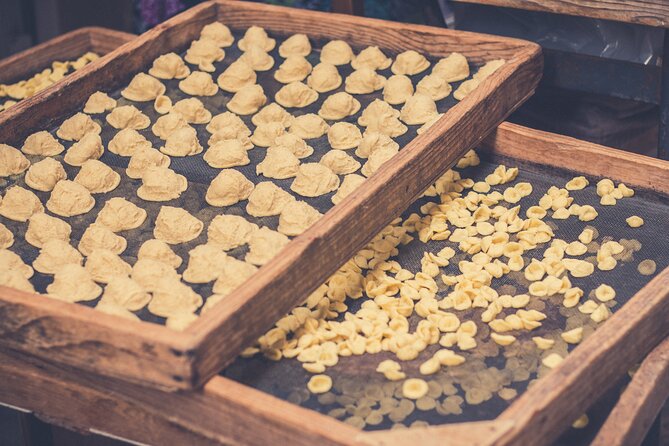
Then you head to Castello Normanno Svevo (the Norman-Swabian Castle). It’s not presented as a huge museum day. Instead, the focus is on what the castle is doing now: the collection of plaster casts and temporary art exhibitions.
Even if you don’t plan a full inside visit, the stop helps you read the city’s defensive and political past. Castles in old towns aren’t just dramatic buildings—they explain why streets and neighborhoods developed where they did.
Like the cathedral stop, museum-style admissions aren’t included here. Still, a short stop at the castle area makes sense in a two-hour format: you get the story and the setting without turning it into a long entry-ticket project.
Stops 4 and 5: Piazza Ferrarese and Piazza Mercantile (where the city meets)
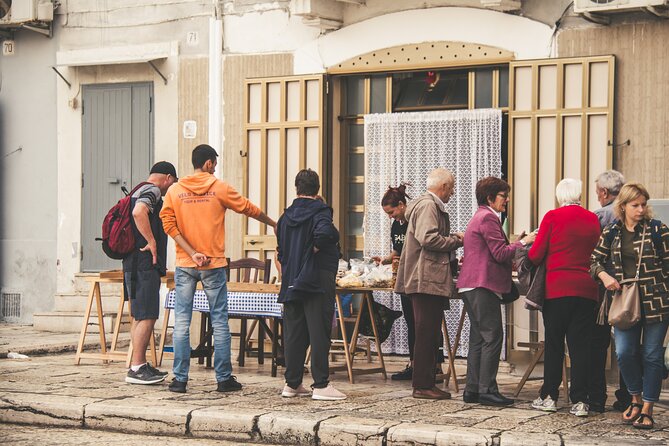
The tour then shifts from monuments to civic life. It’s easy to forget how much old cities run on piazzas, but Bari’s piazzas do real work: they’re meeting points, access points, and the visual center of neighborhood life.
At Piazza Ferrarese, you’re in a gateway to Bari Vecchia, with narrow streets, alleys, and small openings that connect the old town from Piazza Ferrarese toward Piazza Mercantile and up toward the castle area. During restoration work, a short stretch of ancient road surfaced—the Via Appia–Traiana, built by Romans in the early 2nd century A.D. That’s a very specific kind of fun: you’re standing near a place where layers of the Roman world literally came back to light.
Next is Piazza Mercantile, which has long represented Bari’s commercial and administrative heart. It’s tied to the city market tradition (even though it’s not currently in that exact area) and to Palazzo Sedile, a historical landmark connected to the city hall. Today it’s described as an irreplaceable meeting point for locals.
Both piazzas are marked as free stops, so they’re easy “value boosters.” They also help you understand Bari’s rhythm: monuments are dramatic, but piazzas tell you how people actually navigate the city day to day.
The pasta experience: learning orecchiette and eating what you make

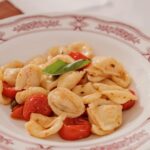
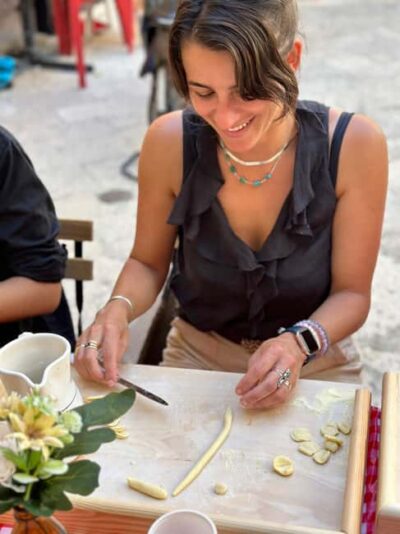
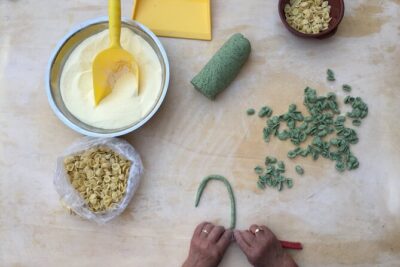
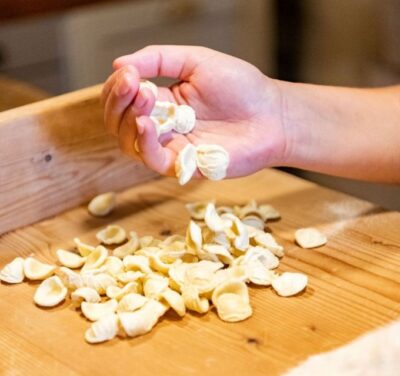
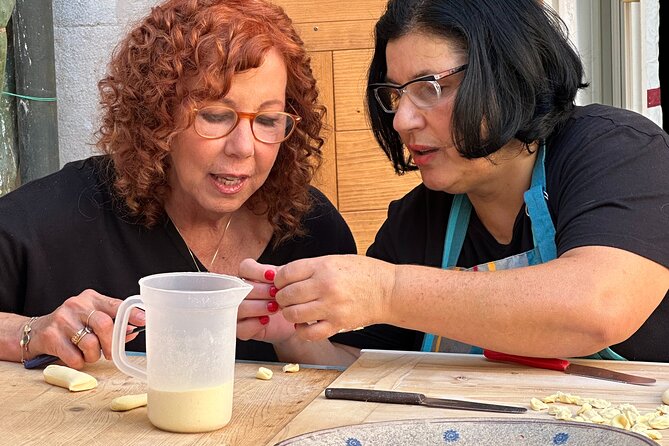
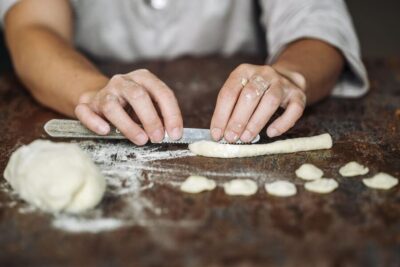
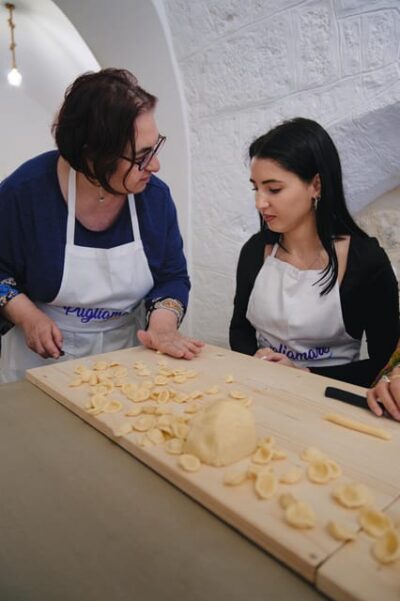
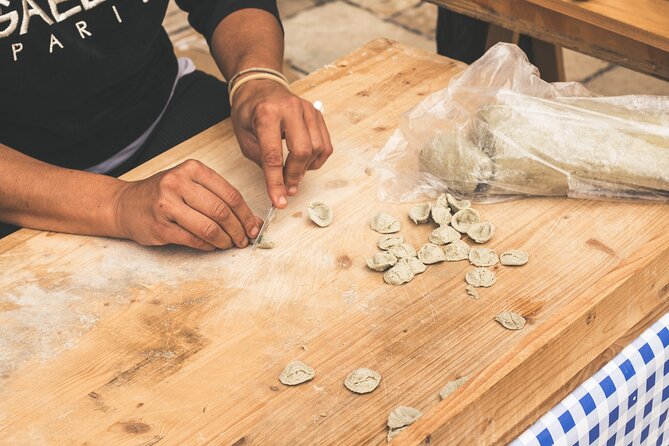
This is the main event for most people. The tour’s pasta part focuses on orecchiette, the iconic Apulian shape, and you make it (or you’re guided through the technique) with a local host.
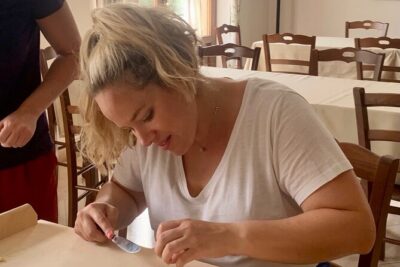
Multiple guides in the feedback are mentioned with real warmth—people talk about hosts like Erica, Barbara, Anna, Anna Rita, and families/hosts connected with names such as Portia / Porzia. The consistent thread is that you’re not just watching. You get taught the technique step-by-step, and then you sit down to eat what you prepared.
That hands-on piece matters more than you might think. Watching pasta gets you educated; making it gets you a muscle memory of the texture and shape that food videos can’t provide. In Apulia, the details are the tradition. The little ridges and the overall feel are what give orecchiette its job: to catch sauce.
There’s also a food expectation reset worth mentioning. Some feedback calls out that the lunch portion can feel small and that wine taste is subjective. If you’re arriving hungry, treat the pasta experience as a cultural lesson meal, not a heavy lunch. You can always follow up with something bigger on your own afterward.
What you drink and taste (and why it’s part of the lesson)
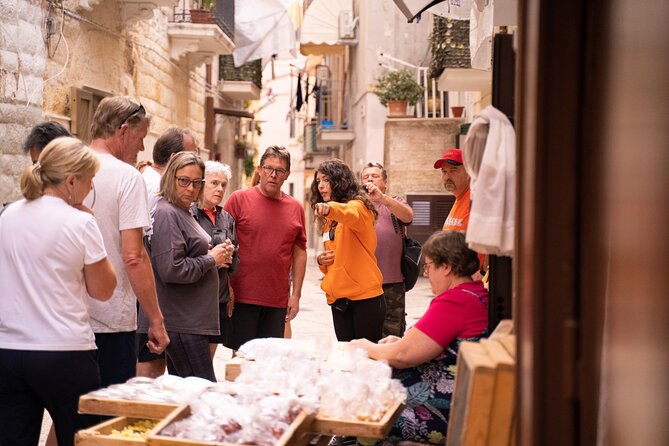
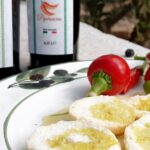
The tour includes food and wine tasting along with the pasta experience. The tasting element is where you learn how the meal fits into everyday Bari eating, not just into special-event dining.
Wine is included, but taste can vary by person. One review described the wine as tasting like vinegar, which tells me it’s best to treat the wine portion as an included sample rather than a guarantee of your favorite style. If wine isn’t your thing, you may still enjoy the pasta lesson and the food tasting part.
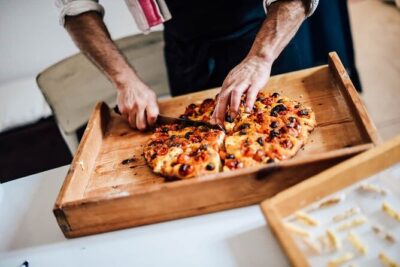
You might also find small extras added to the experience. Some people reported the tour ending with gelato, and one mentioned a musical treat. These aren’t clearly listed as fixed items in the core outline you’ll receive, but if your guide includes them, it’s the kind of Bari touch that turns a good tour into a memorable day.
Guides make the difference (especially in a short 2-hour window)
Because this is a compact timeline, the guide matters. In the feedback, the most praised guides combine city history storytelling with humor and a friendly pace.
Names that came up repeatedly include Barbara, Anna, Erica, Alessio, Vincenzo, Guilia, Carlotta, Iris, and Anna Rita. If you’re the type who likes your history explained in human terms—why something matters, not just what it is—this is where you’ll feel the payoff.
Also, there’s a practical benefit: one person said a guide even helped them catch up when they were late (using a taxi/cart option, with the guest paying for it). That suggests the operator tries to keep people integrated and not just strict-stop-after-start.
Price and value: is $52.12 worth it?
At $52.12 per person for about two hours, this isn’t just a walking tour. You’re paying for:
- a local guide across key Bari sites
- a pasta experience (hands-on lesson)
- food and wine tasting
- a small-group format (max 15)
If you compare it to doing history walking plus finding a separate cooking class plus paying for a meal, this package-style approach is the value story. You’re cutting decision fatigue. The route and the food timing are bundled, which is exactly what you want on a trip with limited time.
Is it the best choice if you want a long, slow, museum-heavy day? No. That’s not what it’s built for. But if you want a “get the city + learn a tradition + eat what you made” combo, the price starts to make sense quickly.
Who should book this pasta-walk (and who should skip it)
Book this if:
- you want a first-time introduction to Bari Vecchia with major sights
- you like food experiences where you learn a real technique, like making orecchiette
- you’re okay with a tighter schedule that keeps moving through the old town
- you enjoy guides who mix facts with storytelling and a light tone
Consider skipping or pairing it with extra time if:
- you want lots of photo pauses and slow wandering at each stop
- you’re going to be disappointed by a smaller lunch portion (it’s more of a lesson meal than a full meal)
- you’re visiting during peak heat; at least one review pointed out that August temperatures made walking uncomfortable, even with good pacing
Practical tips so it goes smoothly
A few simple moves can make a big difference:
- Wear shoes you can walk in for a couple hours. The route is short-stop hopping, not a sit-down museum day.
- Bring a way to handle heat. One review mentioned shade management and hot weather can be a factor.
- If you care about photos, decide your top 2 or 3 “must shoot” spots in advance. The schedule can feel tight.
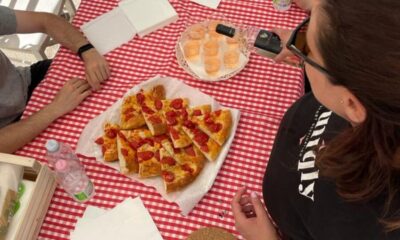
- If you’re hungry, mentally plan this as a cultural meal. Afterward, add a proper gelato, focaccia, or another bite on your own.
Also, plan for the ticket reality: some entries are free (like San Nicola) and some are not included (like the Succorpo stop details and other museum-style access). Your guide will handle the flow, but it helps to know the pattern going in.
Should you book Bari’s pasta walking tour?
Yes, if you want a compact, high-value old-town introduction that ends with something you can’t get by simply reading about food. The mix of Bari Cathedral-area storytelling and the hands-on orecchiette lesson is what makes this work.
I’d book it especially if you love the idea of learning a local dish in a local setting, with a guide who can explain what you’re seeing while you walk. If you prefer very slow pacing or you’re expecting a big, restaurant-style lunch, you may feel rushed or underfed. In that case, keep it as a short highlight and plan your fuller meal separately.
FAQ
How long is the Bari walking tour with pasta?
It runs about 2 hours.
What’s included in the price?
The tour includes a 2-hour walking tour with a local guide, plus food and wine tasting and a pasta experience.
Do I need to pay for entry to the sights?
Admission to Basilica San Nicola is listed as free. Admission for Cattedrale di San Sabino (including the underground Succorpo area) is listed as not included, and Castello Normanno Svevo is also listed as not included.
Where do I meet the guide?
The meeting point is Strada Vallisa, 81, 70122 Bari BA, Italy, and the tour ends back at the meeting point.
Is the tour offered in English?
Yes, the experience is offered in English, and it may be operated by a multilingual guide.
What group size should I expect?
The tour has a maximum group size of 15 travelers.
Can I get a refund if I cancel?
Yes. You can cancel for a full refund up to 24 hours in advance of the experience’s start time.
More Tours in Bari
- Matera: Sassi Tour with Cave House and Rupestrian Church
★ 4.7 · 6,618 reviews - Polignano a Mare: Cave Boat Tour with Aperitif
★ 4.7 · 1,891 reviews - Discover Matera, the ancient city – English tour
★ 5.0 · 1,771 reviews - Guided Tour of Matera Sassi
★ 4.5 · 1,312 reviews - Bari’s Ultimate Street Food Tour – Small Group by Do Eat Better
★ 5.0 · 1,187 reviews - Polignano a Mare boat tour emotions, caves, diving and appetizers
★ 5.0 · 1,022 reviews
More Tour Reviews in Bari
- Matera: Sassi Tour with Cave House and Rupestrian Church
★ 4.7 · 6,618 reviews - Polignano a Mare: Speedboat Cruise to Caves with Aperitif
★ 4.8 · 3,382 reviews - Polignano a Mare: Cave Boat Tour with Aperitif
★ 4.7 · 1,891 reviews - Discover Matera, the ancient city – English tour
★ 5.0 · 1,771 reviews - Guided Tour of Matera Sassi
★ 4.5 · 1,312 reviews - Polignano a Mare: Boat Trip, Swim & Cave with Aperitif
★ 4.8 · 1,300 reviews
More Orecchiette & Puglia Cooking Classes
- Bari: Pasta Experience Walking Tour
★ 4.7 · 660 reviews - Polignano a Mare: Pasta Making Cooking Class with Drink
★ 4.8 · 260 reviews - Polignano a Mare: Apulian Cooking Class with Food and Drinks
★ 4.8 · 159 reviews - Apulian Cooking Class with Aperitif and Wine in Polignano a Mare
★ 5.0 · 89 reviews - Bari Bike Tour with Pasta Experience
★ 5.0 · 87 reviews - Matera: Pasta Cooking Class Old Farmer Style in Sassi Cellar
★ 5.0 · 87 reviews