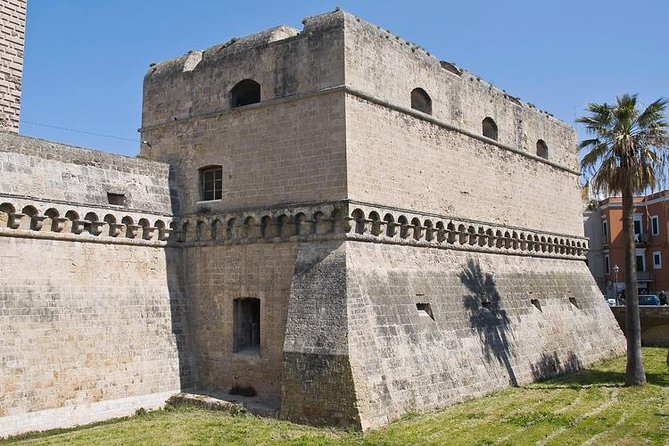
Bari’s defenses tell a story you can walk. This tour follows the city’s fortifications step by step, from megalithic-style beginnings to the way Murat reshaped the urban plan, so history feels physical, not dusty. I especially love the Castello Normanno Svevo + Gipsoteca, with its 130 reproduced Romanesque models, and I like how the route mixes serious stonework with quick, real Bari street life like the orecchiette makers.
One thing to consider is that you’ll do a fair amount of outdoor walking between viewpoints, and the tour depends on good weather.
If you want a quick way to understand Bari Vecchia’s layout, this works fast. It also helps that the group stays small (up to 30), and the guides you might encounter, like Ana, Rosella, Francesca, Luana, and Fabio, are praised for spotting the small details that make the stones make sense.
In This Review
- Key highlights I’d prioritize
- Why Bari’s Fortifications Feel Like a Living Map
- Castello Normanno Svevo and the Gipsoteca Models
- Orecchette Street Stop at Arco Basso
- San Sabino and San Nicola: Exterior Views, Big Meaning
- Walking the Wall of Bari Vecchia from Via Venezia
- Fortino S. Antonio: Highest Point for Medieval Traces
- Piazza del Ferrarese and the Sea Gate That Isn’t There Anymore
- How Long Is It, and What the Pace Feels Like
- Price and Value: What You’re Really Paying For
- Who This Tour Suits (and Who Might Want a Different Plan)
- Should You Book This Fortifications Tour?
- FAQ
- How long is the Fortifications of Bari tour?
- What is the price per person?
- Where does the tour start and end?
- Is the ticket mobile?
- What’s included in the price for admission?
- Is it a small group tour?
- Is the tour mostly outside?
- Are service animals allowed?
- What’s the cancellation rule?
- What if the tour can’t run due to weather?
Key highlights I’d prioritize
- Castello Normanno Svevo is worth the ticket on its own, thanks to the Gipsoteca with 130 Apulian Romanesque models.
- Orecchette street action: you’ll stop at the Arco Basso area for a short look at pasta shaping with quick hands.
- Exterior architecture stops: you get San Sabino and San Nicola context without spending time hunting for interiors.
- Real wall-walk views: Via Venezia gives you a panoramic way to read the city’s defensive lines.
- Fortino S. Antonio is the high-point perspective for the old port and medieval traces.
Why Bari’s Fortifications Feel Like a Living Map
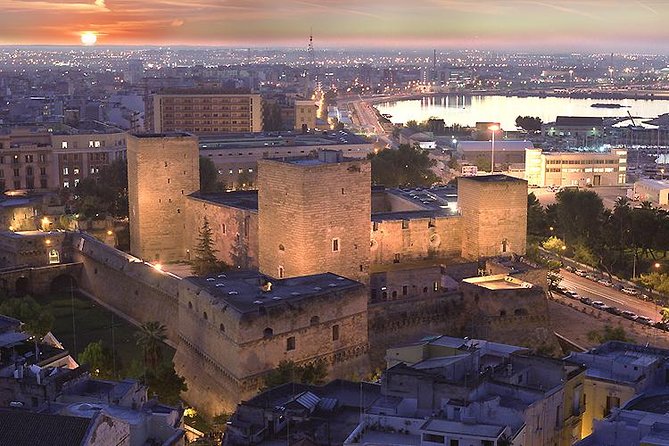
Bari has always been about where people could defend themselves—and this tour is built around that simple idea. You move from stronghold to stronghold, and the guide ties each stop to a larger timeline: old walls, changing power, and the way the city’s shape still reflects those choices.
The pacing is also smart. Even if you’re not a hardcore medieval-history person, you’ll get enough context to understand what you’re seeing. And because several stops are exterior views (cathedral and basilica façades, wall sections, viewpoints), you spend more time looking than waiting.
More Bari sightseeing by day, from the castle to the seafront



Castello Normanno Svevo and the Gipsoteca Models
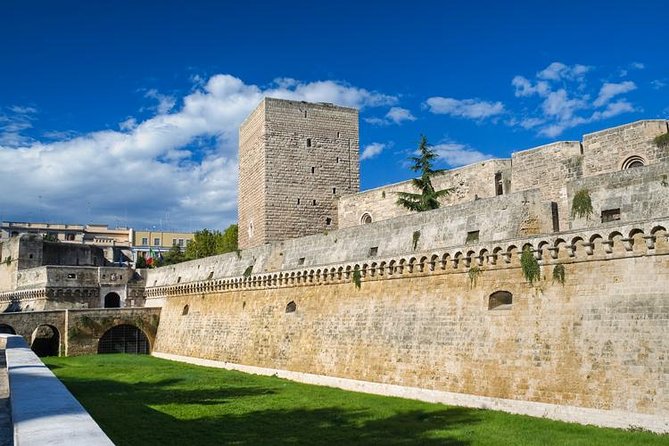
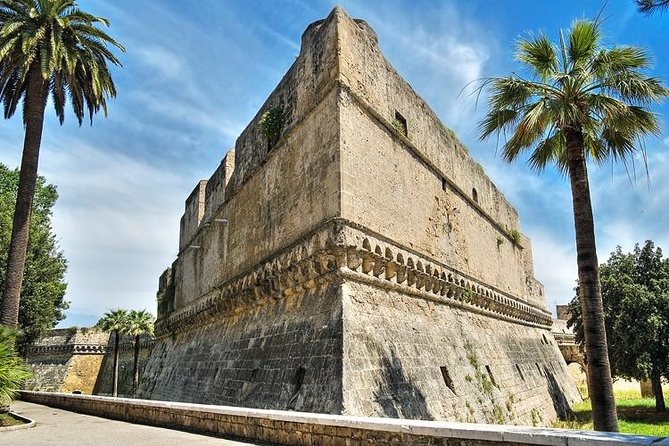
The tour starts with the Castello Normanno Svevo, including the entrance ticket. This matters for value because it’s the only stop that’s explicitly ticketed for admission, and it’s a full 1-hour block.
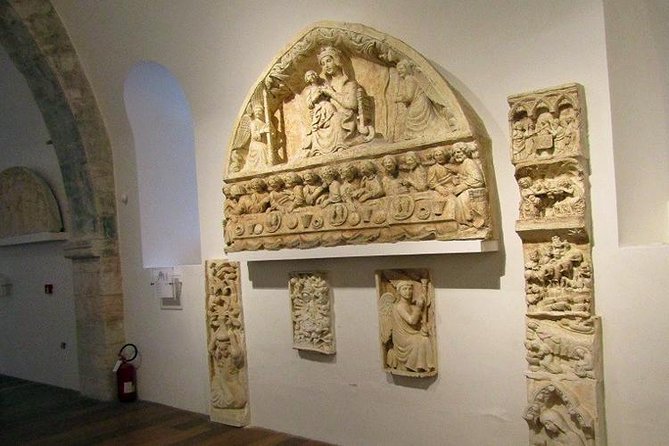
Inside, the Gipsoteca is the star: 130 models showcasing masterpieces of Apulian Romanesque architecture. What I like about this setup is that you’re not just hearing about Romanesque details—you’re visually comparing forms. The models cover capitals, shelves, statues, and architectural details. And they weren’t pulled from thin air: the reproduced works were made in 1911 by sculptors Pasquale Duretti and Mario Sabatelli. That date gives the room a specific kind of character—someone once tried to preserve architectural “how-it-looks” before modern tourism made conservation feel automatic.
If you tend to get lost inside large museums, this one is still friendly. It’s focused on a style you can recognize in churches across Puglia, so the time spent inside tends to pay off later when you look at façades during the rest of the walk.
Orecchette Street Stop at Arco Basso
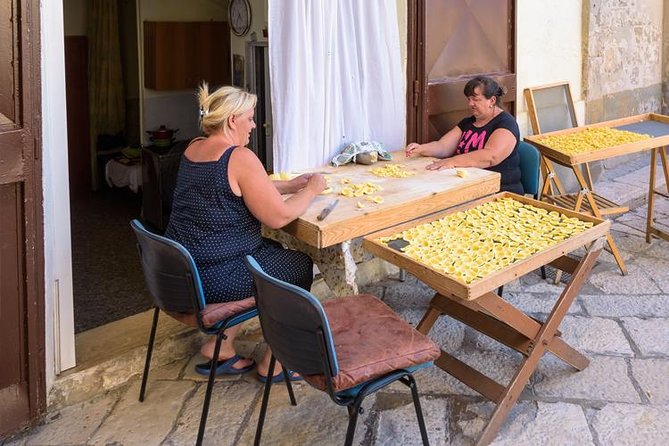
Right after the castle, you shift from stone to street food with a short stop along the Strada delle Orecchiette area, near the Arco Basso. It’s brief—about 15 minutes—and that’s exactly why it works. You get a taste of daily Bari without turning the whole tour into a food crawl.
The key moment is watching the “street artists” model orecchiette with fast, practiced hands. It’s one of those small local rituals that makes a city feel inhabited. And it also connects to the theme of fortifications in a clever way: even defensive cities have their rhythms, and Bari’s everyday life keeps going in the narrow spaces built around centuries of walls.
If your main goal is history only, you might be tempted to treat this as a quick break. But even then, it’s a helpful reset before the exterior church stops and wall walk.
San Sabino and San Nicola: Exterior Views, Big Meaning
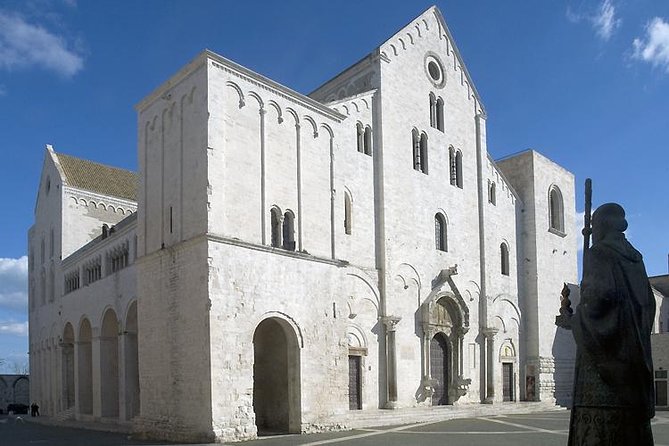
After the food stop, the itinerary turns to the religious architecture that sits inside Bari’s defensive story.
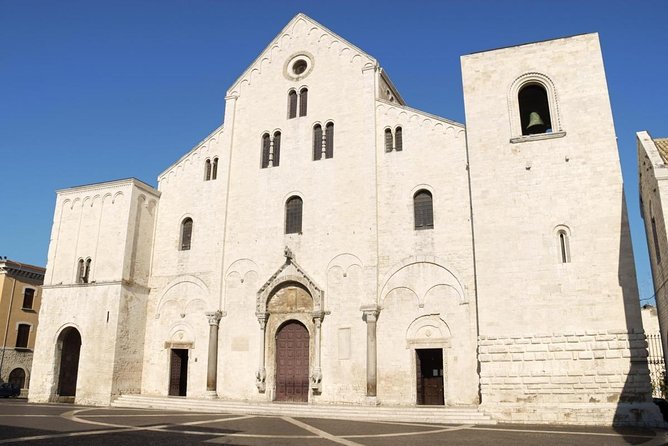
First comes the Cattedrale di San Sabino. You visit the exterior with history and architecture explained. Exterior visits can sound limiting, but in a tour about fortifications, façades are useful. They show how sacred spaces were positioned in a city with shifting defenses—what people chose to display outwardly.
Then you move to the Basilica San Nicola, again from the exterior viewpoint, with context about the Byzantine citadel and St. Nicholas. This stop is about more than a landmark. It gives you a second anchor point for understanding how power and faith overlapped in Bari, long before modern streets fully smoothed out the city’s “before-and-after” eras.
One practical note: because these are short exterior blocks, you’re not expected to linger. If you want extra time photos, just be ready to do it quickly and then rejoin the group.
More history-led walks around old Bari and the cathedral
- Matera’s Sassi Walking Tour – History & Culture★ 5.0 · 476 reviews
- Guided Tour, Historic Center Sassi Rock Churches and Cave House★ 5.0 · 461 reviews
- Matera: Sassi History and Culture Walking Tour★ 4.8 · 267 reviews
- Alberobello: History Walking Tour★ 4.6 · 223 reviews
- Matera: Sassi di Matera Historical Self-Guided Audio Tour★ 3.6 · 183 reviews
Walking the Wall of Bari Vecchia from Via Venezia
This is where the tour really becomes a map you can feel.
You’ll walk on the Wall of Bari Vecchia along Via Venezia, taking in panoramic views of the city and passing by bastions. Even if you only catch partial sightlines between buildings, you’ll start to recognize how the old city’s edge shaped movement and protection.
What I like about a wall walk is that it changes your scale. In the streets, everything feels tight and close. On the wall, Bari suddenly looks planned—lines, angles, and strategic placements. It’s an easy way to understand why certain neighborhoods developed where they did.
If you’re the type who normally skips city walls, this section can flip your mind. You don’t need to be a military-history specialist; the views plus the guide’s explanation are enough to make the route click.
Fortino S. Antonio: Highest Point for Medieval Traces
Next up is Fortino S. Antonio, located in front of the old port. This rampart was one of four that marked the walls of Bari until the nineteenth century, and the stop is designed to connect the medieval defensive layout with what you can still recognize today.
This is also the “lookout” moment of the walk. The fort is described as the highest point of the old city, letting you embrace traces of the medieval walls behind the Imperatore waterfront. That waterfront dating is also given: it points to the first half of the 20th century. In other words, you’re not just seeing one era. You’re seeing layers stacked in one glance—old wall lines sitting behind later development.
If you’re short on time in Bari and want the best payoff for your camera and your understanding, this is a top stop to treat as a priority.
Piazza del Ferrarese and the Sea Gate That Isn’t There Anymore
The last major area is Piazza del Ferrarese. Historically it was known as Piazzetta d’armi, and it’s tied to where the Sea Gate once stood. That alone is a nice trick for visitors: you learn that a place can be defined by a structure that’s no longer there.
Today, Piazza del Ferrarese acts as a dynamic connector between the historic center and the Muratian village area of the city. It’s the kind of endpoint that helps you understand how old defenses gave way to a new urban identity.
This is also where the tour’s timeline gets especially satisfying. The big story thread connects back to Murat, who started the “chessboard” work of the new city after demolishing earlier defenses. So your route ends not just at an impressive view, but at a functional urban junction—the kind of modern space that replaced older fort-driven choke points.
How Long Is It, and What the Pace Feels Like
The full tour runs about 2 hours 30 minutes. With multiple stops—plus a real entrance time at the castle—it’s long enough to learn the theme, but not so long that you’ll feel trapped in one place.
The group size cap of 30 travelers is important. It tends to keep the walk manageable and makes it easier for a guide to point out details. It also matches what you’ll want when you’re walking wall lines and reading city layout rather than sitting in a van.
Also, expect outdoor time. Since the experience requires good weather, I’d plan to check the forecast the day of.
Price and Value: What You’re Really Paying For
At $53.36 per person for about 2.5 hours, the best way to judge value is to look at what’s included. The castle entrance ticket is included in the price, and the Gipsoteca visit inside the Castello Normanno Svevo is the main paid component.
Other stops are structured as short visits with free admission or exterior viewpoints: the orecchiette street stop, the cathedral and basilica exteriors, the wall walk, and the fort and piazza viewpoints. So you’re not paying to enter multiple buildings. You’re paying for guided interpretation plus the most substantial ticketed experience.
If you’re visiting Bari briefly—especially if you’re coming off a cruise—you’ll likely feel the value because you cover key historic anchors quickly without needing to plan separate museum visits.
Who This Tour Suits (and Who Might Want a Different Plan)
This tour fits best if you like:
- walking tours that teach you how a city is organized
- medieval and early-modern urban changes (Murat’s reshaping, defensive lines, ramparts)
- visitors who want the essentials of Bari Vecchia without spending all day
It’s also a strong choice if you enjoy guides who explain details clearly. The people you might meet on departure are described as friendly and skilled at making the route feel fun, even when the topic is serious. Guides like Ana, Rosella, Francesca, Luana, and Fabio show up in feedback with praise for attention to small details and strong cultural knowledge.
One caution: if you personally prefer minimal history facts and mostly photo time, you might find some segments heavier than expected. The tour does tie places to timelines, and there’s a lot of “why this wall here” explanation.
Should You Book This Fortifications Tour?
Yes, if you want a focused way to understand Bari Vecchia’s shape and defenses in a single morning/afternoon block. The combination of a paid castle stop (with the Gipsoteca models) plus wall and viewpoint time is a very practical pairing. You come away with city-reading skills, not just photos.
I’d especially book it if:
- you have limited time in Bari
- you enjoy architecture and urban history
- you want your first mental map of Bari built on real physical evidence (walls, bastions, ramparts)
Skip it or consider a lighter plan if you hate outdoor walking, or if you know you’re going to tune out when the guide goes deep into historical context.
FAQ
How long is the Fortifications of Bari tour?
It lasts about 2 hours 30 minutes.
What is the price per person?
The price is $53.36 per person.
Where does the tour start and end?
It starts at Piazza Federico II di Svevia, 70, Bari and ends at Piazza del Ferrarese, 70122 Bari.
Is the ticket mobile?
Yes, you receive a mobile ticket.
What’s included in the price for admission?
The price includes the entrance ticket to Castello Normanno Svevo. Other stops are described as free admission or exterior views.
Is it a small group tour?
Yes. The tour has a maximum of 30 travelers.
Is the tour mostly outside?
Yes. It includes wall walking and multiple exterior-view stops, with weather affecting the experience.
Are service animals allowed?
Yes, service animals are allowed.
What’s the cancellation rule?
You can cancel for a full refund up to 24 hours before the experience starts.
What if the tour can’t run due to weather?
If it’s canceled due to poor weather, you’ll be offered another date or a full refund.
More Bari Sightseeing by Day
- Discover Matera, the ancient city – English tour
★ 5.0 · 1,771 reviews - Bari: City Highlights Guided Bike Tour
★ 4.7 · 527 reviews - Bari Walking City Tour
★ 4.5 · 511 reviews - Bari by boat: admire the city from the sea with Aperitivo
★ 4.6 · 256 reviews - Matera: Guided City Center Tour with Cave Churches & Houses
★ 4.7 · 62 reviews - Bari: City Bike Rental
★ 4.9 · 20 reviews
More Tours in Bari
- Matera: Sassi Tour with Cave House and Rupestrian Church
★ 4.7 · 6,618 reviews - Polignano a Mare: Cave Boat Tour with Aperitif
★ 4.7 · 1,891 reviews - Discover Matera, the ancient city – English tour
★ 5.0 · 1,771 reviews - Guided Tour of Matera Sassi
★ 4.5 · 1,312 reviews - Bari’s Ultimate Street Food Tour – Small Group by Do Eat Better
★ 5.0 · 1,187 reviews - Polignano a Mare boat tour emotions, caves, diving and appetizers
★ 5.0 · 1,022 reviews
More Tour Reviews in Bari
- Matera: Sassi Tour with Cave House and Rupestrian Church
★ 4.7 · 6,618 reviews - Polignano a Mare: Speedboat Cruise to Caves with Aperitif
★ 4.8 · 3,382 reviews - Polignano a Mare: Cave Boat Tour with Aperitif
★ 4.7 · 1,891 reviews - Discover Matera, the ancient city – English tour
★ 5.0 · 1,771 reviews - Guided Tour of Matera Sassi
★ 4.5 · 1,312 reviews - Polignano a Mare: Boat Trip, Swim & Cave with Aperitif
★ 4.8 · 1,300 reviews