White streets can feel almost unreal. That’s the hook, and this short tour is built around why Ostuni turns so many surfaces white, from old traditions to the look you’ll see as you wander its historic core. I like that you’re not stuck staring at photos; you’re guided through the town’s key sights in a focused route. I also like the practical touch of typical tastings plus audio listening so you get meaning, not just movement.
One thing to consider: the experience is only 1.5 hours, and the walking includes small climbs and steps. Add in a real-world timing risk—there have been cases where tours ran short or didn’t start as expected—so I’d plan this for a day where you can stay flexible.
In This Review
- What you’ll notice during the walk
- Starting at Piazza della Libertà, with the Aragonese walls as your compass
- Entering Ostuni Vecchia and the meaning behind the white
- Cathedral time: why this stop works on a short 1.5-hour schedule
- Chiesa San Francesco: a second church stop that adds layers
- Panoramic place: where the route gives you a breather
- Typical tastings and audio listening: small add-ons with big payoff
- Price and time: is $72.50 worth it?
- Private group pacing: why it may feel better, even with steps
- Practical watch-outs: timing issues and how to protect your day
- Who this Ostuni white-city tour suits best
- Should you book this tour?
- FAQ
- How long is the Ostuni white city tour?
- Where do you meet for the tour?
- What are the main places visited?
- What’s included in the price?
- Is this a private tour?
- What languages are offered?
- Is there walking involved?
- How much does the tour cost?
- Can I cancel and get a refund?
What you’ll notice during the walk
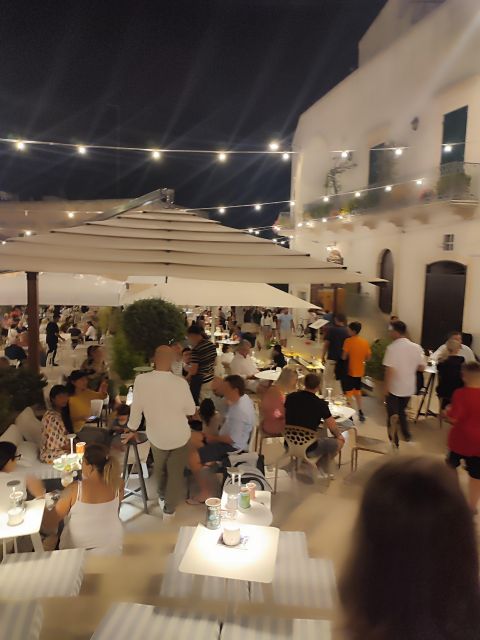
- Outside first, then in: You start near the Aragonese walls and get oriented before stepping into Ostuni Vecchia
- White-on-white streets with a reason: the tour ties the look of the city to traditions and local lore
- A cathedral stop that anchors the route: you’ll see the city’s main religious focal point before heading down toward the square
- Chiesa San Francesco: a second major church visit that helps you understand the town’s religious layers
- A panoramic moment: a viewpoint break that turns the walking route into a photo-and-breath moment
Starting at Piazza della Libertà, with the Aragonese walls as your compass
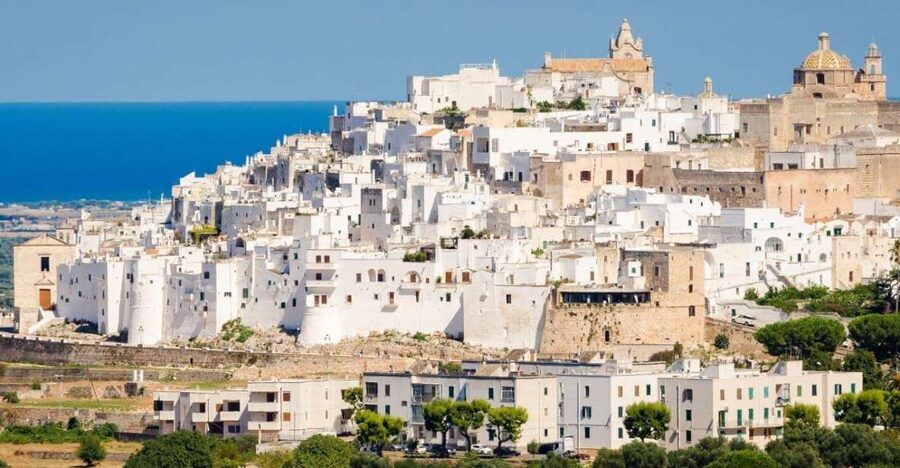
Most tours rush you into the maze. This one gives you a calmer entry. You’ll meet around Piazza della Libertà near the start point by the San Francesco church, then begin your path from outside the mighty Aragonese walls.
That first step matters more than you’d think. From the outside you can get a sense of where the town sits and why the streets feel like a staged climb-and-fall inside the walls. It’s also easier to understand the route once you’ve seen the perimeter first. If you’re the type who likes getting your bearings fast, this opening helps.
Then you transition into the historic center—Ostuni Vecchia—where the walking becomes part navigation, part storytelling. This is where you trade wide, open orientation for narrow street rhythm, and the guide’s pacing helps you keep up without feeling dragged.
More runs up to Ostuni the White City from Bari

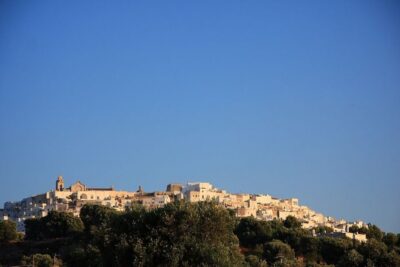
Entering Ostuni Vecchia and the meaning behind the white
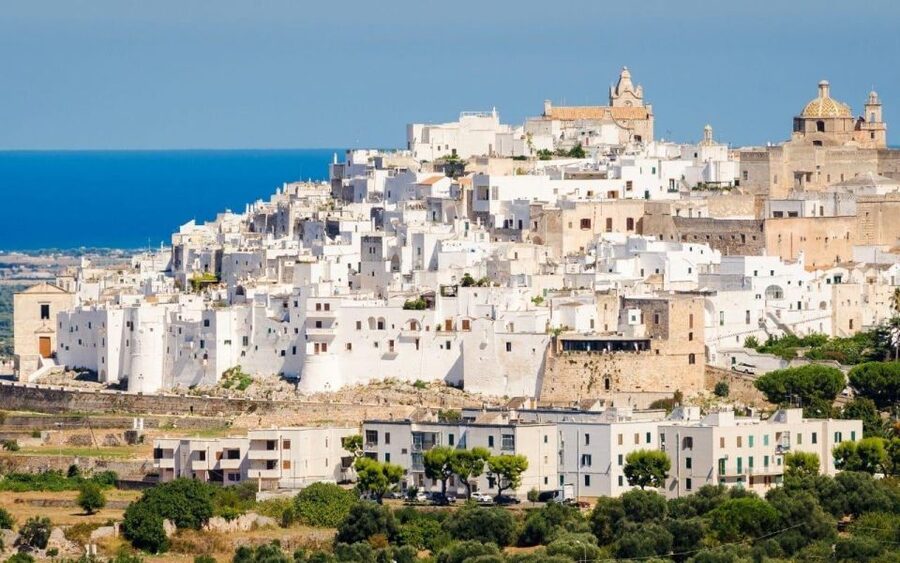
The tour’s whole theme is the history of white, and the color isn’t just aesthetic here. As you move through the historic core, you’ll go along white paths and hear how local traditions shaped the look of the town. The description you’ll get focuses on the atmosphere of Ostuni’s older streets—white architecture, white surfaces, and a kind of visual identity that’s instantly recognizable from afar.
This is where I think the tour earns its value: it connects the look of the city to why locals cared about maintaining it. Even without a long classroom-style lesson, the guide frames the city so the whiteness becomes a clue you can read as you walk. You’re not just saying, yes, everything is white; you’re learning what that means in daily life and in the town’s long memory.
Expect a steady movement through tight lanes. The roads can include small climbs and steps, so bring comfortable shoes and a slow, sure pace. The white surfaces look clean in photos, but on foot they’re just streets—so treat this as a walking tour first, sightseeing second.
Cathedral time: why this stop works on a short 1.5-hour schedule
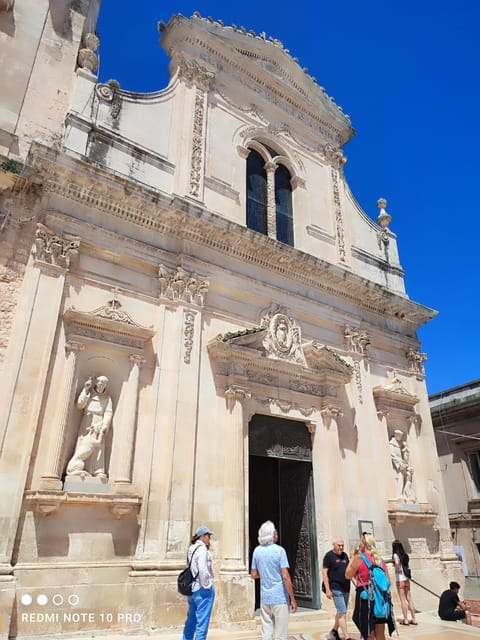
One of the highlights is the Cathedral visit, and it makes sense in a tight itinerary. In towns like Ostuni, the cathedral isn’t a standalone attraction—it’s a landmark that helps you read the town’s structure. It’s often the place where the route “makes sense” after wandering narrow lanes.
Here’s what you’ll likely appreciate: the guide doesn’t just point out religious art and architecture; they use the cathedral as an anchor point to explain how the center developed its identity. That anchor effect is ideal for first-timers. You get a reference for where you are, then you can relax into the remaining stops with better context.
After the cathedral, the plan continues toward a square area. This shift from a major religious site to an open public space is a smart pacing move. It lets you rest your legs briefly while resetting your eyes for the viewpoint and the rest of the walk.
Chiesa San Francesco: a second church stop that adds layers
The other church highlight is Chiesa San Francesco. Having two church stops in a short tour may sound like overkill, but it actually helps you see the town’s spiritual and architectural variety. When you visit more than one, the guide can compare details—how different buildings serve different moments in the town’s story.
You’ll also feel the route’s flow more clearly, because the tour starts near the San Francesco area and later revisits it through the walk’s structure (meeting/start in the area, then moving through the center). Even if you’re not chasing “checklist travel,” two church visits can deepen the sense of place. They remind you Ostuni isn’t only a white-candy postcard town; it’s a living community shaped by faith, festivals, and local rhythms.
If you love architecture, you’ll likely enjoy how the guide keeps tying visuals back to meaning. If you’re more into atmosphere, this still works, because the churches create natural pauses in the walking pattern.
More history-led walks around old Bari and the cathedral
- Matera’s Sassi Walking Tour – History & Culture★ 5.0 · 476 reviews
- Guided Tour, Historic Center Sassi Rock Churches and Cave House★ 5.0 · 461 reviews
- Matera: Sassi History and Culture Walking Tour★ 4.8 · 267 reviews
- Alberobello: History Walking Tour★ 4.6 · 223 reviews
- Matera: Sassi di Matera Historical Self-Guided Audio Tour★ 3.6 · 183 reviews
Panoramic place: where the route gives you a breather
A “panoramic place” is listed as a highlight, and that’s a big deal on a short itinerary. Views are not extra filler here. They’re a chance to stop, look out over the town, and understand the scale of what you’ve been walking through.
For a place like Ostuni, a viewpoint also helps you connect the “white city” idea to real geography. You’ll often notice how the buildings catch light and how the town’s core sits within its wider setting. Even a quick look can make the earlier streets feel more coherent.
Practical tip: bring a phone with enough battery, and don’t treat this as a rushed photo stop. Give yourself ten to twenty seconds to actually look. It makes the whole experience feel less like movement and more like comprehension.
Typical tastings and audio listening: small add-ons with big payoff
One of the included items is a tasting of typical products, and audio listening is included too. In a 1.5-hour tour, that’s a strong combo because it adds sensory context without adding hours.
Tastings can be hit-or-miss on some tours, but when they’re paired with a walking guide, they tend to feel like part of the story. You’re learning about the city’s identity in one channel (visual and verbal) and then confirming it with taste. If you prefer experiences where food feels connected to place rather than a separate event, this format is good.
Audio listening is another smart inclusion. It can help you follow the story even if you step slightly ahead or need to pause. On tight lanes and busy streets, having guide support through audio can make the tour feel smoother.
Also, the tasting isn’t the only included moment—this is still a walking route. So be ready to sip, nibble, and keep moving.
Price and time: is $72.50 worth it?
The price listed is $72.50 per person for a 1.5-hour guided walk. On its face, it’s not “cheap,” but it’s also not a long, spend-the-day style tour. Here’s how I’d judge value:
- You’re paying for a live guide and a focused route through the historic center
- You get multiple highlights (Cathedral, Chiesa San Francesco, and a panoramic place)
- You also get tastings and audio listening, which adds real “included value,” not just sightseeing
Where value can drop is the timing factor. There have been cases where the planned duration didn’t match what was expected, including a shortened window and at least one serious start-time issue tied to a guide named Renata. I can’t promise your experience will match those problems—but the key takeaway is to keep expectations realistic and avoid booking something later that you can’t reschedule.
If you’re doing Ostuni as a first visit and want the highlights with minimal planning, this can be a good deal. If you’re the type who hates any walking and needs a strictly timed schedule, you may find the short length a bit too tight when things don’t run perfectly.
Private group pacing: why it may feel better, even with steps
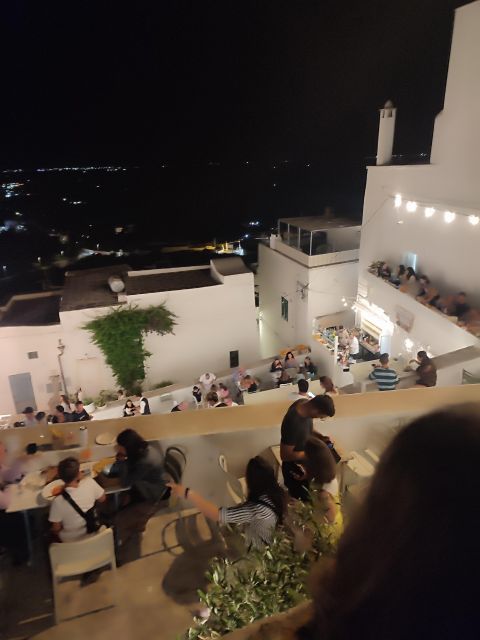
This is a private group tour, with English and Italian live guiding. Private-group format often helps in two ways: you get a more direct Q&A flow, and the guide can adjust pacing for your group’s comfort level.
The tradeoff is that you’re still walking the streets. The “small climbs and roads with steps” detail is important. A private group won’t remove the physical reality of Ostuni’s old town. If your feet are sensitive, treat this as a moderate walking day and plan accordingly.
I like private groups for history-and-meaning tours because the guide can tailor explanations to what you actually care about—white traditions, the cathedral focus, or just learning how to interpret what you’re seeing as you go.
Practical watch-outs: timing issues and how to protect your day
Because this is a short, high-impact tour, timing matters. The experience description focuses on a tight route and quick highlights, and the reviews data includes some red flags around schedule changes and a case where a guide didn’t appear.
So here’s the practical way to protect yourself:
- Give yourself extra buffer time before and after the tour
- Wear shoes that handle steps without stress
- If your schedule is strict, don’t stack another timed activity immediately afterward
Also, confirm the meeting area in your head before you arrive. The start point is tied to San Francesco church, and you’re meeting in the Piazza della Libertà area. Those details are easy to mix up in an old town setting, especially if you get turned around in white alleys.
The good news: when it runs smoothly, the tour is designed to show you a lot in 1.5 hours. The weak point is not the content—it’s the execution consistency.
Who this Ostuni white-city tour suits best
This tour makes sense if you:
- Are in Ostuni for a short time and want the core sights in one walk
- Like explanations that connect the look of a place to local meaning
- Enjoy light food stops, especially when they’re included rather than an extra expense
- Prefer private-group guiding in English or Italian
It’s less ideal if you:
- Need a long, slow experience with lots of free time in each stop
- Have mobility limitations that make steps and small climbs hard
- Rely on tight schedules and cannot handle changes
If you’re traveling with a group that values a guided orientation and a “walk-and-learn” rhythm, you’ll likely appreciate how the route is built.
Should you book this tour?
If your priority is a fast orientation to Ostuni’s white historic center—plus cathedral + San Francesco and a panoramic pause—this is a solid pick. The included tastings and audio listening are the kind of extras that actually help the tour feel complete.
But I’d book it with eyes open. The most important consideration is timing reliability. If you can build in a buffer and you’re comfortable with steps, you’ll likely enjoy the guided storytelling and the payoff of seeing why the city looks the way it does.
FAQ
How long is the Ostuni white city tour?
The duration is listed as 1.5 hours.
Where do you meet for the tour?
You meet in Piazza della Libertà. The start point is noted as the San Francesco church, and the activity ends back at the meeting point.
What are the main places visited?
The highlights include the Cathedral, Chiesa San Francesco, and a panoramic place.
What’s included in the price?
The tour includes a tasting of typical products and audio listening. Extra museum tickets are not included.
Is this a private tour?
Yes. The group type is listed as private group.
What languages are offered?
The live tour guide is available in English and Italian.
Is there walking involved?
Yes. You should expect to walk some small climbs and roads with steps.
How much does the tour cost?
The price is listed as $72.50 per person.
Can I cancel and get a refund?
Free cancellation is listed up to 24 hours in advance for a full refund.
More Bari History & Heritage Walks
- Matera’s Sassi Walking Tour – History & Culture
★ 5.0 · 476 reviews - Guided Tour, Historic Center Sassi Rock Churches and Cave House
★ 5.0 · 461 reviews - Matera: Sassi History and Culture Walking Tour
★ 4.8 · 267 reviews - Alberobello: History Walking Tour
★ 4.6 · 223 reviews - Matera: Sassi di Matera Historical Self-Guided Audio Tour
★ 3.6 · 183 reviews - Bari Walk Through History
★ 5.0 · 36 reviews
More Tour Reviews in Bari
- Matera: Sassi Tour with Cave House and Rupestrian Church
★ 4.7 · 6,618 reviews - Polignano a Mare: Speedboat Cruise to Caves with Aperitif
★ 4.8 · 3,382 reviews - Polignano a Mare: Cave Boat Tour with Aperitif
★ 4.7 · 1,891 reviews - Discover Matera, the ancient city – English tour
★ 5.0 · 1,771 reviews - Guided Tour of Matera Sassi
★ 4.5 · 1,312 reviews - Polignano a Mare: Boat Trip, Swim & Cave with Aperitif
★ 4.8 · 1,300 reviews
More Ostuni White City Trips
- Itria Valley: Polignano, Ostuni, and Locorotondo, from Bari
★ 4.6 · 502 reviews - Ostuni: Olive Oil Tasting Tour
★ 4.4 · 171 reviews - Ostuni: Guided e-bike tour + countryside tasting stop
★ 5.0 · 64 reviews - Valle d’Itria Tour: Polignano, Ostuni e Locorotondo, da Bari
★ 4.0 · 57 reviews - Ostuni: Walking Tour
★ 4.6 · 53 reviews - Ostuni: Alberobello, Locorotondo, Ostuni & Apulian brunch
★ 4.9 · 48 reviews