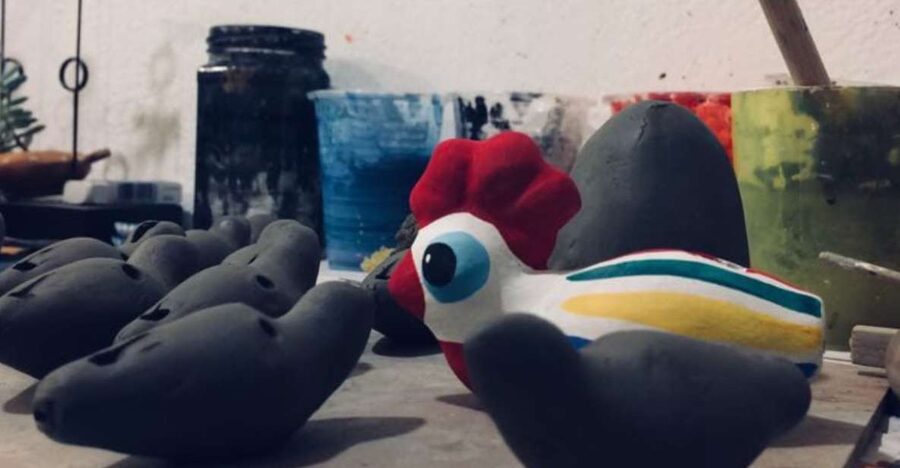
Clay birds beat most souvenirs. In Matera, this workshop lets you hand-mold a traditional cucù bird whistle with a local craftsman, and you’ll learn why this simple whistle matters in local culture. I also like that it’s private for two, so you get real help shaping the bird and getting the sound right, with guidance from Christian (he was patient and kind). The main catch: your piece is fired and may take a few days to be ready, and shipping costs extra if you don’t collect it on-site.
You’ll meet at Martulli Viaggi – Tour & Experience to start, then spend about 1.5 hours working with clay and whistle techniques (single-tone, two-tone, and water whistles). When you finish, your souvenir goes into the kiln and you’re set up with a 10% discount coupon at MòVado Food & Drink bar, next to Matera’s Cathedral—handy for a post-workshop drink or snack.
In This Review
- Key things to know before you go
- Why Matera’s cucù whistle feels different in your hands
- Meeting at Martulli Viaggi and getting set up fast
- In the workshop: shaping the clay bird step by step
- Single-tone, two-tone, and water whistles: what you’re actually learning
- From your bench to the kiln: timing and taking it home
- The coupon at MòVado and a Piazza Duomo sunset plan
- Price and value: is $83 fair for this private workshop?
- Who should book this handmade clay bird workshop?
- Practical tips so your clay day stays easy
- Should you book the Matera Handmade Clay Bird Workshop?
- FAQ
- How long is the Matera handmade clay bird workshop?
- Is this experience private?
- What will I make during the workshop?
- What happens to the clay after I finish shaping it?
- When and how can I get my finished souvenir?
- What’s included in the price?
- What should I bring, and what’s not allowed?
- What languages are spoken during the workshop?
- Can I cancel if my plans change?
Key things to know before you go
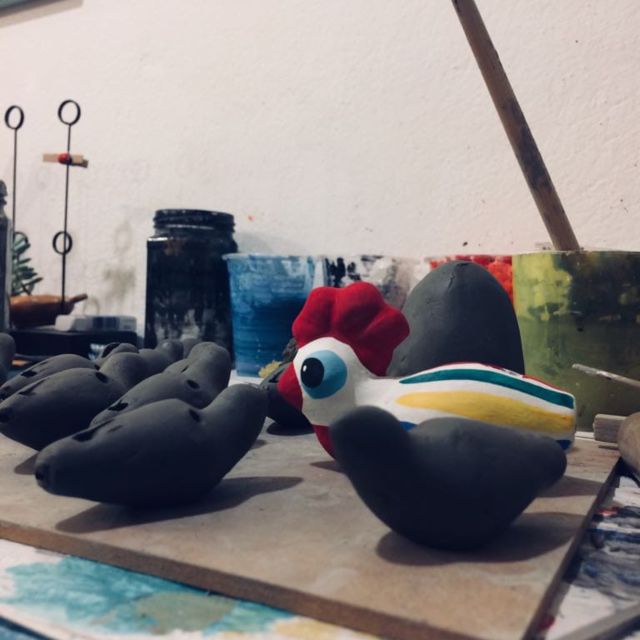
- Private for two people: you’re not sharing bench space with strangers.
- You make a real Materan cucù whistle: not just a decorative clay bird.
- The sound techniques are part of the lesson: single-tone, two-tone, and water whistles.
- Your clay goes to the kiln: you’ll collect later or arrange shipment (shipping isn’t included).
- Bring clothes that can get messy: you’ll want a change of clothes.
- A 10% coupon right in Piazza Duomo: at MòVado Food & Drink bar near the Cathedral.
Why Matera’s cucù whistle feels different in your hands
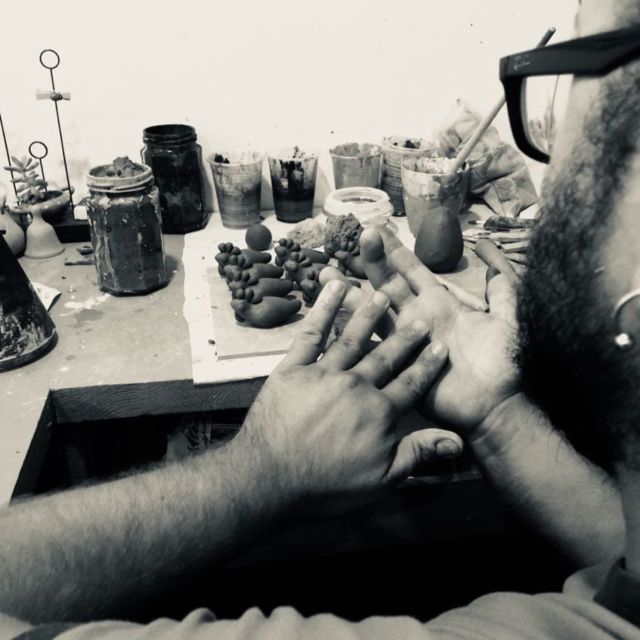
In Matera, people don’t just collect ceramics. They carry the idea of craft into daily life. A cucù bird whistle is one of those objects that’s instantly “Matera” when you see it—and it becomes even more personal once you’ve made it yourself.
What I like about this workshop is the combination of making something tactile and learning the why behind it. You’ll hear about the tradition of the cucù and its role in society, then you’ll apply that story with your hands. That turns a souvenir into a skill you practiced, even if you’re a complete beginner.
And the form isn’t random. You’re creating a typical Matera whistle bird, the kind of item people recognize as part of local identity. When you finish, you’ll understand how the pieces work together: the shape, the mouthpiece, and the whistle function are all connected.
More Matera Sassi day trips that leave from Bari



Meeting at Martulli Viaggi and getting set up fast
Your start point is Martulli Viaggi – Tour & Experience. Plan to arrive a few minutes early so you can get oriented without rushing. This is the kind of activity where a calm start helps. You’ll want your feet comfortable, because you’re moving around a workshop setup and working close to your work area.
Before you go, read the simple rules and follow them:
- wear comfortable shoes
- bring a change of clothes
- skip anything that you care about—clay can be stubborn
- don’t bring jewelry, and avoid large bags / luggage
Also, food and drinks aren’t allowed during the workshop. That’s not just for rules sake. Clay work can get messy quickly, and the workshop flow is set up to keep the workspace clean.
The workshop language is Italian and English, so you’ll be able to ask questions and get directions clearly. You’ll also be in a private group, which means you’re more likely to get personal coaching than a “watch and copy” vibe.
In the workshop: shaping the clay bird step by step
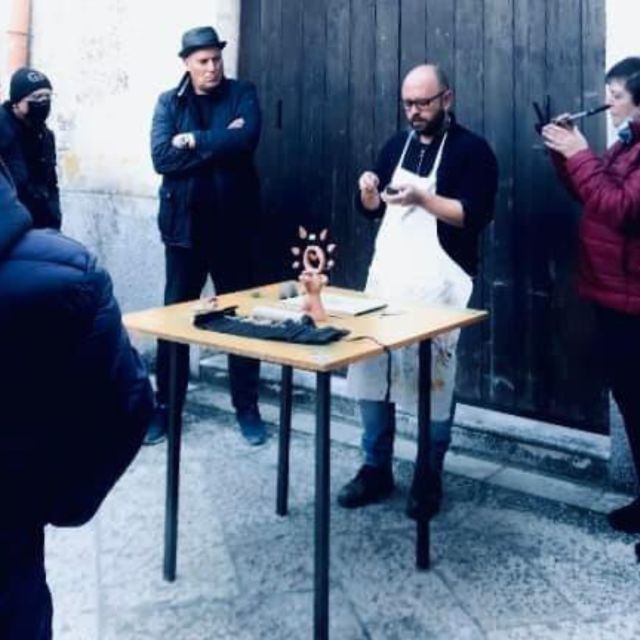
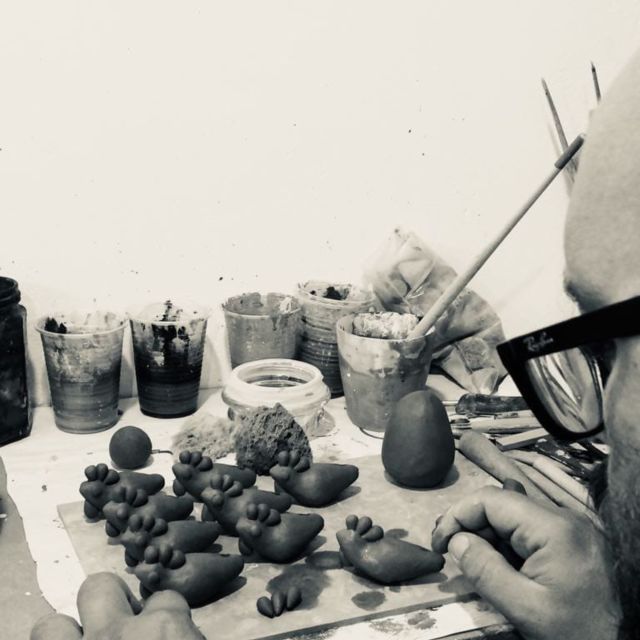
The heart of the experience is the hands-on making. You’ll craft a traditional cucù bird whistle from raw clay in a workshop setting that focuses on local ceramic methods.
You start from raw material and build toward the finished bird. The process typically runs in stages:
- preparing and working the clay so it behaves the way you need
- shaping the body and key whistle elements
- forming details so the bird shape reads clearly as a cucù
- refining the parts that affect sound
One important thing: the techniques matter. This isn’t just “squeeze clay into a bird and call it done.” The instruction is about getting the whistle to behave. That means you’ll be asked to adjust and experiment, not just follow a single rigid step.
With a craft instructor like Christian, the guidance is practical and patient. If you mess up a shape (it happens), you can usually correct it as you work. That’s a big part of the value of having a private setup: you get time to fix things without feeling rushed.
The workshop is also structured around different whistle styles, so you’ll learn while you work rather than waiting until the end for explanations.
Single-tone, two-tone, and water whistles: what you’re actually learning
Here’s where this workshop goes beyond a basic “pottery class.” You’ll learn techniques for single-tone, two-tone, and playful water whistles.
I think of this as three layers of understanding:
1) Single-tone teaches you the core whistle setup—how the shape and airflow create one clear sound.
2) Two-tone asks you to control more than one part of the whistle system, which makes you pay attention to alignment and proportion.
3) Water whistles introduces an extra concept: how water interacts with the whistle mechanism.
Even if you don’t become a whistle engineer, you’ll leave knowing that craft is often about small geometry and fine-tuned details. That’s why this kind of workshop feels more satisfying than a quick craft where the main result is visual.
It also helps you appreciate why a traditional object like the cucù has staying power. It’s not just decorative. It’s functional, and the sound is part of the tradition.
More Bari hands-on workshops, from pasta boards to ceramics
- Apulian Cooking Class with Aperitif and Wine in Polignano a Mare★ 5.0 · 89 reviews
- Matera: Pasta Cooking Class Old Farmer Style in Sassi Cellar★ 5.0 · 87 reviews
- Matera Cooking Class★ 5.0 · 76 reviews
- Apulian cooking class fresh pasta and focaccia★ 5.0 · 68 reviews
- Cesarine: Small group Pasta and Tiramisu class in Bari★ 5.0 · 56 reviews
From your bench to the kiln: timing and taking it home
When your cucù is complete, it goes into the kiln. This is a key detail to plan around. Your finished artifact isn’t handed to you at the end of the session.
Instead, you’ll either collect it on the arranged day or have it carefully sent to you. The workshop notes that it may take a few days to receive the finished piece. If you don’t collect on-site, shipping costs aren’t included, so build that into your decision if you’re leaving town soon.
This matters for travelers because Matera can be part of a quick route. If you’re flying out the next day, you’ll need either a pickup plan or a realistic shipping expectation. If you’re staying a few nights, it’s usually easier to coordinate the collection.
Practically, treat the workshop as “make it today, enjoy it later.” That’s normal for fired ceramics, and the good news is the souvenir is made to last—firing is part of what turns wet clay into something durable.
The coupon at MòVado and a Piazza Duomo sunset plan
One smart touch here is the included 10% discount coupon at MòVado Food & Drink bar, located next to Matera’s Cathedral. After 1.5 hours of clay work, you’ll probably want something warm and low-effort.
Use the coupon soon after your workshop. The location is convenient if you’re already planning to walk around the historic center. You can also pair it with an easy evening rhythm: admiring the sunset in Piazza Duomo, then grabbing a drink at the bar where your coupon works.
I like this kind of pairing because it turns “craft time” into a complete small outing. Clay workshops can feel self-contained; adding a simple cathedral-area stop gives you a nice payoff for your time.
Price and value: is $83 fair for this private workshop?
$83 per person sounds specific, and it’s not the cheapest activity in Matera. But the value makes sense when you break down what’s included.
You’re paying for:
- a private hands-on session (it’s just you and one other person)
- instruction in whistle techniques, not just generic ceramics
- raw materials for the workshop
- your finished cucù souvenir, fired in the kiln
- a 10% coupon at a nearby bar
For me, the “private for two” part is the main value driver. In a small workshop, you can get corrections in real time. That boosts your chance of walking away with something you’re proud of.
Also, you’re not doing this in an open craft market setting with no kiln process. The firing step is handled, which is a big part of the actual work and the durability of the souvenir.
If you compare it to cheaper group crafts where you make a simple clay item and it isn’t fired by the workshop, the price looks more reasonable. Here, the souvenir is the product, and you’re paying for the process that makes it real.
Who should book this handmade clay bird workshop?
This experience fits best if you want a hands-on activity that still feels unmistakably local.
You’ll probably love it if:
- you enjoy working with your hands and learning a step-by-step process
- you want a souvenir with a story attached to the making
- you prefer a private format with direct guidance
- you’re curious about why Matera’s cucù whistles are more than decoration
You might not love it if:
- you need a souvenir you can take home immediately the same day (firing takes time)
- you’re traveling with limited flexibility and can’t handle a few days of waiting or potential shipping
- you have mobility limitations, because the workshop is noted as not suitable for people with mobility impairments
If you’re traveling with someone who likes traditional crafts, this is a strong “do something together” plan. It also works well as a short break in the middle of sightseeing, since the session is only 1.5 hours.
Practical tips so your clay day stays easy
A few things will save you stress.
Wear clothing you don’t mind getting marked. Even with care, clay work can leave residue. Bring a change of clothes—you’ll be glad you did.
Leave jewelry at home. If you wear rings, bracelets, or anything dangling, it’s more than a comfort issue. The workshop rules say jewelry isn’t allowed.
Bring comfortable shoes because you’ll be standing and working for the session. This isn’t a sit-at-a-table-only activity.
Finally, plan ahead for the souvenir timeline. Expect it after firing, not at the end of the workshop. If you’re leaving Matera soon, consider whether pickup or shipping fits your schedule.
Should you book the Matera Handmade Clay Bird Workshop?
Yes, I’d book it if you want a hands-on Matera experience with a tangible result. The private format for two people, the focus on a traditional cucù whistle, and the instruction around different whistle techniques make it feel like more than a casual craft.
The biggest decision point is timing. If you can handle waiting a few days for firing and pickup (or you’re okay with shipment, knowing shipping costs aren’t included), this is a great value way to create something you’ll remember.
If you need a same-day take-home souvenir, or if clay work and messy clothes aren’t your thing, you’ll probably be happier choosing a different activity. But if you’re up for getting your hands dirty and learning how a Materan whistle is made, this one is worth your time.
FAQ
How long is the Matera handmade clay bird workshop?
The workshop lasts 1.5 hours.
Is this experience private?
Yes. It’s a private experience for a small group (just two people).
What will I make during the workshop?
You’ll create a traditional Materan cucù (cuckoo) bird whistle from clay.
What happens to the clay after I finish shaping it?
Your bird is carefully fired in a kiln. It may take a few days to be ready.
When and how can I get my finished souvenir?
You can collect it on the arranged day. You can also have it sent to you, but shipping costs are not included.
What’s included in the price?
The price includes the clay workshop with a local craftsman, the raw material for the workshop, your private hands-on experience, and your handcrafted cucù souvenir. You also receive a 10% discount coupon at MòVado Food & Drink bar next to Matera’s Cathedral.
What should I bring, and what’s not allowed?
Bring comfortable shoes and a change of clothes. Food and drinks aren’t allowed, and you should avoid luggage or large bags. Jewelry also isn’t allowed.
What languages are spoken during the workshop?
The instructor speaks Italian and English.
Can I cancel if my plans change?
Yes. You can cancel up to 24 hours in advance for a full refund.
More Puglia Workshops & Hands-On Classes
- Polignano a Mare: Pasta Making Cooking Class with Drink
★ 4.8 · 260 reviews - Polignano a Mare: Apulian Cooking Class with Food and Drinks
★ 4.8 · 159 reviews - Apulian Cooking Class with Aperitif and Wine in Polignano a Mare
★ 5.0 · 89 reviews - Matera: Pasta Cooking Class Old Farmer Style in Sassi Cellar
★ 5.0 · 87 reviews - Matera Cooking Class
★ 5.0 · 76 reviews - Apulian cooking class fresh pasta and focaccia
★ 5.0 · 68 reviews
More Tour Reviews in Bari
- Matera: Sassi Tour with Cave House and Rupestrian Church
★ 4.7 · 6,618 reviews - Polignano a Mare: Speedboat Cruise to Caves with Aperitif
★ 4.8 · 3,382 reviews - Polignano a Mare: Cave Boat Tour with Aperitif
★ 4.7 · 1,891 reviews - Discover Matera, the ancient city – English tour
★ 5.0 · 1,771 reviews - Guided Tour of Matera Sassi
★ 4.5 · 1,312 reviews - Polignano a Mare: Boat Trip, Swim & Cave with Aperitif
★ 4.8 · 1,300 reviews
More Matera Sassi Day Trips
- Matera: Sassi Tour with Cave House and Rupestrian Church
★ 4.7 · 6,618 reviews - Discover Matera, the ancient city – English tour
★ 5.0 · 1,771 reviews - Guided Tour of Matera Sassi
★ 4.5 · 1,312 reviews - Tour di Alberobello e Matera in bus privato da Bari
★ 4.8 · 701 reviews - Matera: Sassi Tour with Entry to Rock Houses and Churches
★ 4.6 · 622 reviews - Tour of Alberobello and Guide to Matera, from Bari
★ 4.7 · 478 reviews