Orecchiette lessons beat the usual tourist dinner. This Polignano a Mare cooking class (near Bari) mixes a practical pasta workshop with an aperitif and wine stop, plus a sit-down meal you can actually enjoy right after you make it.
What I like most is the hands-on focus: you work the dough and learn shaping while staying close to the chef’s tips (one favorite guide I’ve seen credited by name is Daniela, and another is Anna Maria/Annamarie). I also really value that the meal isn’t just an afterthought: you get Apulian nibbles like olives, taralli, pickles, plus Bari-style focaccia and wine with your pasta. The one thing to consider: the class centers on pasta and aperitif courses, so don’t plan on cooking dessert like tiramisu as part of this experience.
In This Review
- Key Things to Know Before You Go
- Polignano’s Pasta Class: Why This Feels Local, Not Staged
- The 2-Hour Flow: From Welcome Aperitif to Dinner Table
- What You’ll Cook: Orecchiette, Shaping Skills, and Tips That Transfer
- Starters and the Apulian Aperitif: Olives, Taralli, Pickles, and Focaccia
- Wine and Drinks Included: What It Means for the Evening
- Price and Value: Is $78.09 Worth It?
- Where to Meet on Via S. Vito (and How to Avoid the Usual Map Trouble)
- Who This Cooking Class Is Best For
- Should You Book This Polignano Cooking Class?
- FAQ
- How long is the Polignano cooking class?
- Is the class offered in English?
- What’s included in the price?
- What does the menu focus on?
- Where is the meeting point?
- Is private transportation included?
Key Things to Know Before You Go
- Small group size (max 12) means more time getting help with shaping pasta.
- English-speaking guide keeps the instructions clear without slowing the class down.
- Two hours is a well-paced sprint: lesson, then you eat what you make.
- Aperitif-style starters with typical bites like olives, taralli, and pickles set the mood before the pasta.
- Drinks are included, with wine being the headline.
- Meeting point is right on Via S. Vito, but you may want extra time to find the exact doorway.
Polignano’s Pasta Class: Why This Feels Local, Not Staged
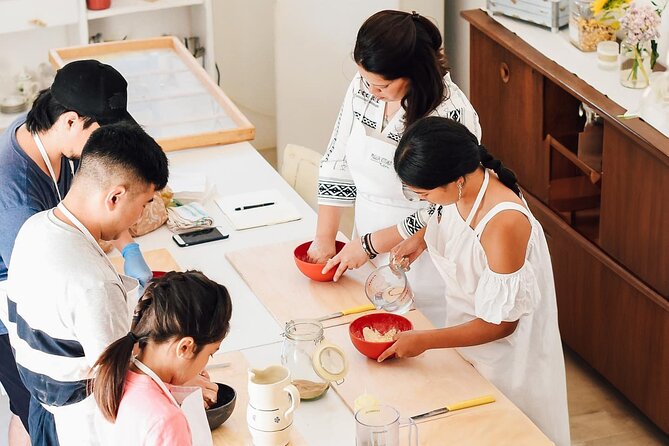
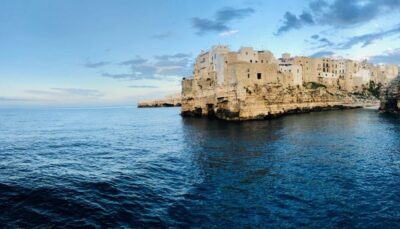
Polignano a Mare is famous for postcard views, but this kind of class anchors you in something more real: the everyday rhythm of Apulian cooking. You’re not just watching someone else cook. You’re learning the technique, getting corrected when your shapes need help, and then eating immediately while everything is still fresh and warm.
That’s a big part of the appeal. Pasta lessons can go two ways: either they feel like a lecture, or they feel like busywork. This format aims for the sweet spot. The workshop is practical, the chef acts as your coach, and the meal follows while the flavors are at their best.
Also, the class is designed to be approachable. Even if you’ve never made fresh pasta before, you’ll be guided through the steps with tools on hand. The small maximum group size (12) matters here. You don’t get lost in the crowd, and you can ask questions without waiting.
One more thing I like: the experience is built around classic Apulia flavors, not a random international menu. Expect the food to taste like the region rather than like a cooking show. That’s why the starter choices (olives, taralli, pickles) are more than filler. They’re part of the local table culture—salt, tang, crunch—right before the pasta course.
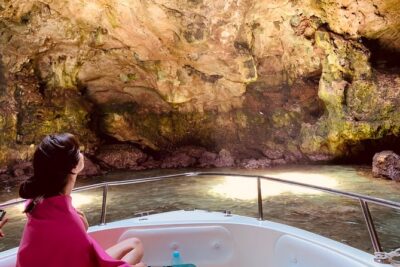
More Polignano a Mare sea cave boat runs from Bari

The 2-Hour Flow: From Welcome Aperitif to Dinner Table
This experience runs about 2 hours, so it doesn’t sprawl. You’ll start at the meeting point on Via S. Vito, then settle in for the chef-led session. The timing is set up so you aren’t stuck waiting forever before food shows up—and you’re not rushed out the door before you can enjoy what you made.
Here’s what the flow typically feels like:
First, you get the pre-meal moment. You’ll have an aperitif with drinks included, and you’ll likely start with small bites. This is where the class sets the tone: Apulia’s salty-snack style before the pasta-heavy part of the evening.
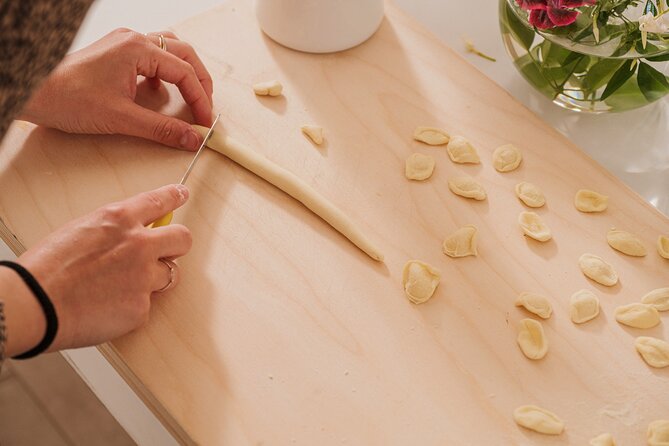
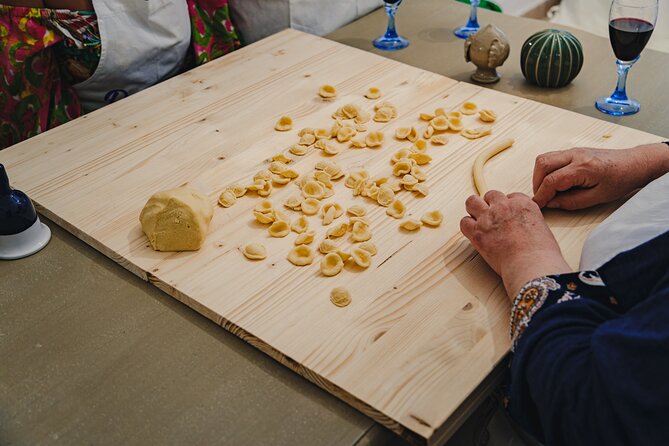
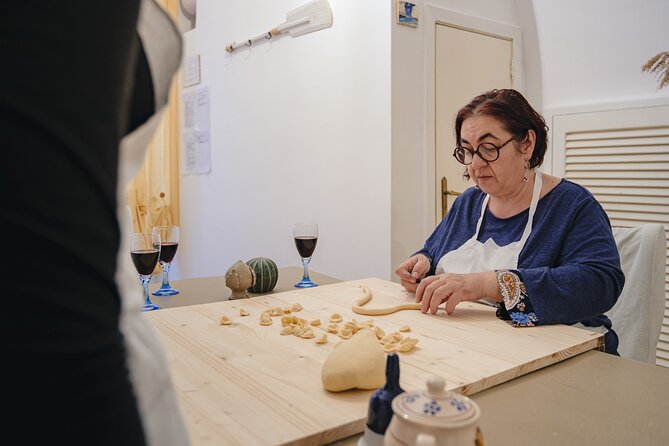
Then comes the cooking workshop. You’ll learn fresh pasta techniques, including shaping. The goal is not just to produce a plate, but to understand how the dough responds and how the shape affects the final bite.
Finally, you sit down and eat. The menu centers on what you made and what the kitchen supports alongside your work. You’re not “snacking” your way through the class; you get a proper sitting meal experience.
A practical note: two hours is long enough to learn, but short enough that you should keep your energy up and listen carefully at the start. When the hands-on part begins, the chef’s instructions move fast.
What You’ll Cook: Orecchiette, Shaping Skills, and Tips That Transfer
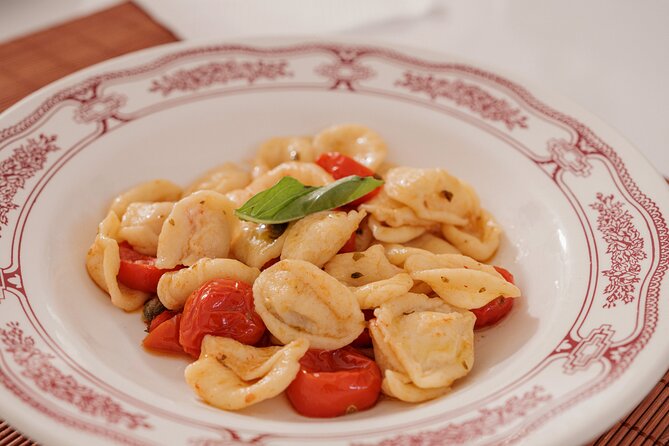
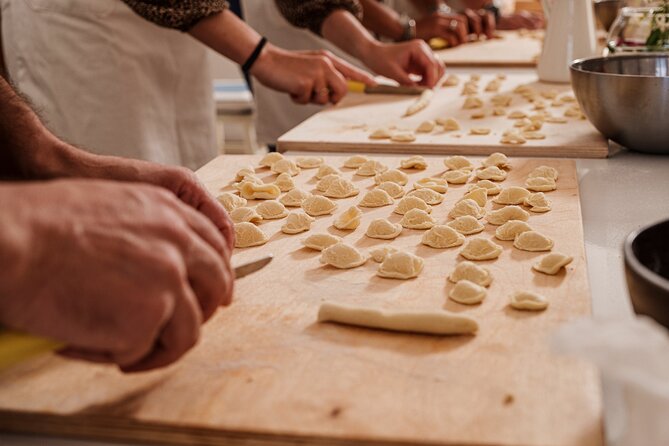
The main event is orecchiette—the little ear-shaped pasta that’s basically a signature of Puglia. You’ll learn how to make fresh pasta using the necessary tools, then pair it with a classic sauce.
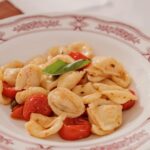
In the menu, you’ll see orecchiette with tomato and basil sauce as the centerpiece. That matters because tomato-basil is a simple combination, which makes technique and quality stand out. If you get the dough and shaping right, the sauce clings and you get that satisfying bite.
Some classes also include learning additional pasta shapes such as cavatelli. One guide named in feedback is Daniela, and she’s specifically credited with making pasta with guests in a fun, Q&A-friendly way. Another host credited is Anna Maria/Annamarie, praised for stepping in when shaping gets tricky.
Even if you only master orecchiette, you’ll walk away with transferable skills:
- How the dough should feel as you work it
- How to form shapes consistently
- When to adjust (a little more flour, a lighter touch, and so on) rather than starting over
And yes, the class includes more than one component. You’ll also see Bari-style focaccia in the starter lineup, which is the kind of warm, olive-oil comfort that fits perfectly with an Apulian aperitif.
The best part is that you’re not just tasting. You’re building the pasta structure with your own hands. That’s why the finished meal tastes different from a restaurant plate—you’ll recognize the technique in every bite.
Starters and the Apulian Aperitif: Olives, Taralli, Pickles, and Focaccia
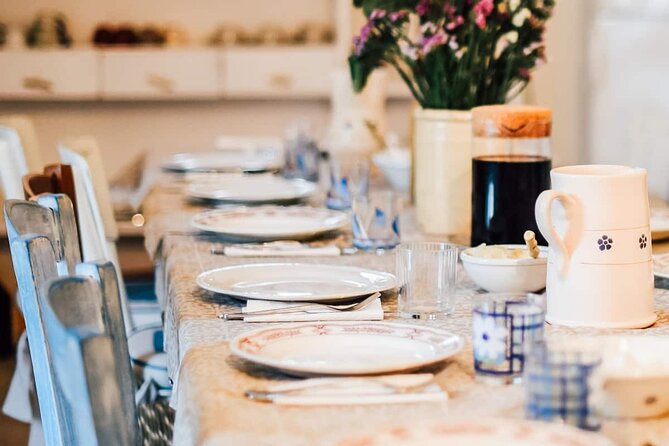
This is not a class where the pasta shows up and everything else is forgotten. The menu intentionally begins with classic Apulian flavors that set your palate.
You’ll get appetizers including:
- Olives, taralli, and pickles
- Additional starter items that round out the aperitif style
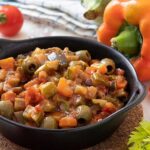
These aren’t complicated dishes, but they’re the right kind of preparation. Taralli brings crunch. Olives add salt and fat. Pickles add that snap of acid that keeps the meal from feeling heavy before the pasta.
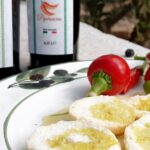
Then there’s Bari-style focaccia bread as a starter. Focaccia belongs in the Apulia category of edible comfort. It also helps you pace yourself. Pasta takes over your appetite fast, and focaccia gives you a bridge between sipping wine and digging into orecchiette.
One subtle win: because the starters arrive early, the class becomes social. You can talk with your chef and your group while you’re tasting, not while you’re waiting.
More orecchiette and Puglia cooking classes around Bari
- Bari: Pasta Experience Walking Tour★ 4.7 · 660 reviews
- Bari Walking Tour with Pasta Experience★ 4.5 · 270 reviews
- Polignano a Mare: Apulian Cooking Class with Food and Drinks★ 4.8 · 159 reviews
- Apulian Cooking Class with Aperitif and Wine in Polignano a Mare★ 5.0 · 89 reviews
- Matera: Pasta Cooking Class Old Farmer Style in Sassi Cellar★ 5.0 · 87 reviews
Wine and Drinks Included: What It Means for the Evening
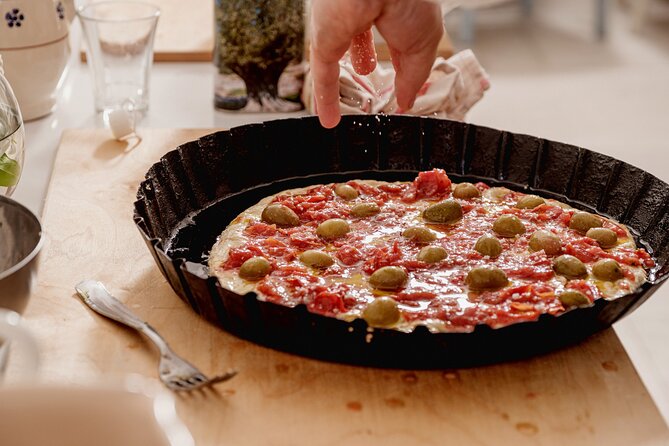
Drinks are included, and wine is part of the story. This matters because the experience is built for a relaxed, dinner-style pace. You’re not treating it like a lab; you’re treating it like a meal with a lesson attached.
In feedback, guests mention the wine pairing and even a local liqueur like limoncello alongside the included drinks. Since your exact pairings aren’t listed in the core menu here, I’d treat limoncello as a possible extra rather than a guarantee. The wine inclusion is the safe bet.
Either way, having drinks included changes how you experience the class:
- You’re more likely to slow down and enjoy the food instead of rushing through the tasting.
- You’ll be comfortable asking questions while you cook.
- The meal feels like something you’d do on a special night, not a paid workshop followed by a quick sandwich.
Price and Value: Is $78.09 Worth It?
At $78.09 per person, you’re paying for more than the ingredients. You’re paying for:
- A professional chef
- A guided cooking lesson with tools
- A sit-down meal
- Typical product tastings
- Drinks with wine included
For a two-hour experience in the Polignano area, this sits in the “good value” category because you’re not only learning. You’re also eating an actual sequence of courses, not a tiny bite-sized sample.
The comparison that matters isn’t just price versus another pasta class. It’s price versus what you get for the full experience: time with the chef, small-group attention, and a meal you can savor. You also save hassle since private transportation isn’t included, meaning you’re likely combining this with your existing plans on foot or via local transport.
If you want hands-on cooking, you’re the target. If you’re only interested in eating Italian food, you might find cheaper options elsewhere. But if your goal is “learn something I can repeat,” this makes financial sense.
Where to Meet on Via S. Vito (and How to Avoid the Usual Map Trouble)
The meeting point is Via S. Vito, 20, 70044 Polignano a Mare BA, Italy. The class ends back at the meeting point, so it’s convenient for looping into the rest of your evening nearby.
One practical reality: this kind of small street meeting point can be easy to miss if your navigation app drops you on the wrong side of the neighborhood. Build in a few minutes of buffer time. If you arrive early, you’re calmer. If you arrive exactly on the dot and you’re searching, the evening starts with stress instead of pasta.
Also, with a mobile ticket, keep your phone battery healthy. You’ll want it when you check in.
Who This Cooking Class Is Best For
This is one of those experiences that works for several travel styles.
It’s ideal if you:
- Want a genuine food activity in Polignano a Mare, not just another photo stop
- Enjoy hands-on learning and want technique, not just tasting
- Travel as a small group or family and want a shared activity that doesn’t require prior skills
It’s especially good for first-time pasta makers. The guidance is designed to keep you moving step by step, and the small maximum group size helps you get corrections in real time.
If you’re traveling with kids, it can be a fun family night because you’re doing something physical and you get to eat the results. Just keep expectations realistic: you’ll learn the core steps and shapes, but the class is only two hours, so it won’t be an all-day culinary marathon.
And if you’re specifically hoping to make dessert like tiramisu, adjust your expectations. This experience focuses on pasta, aperitif courses, and what’s included in the meal plan.
Should You Book This Polignano Cooking Class?
Book it if you want a short, satisfying evening with real technique and a full meal attached. The combination of hands-on fresh pasta, Apulian starters, and included wine makes it feel like value rather than a tourist gimmick. The small-group size (max 12) is the biggest “win,” because it improves the odds you’ll actually learn and not just stand around.
Skip or reconsider if:
- You only care about eating and don’t want to cook
- You’re specifically looking for dessert-making as part of the workshop
- You dislike activities where you’ll need to follow steps closely for two busy hours
My bottom line: if pasta is your thing, and you want an Apulia-flavored evening you can repeat at home, this is a solid choice.
FAQ
How long is the Polignano cooking class?
It lasts about 2 hours.
Is the class offered in English?
Yes, it’s offered in English.
What’s included in the price?
You get a professional chef, the cooking lesson, tools, tasting of typical products, dinner, and drinks.
What does the menu focus on?
The sample menu includes appetizers (with items like olives, taralli, and pickles), Bari-style focaccia bread, and orecchiette with tomato and basil sauce.
Where is the meeting point?
The start location is Via S. Vito, 20, 70044 Polignano a Mare BA, Italy, and the activity ends back at the meeting point.
Is private transportation included?
No, private transportation is not included.
More Tour Reviews in Bari
- Matera: Sassi Tour with Cave House and Rupestrian Church
★ 4.7 · 6,618 reviews - Polignano a Mare: Speedboat Cruise to Caves with Aperitif
★ 4.8 · 3,382 reviews - Polignano a Mare: Cave Boat Tour with Aperitif
★ 4.7 · 1,891 reviews - Discover Matera, the ancient city – English tour
★ 5.0 · 1,771 reviews - Guided Tour of Matera Sassi
★ 4.5 · 1,312 reviews - Polignano a Mare: Boat Trip, Swim & Cave with Aperitif
★ 4.8 · 1,300 reviews
More Orecchiette & Puglia Cooking Classes
- Bari: Pasta Experience Walking Tour
★ 4.7 · 660 reviews - Bari Walking Tour with Pasta Experience
★ 4.5 · 270 reviews - Polignano a Mare: Pasta Making Cooking Class with Drink
★ 4.8 · 260 reviews - Polignano a Mare: Apulian Cooking Class with Food and Drinks
★ 4.8 · 159 reviews - Apulian Cooking Class with Aperitif and Wine in Polignano a Mare
★ 5.0 · 89 reviews - Matera: Pasta Cooking Class Old Farmer Style in Sassi Cellar
★ 5.0 · 87 reviews
More Polignano a Mare Sea Cave Boat Trips
- Polignano a Mare: Speedboat Cruise to Caves with Aperitif
★ 4.8 · 3,382 reviews - Polignano a Mare: Cave Boat Tour with Aperitif
★ 4.7 · 1,891 reviews - Polignano a Mare: Boat Trip, Swim & Cave with Aperitif
★ 4.8 · 1,300 reviews - Polignano a Mare boat tour emotions, caves, diving and appetizers
★ 5.0 · 1,022 reviews - Boat tour of the Polignano a Mare caves with aperitif
★ 4.5 · 595 reviews - Polignano a Mare: Boat Cruise to Scenic Caves with Prosecco
★ 4.7 · 550 reviews